

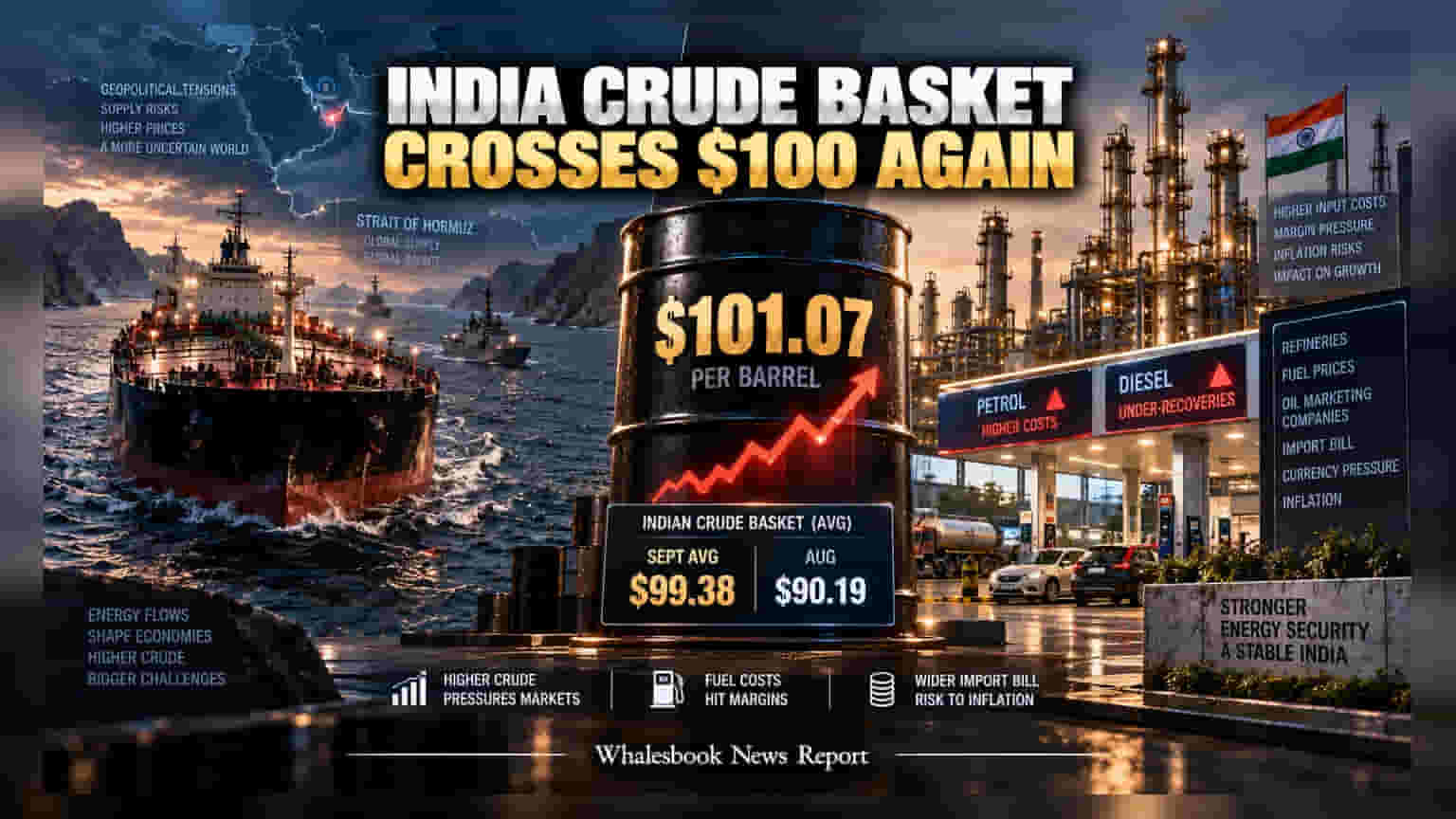
The Indian crude import basket hit $101.07 a barrel on September 4, driven by rising tensions in West Asia. This jump adds stress to Oil Marketing Companies (OMCs) facing high under-recoveries and impacts stocks in energy-sensitive sectors like tires and aviation.
The Indian crude oil basket reached $101.07 a barrel on Friday, September 4, crossing the $100 mark for the first time in weeks. The average price for September has climbed to $99.38, a significant increase from the previous month. This upward movement is primarily fueled by rising instability in West Asia, particularly concerns around potential supply disruptions in the Strait of Hormuz, a critical route for global energy transit.
Impact on Oil Marketing Companies
The rising cost of crude oil poses a direct challenge to India's Oil Marketing Companies (OMCs), including Indian Oil Corporation, BPCL, and HPCL. When global crude prices increase, these companies often face 'under-recoveries,' which means the cost of processing and selling fuel exceeds the retail price. Recent reports indicate that marketing margins have turned negative, with petrol losses estimated at around ₹4.2 per litre and diesel losses nearing ₹24.9 per litre. If retail fuel prices remain stable while crude stays elevated, these companies may see their profitability squeezed further.
Market Reaction and Sector Sensitivity
The stock market reacted to these developments on September 7, with the Nifty Oil & Gas index falling over 0.6%. Shares of major energy companies, including Reliance Industries, Indian Oil, BPCL, and HPCL, faced selling pressure during the trading session. Beyond oil and gas, the rise in crude prices creates a ripple effect across other sectors that rely on oil derivatives for production and operations. Companies in the paint, tire, and aviation industries typically face higher input costs when oil prices climb, which can lead to thinner profit margins if these costs cannot be fully passed on to customers.
Broader Economic Implications
For the Indian economy, a sustained period of crude prices above $100 per barrel creates several pressure points. It increases the nation's energy import bill, which can put downward pressure on the Indian rupee and contribute to a wider current account deficit. Additionally, higher energy costs have the potential to push up inflation, affecting the broader cost of living and manufacturing expenses across the country.
Investors are now closely monitoring whether these high global prices will persist or stabilize. The primary factor to track will be the government's stance on retail fuel pricing and whether any adjustments are made to support the margins of state-run oil retailers. Further updates on the supply situation in West Asia will also determine the direction of crude oil benchmarks in the coming weeks.