

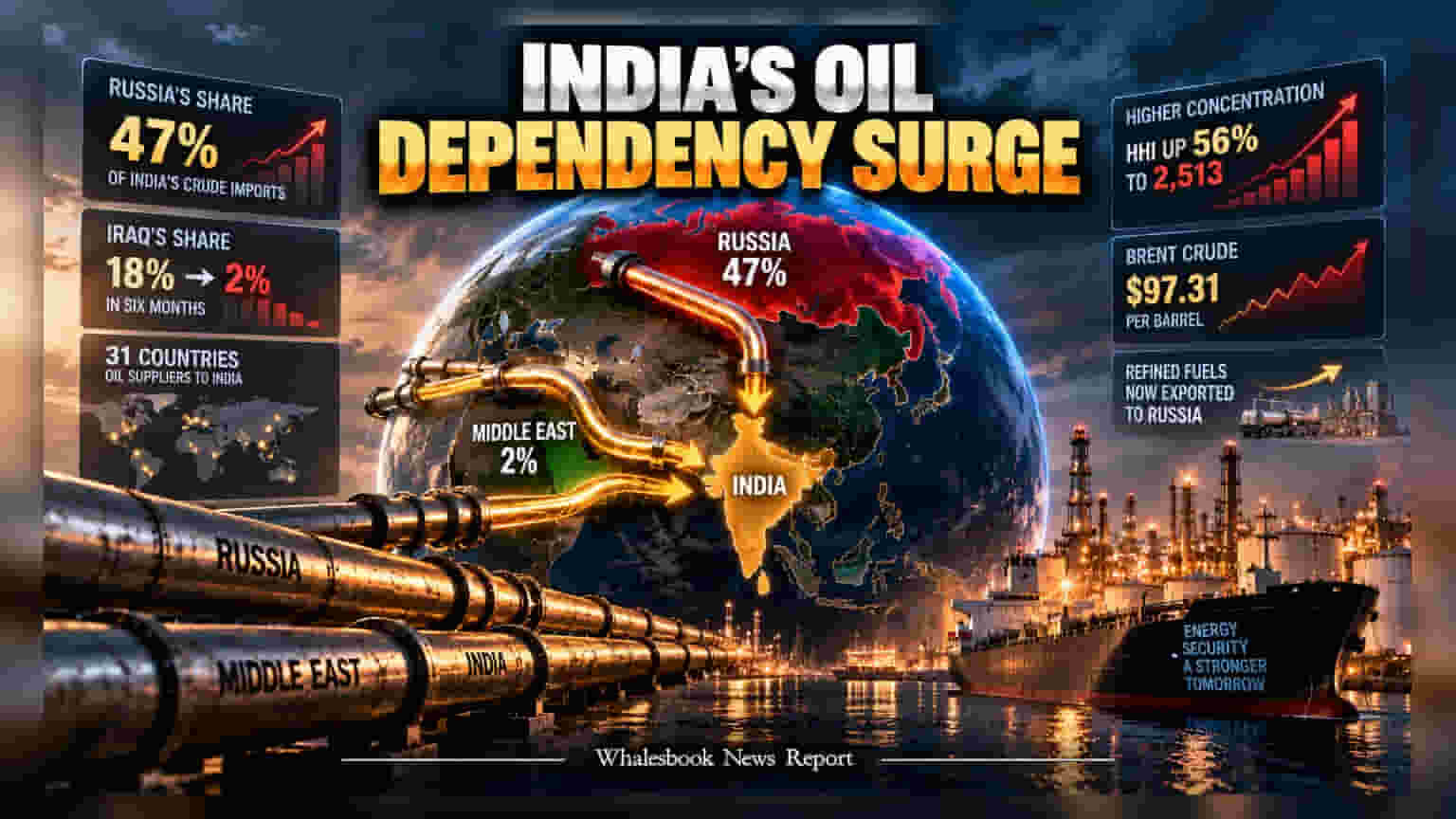
India has expanded its crude oil supplier network to 31 countries, but import concentration has significantly increased. Russia now accounts for 47% of India's total imports, offsetting declines from traditional suppliers like Iraq. With Brent crude trading near $97 per barrel, this high concentration creates structural challenges, including risks related to geopolitical sanctions and trade route volatility.
India has managed to expand its network of crude oil suppliers to 31 countries, yet the actual source of oil has become much more concentrated. While the country is trying to reduce its dependence on specific regions, the reliance on Russian crude has intensified, creating a new structural reality for domestic energy importers. The shift is stark as Russia now accounts for 47% of India’s total crude imports. This surge has effectively filled the gap left by other suppliers, particularly Iraq, whose export share to India dropped from 18% to just 2% in the last six months.
Impact on Market Concentration
Analysts use a specific metric, known as the Herfindahl-Hirschman Index, to measure how dependent a country is on a few suppliers. This number has jumped 56% to 2,513. In simple terms, any number above 2,500 indicates that the country relies heavily on a small group of sources rather than a diverse mix. This high level of concentration can make the national energy supply more vulnerable to global market changes and geopolitical shifts. While India did add ten new suppliers during the recent six-month conflict period, these new partners combined only account for about 1.4% of total imports, showing that they have not yet made a significant dent in the overall supply mix.
The Shifting Trade Dynamic
Interestingly, the energy relationship with Russia has evolved beyond just crude imports. Indian refiners have started exporting refined petroleum products, such as petrol, to Russia. This shift occurred largely after disruptions caused by Ukrainian drone strikes impacted production at Russian refineries, creating a unique two-way trade dynamic that was not present in previous years.
Risks and Economic Context
With global Brent crude prices hovering around $97.31 per barrel, the cost of oil continues to put pressure on India’s import bill and domestic inflation. Beyond price, there are broader concerns that market participants are monitoring. The heavy reliance on one source raises the potential for risks such as U.S. secondary sanctions or new tariffs on Indian exports. Furthermore, maritime trade routes face ongoing operational risks due to regional conflicts, which could impact both the inflow of crude and the outflow of refined petroleum products.
For investors and stakeholders, the next steps involve tracking how these geopolitical factors influence trade stability. The key monitorables will include the sustained movement of global crude prices, the impact of potential trade restrictions on energy procurement, and the ability of domestic oil marketing companies to maintain profit margins amid high and volatile international oil costs.