

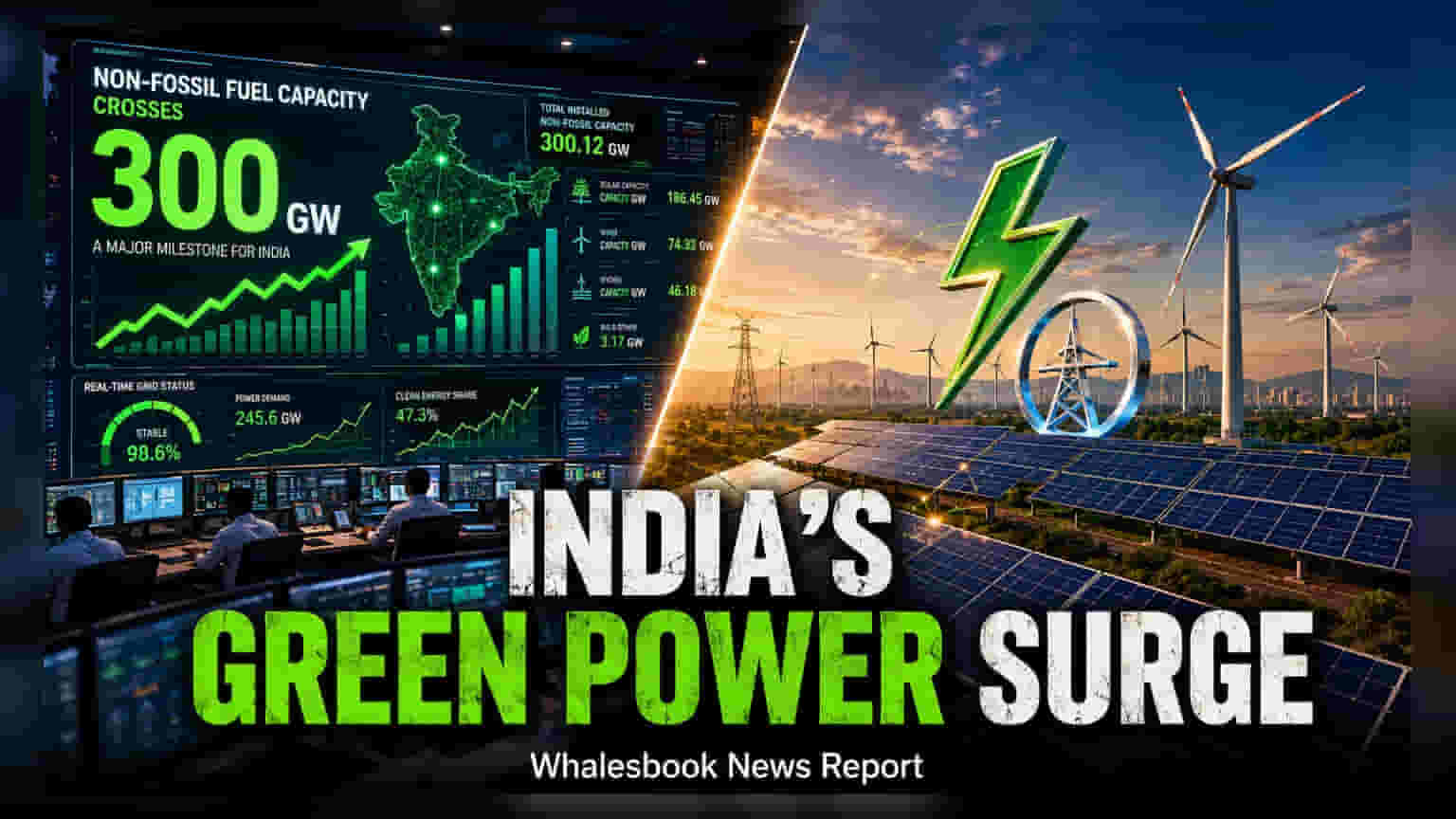
India has reached 300 GW of non-fossil fuel generation capacity, adding 30.58 GW in the first half of 2026. This milestone keeps the nation on track for its 500 GW target by 2030. While the sector is expanding, investors are monitoring risks such as the financial health of state distribution companies, grid integration needs, and the requirement for large-scale energy storage solutions.
The government has officially confirmed that India's non-fossil fuel electricity generation capacity has crossed the 300 GW mark. This achievement, announced by Union Minister Pralhad Joshi, reflects a major acceleration in the country’s energy transition. The nation added 30.58 GW of capacity in the first half of 2026, marking a 25% increase compared to the same period in 2025. Over the last two years alone, India has integrated approximately 90 GW of renewable energy, demonstrating a significantly faster pace of project implementation.
Expanding Rooftop Solar and Household Adoption
A central driver of this growth is the PM Surya Ghar Muft Bijli Yojana. The scheme has gained significant traction, with over 50 lakh households enrolled and installations increasing more than three times over the nine-month period ending in July 2026. Currently, around 16,000 households are installing solar rooftop systems every day. This initiative has not only increased local capacity to 14 GW but has also provided financial benefits to many households, with a large number of participants reporting zero electricity bills and some even generating income by selling surplus power back to the grid.
Investor Context and Sector Impact
For the Indian stock market, this surge in capacity is shifting capital flows toward the energy value chain. The focus is extending beyond power generation companies to include manufacturers of solar modules, balance-of-system providers, and companies involved in transmission and distribution infrastructure. As India moves toward its 500 GW target, the demand for high-voltage transmission networks, smart grids, and localized energy infrastructure is creating a structural shift in the business models of many utility and infrastructure firms. However, investors often differentiate between pure-play renewable developers and integrated utilities, as balance sheets and execution track records vary significantly across the sector.
Risks and Structural Challenges
While capacity additions remain high, the sector faces verified operational and financial risks. A primary concern for investors remains the financial health of state-owned electricity distribution companies, or DISCOMs. Payment delays from these utilities to renewable energy generators can impact cash flow and return ratios. Additionally, the rapid integration of intermittent solar and wind power creates technical pressure on the national grid. Managing this requires substantial and ongoing capital expenditure in battery energy storage systems and grid stabilization technology. Furthermore, the industry remains sensitive to global supply chain volatility for critical components like solar cells and battery raw materials, which could influence project costs and profit margins if input prices shift suddenly.
Next Monitorables
Investors are now tracking the execution of large-scale renewable tenders and the pace of investment in the National Green Hydrogen Mission. Future updates regarding the reduction of DISCOM debt, the cost trajectory of battery storage, and the stability of the power grid will be critical. The industry's ability to maintain these growth rates will depend on whether infrastructure spending keeps pace with the rapid addition of generation capacity.