

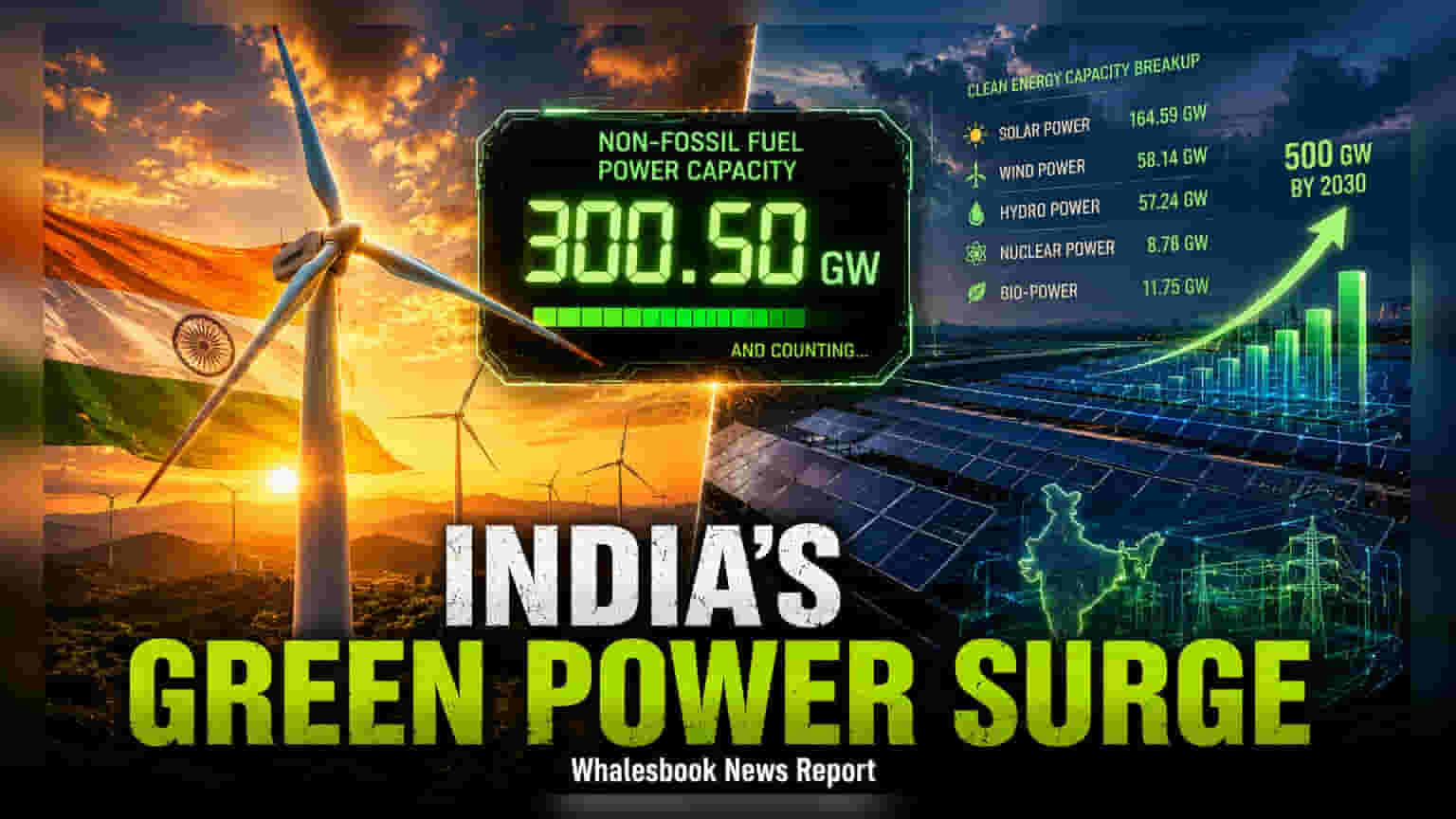
India has reached 300.5 GW of non-fossil fuel power capacity, accounting for over 54% of the country’s total electricity generation. While this marks significant progress toward the 500 GW target for 2030, investors should monitor ongoing challenges like power grid congestion and payment delays from state distributors.
India has officially reached a significant milestone in its energy transition, with non-fossil fuel power capacity surpassing 300 gigawatts (GW). According to government data as of July 31, 2026, the country’s installed clean energy capacity stands at 300.50 GW. This development signifies that clean energy now represents over 54% of India’s total electricity generation capacity of approximately 552 GW.
This progress marks a major step toward the nation's ambitious goal of achieving 500 GW of non-fossil fuel capacity by 2030. The current mix is diverse, with solar power leading the contribution at 164.59 GW, followed by wind at 58.14 GW and hydro power at 57.24 GW. Nuclear and bio-power also contribute to the total, providing a stable foundation for the grid.
Infrastructure Challenges and Risks
While the capacity growth is a positive sign for long-term energy security, the renewable sector faces practical hurdles that impact profitability and project viability. One of the primary risks for energy companies is grid congestion. In many regions, transmission infrastructure has struggled to keep pace with the rapid addition of new solar and wind projects. This has led to power curtailment—where developers are forced to reduce electricity generation because the grid cannot transport the energy to consumers.
Recent reports indicate that this issue has caused significant financial strain, with estimated losses in the renewable sector reaching 45 billion rupees since February 2025. Additionally, the financial health of state distribution companies, or DISCOMs, remains a critical monitorable for investors. Delays in payments by these state-owned utilities often create cash flow pressure for power producers, impacting their ability to service debt and fund future capital spending.
Future Outlook for Investors
Looking ahead, the private sector is expected to play an increasingly important role, potentially accounting for 63% of the additional capacity required to reach the 2030 targets. For investors, the focus remains on companies with efficient project execution and those managing their debt exposure effectively against rising project costs.
As the government pushes for further expansion, including emerging areas like green hydrogen and wind-solar hybrid infrastructure, market participants may keep a close watch on two key areas. First, whether new policies successfully address the transmission bottlenecks that currently lead to power loss. Second, whether reforms in the distribution sector improve the payment collection cycles, which would provide greater financial stability for power developers across the country.