

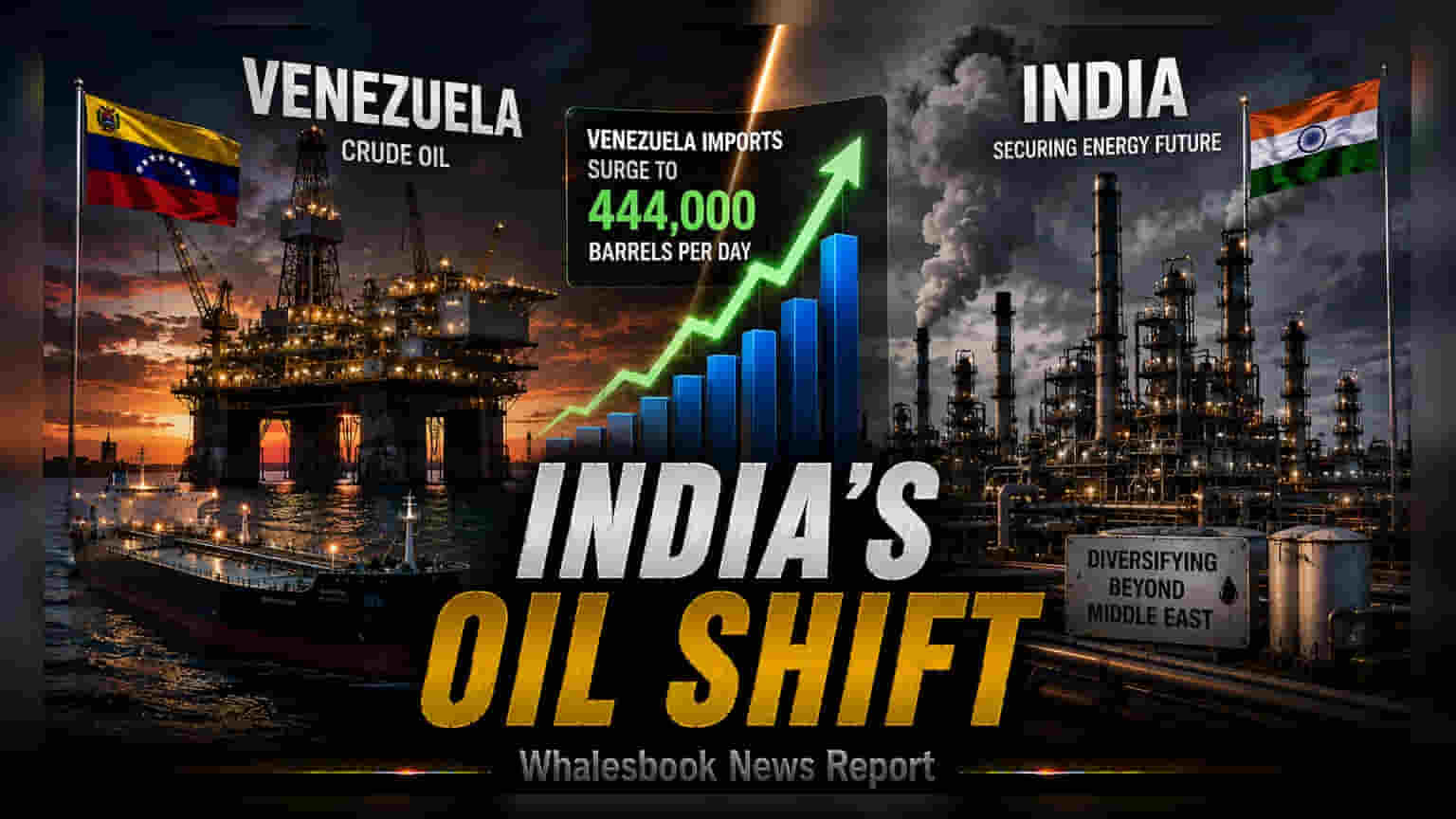
India has made Venezuela its fourth-largest crude oil supplier in August 2026 to mitigate Middle East supply risks. Beyond import volume, state-owned ONGC is resuming operations in the country, which may unlock over $500 million in long-pending dividends for the company.
India is actively diversifying its crude oil import sources, with Venezuela emerging as a key supplier in August 2026. Data indicates that Venezuelan crude imports have surged to approximately 444,000 barrels per day, making it the country's fourth-largest supplier. This strategic move aims to reduce heavy reliance on Middle Eastern routes, which have recently faced increased geopolitical tensions and concerns regarding potential disruptions at the Strait of Hormuz.
For investors, this shift involves more than just purchasing oil. State-run Oil and Natural Gas Corporation (ONGC) has secured a U.S. Office of Foreign Assets Control (OFAC) license to resume full-scale operations in Venezuela. This development is significant because it allows the company to potentially recover over $500 million in dividends that had been stuck due to past restrictions. The resumption of these operations is a positive signal for ONGC's balance sheet, though the timeline for the actual receipt of these funds remains a key monitorable.
While the diversification strategy enhances energy security, it comes with distinct challenges. Crude oil imported from Latin America involves longer transit routes compared to Middle Eastern supplies, which can lead to higher shipping, insurance, and freight costs. These expenses can impact the landing cost of oil, potentially affecting the profit margins of Indian refiners if they cannot pass on the costs to consumers.
Furthermore, the reliance on Venezuelan crude carries inherent geopolitical risks. Although current sanctions allow for this trade, any future changes in international relations or U.S. policy toward Venezuela could disrupt supply chains or impact the status of ONGC’s operations. India continues to maintain a strong dependence on Russian crude to meet its massive energy needs, and the addition of Venezuelan supply is designed to provide a hedge against regional volatility rather than replace the primary import basket entirely.
Investors should keep a close watch on the stability of these shipping routes and any updates regarding the repatriation of the $500 million in dividends. The ability of Indian refineries to maintain margins while balancing higher logistical costs and the geopolitical risks associated with diverse supply chains will remain important factors to track in upcoming quarterly results.