 Whalesbook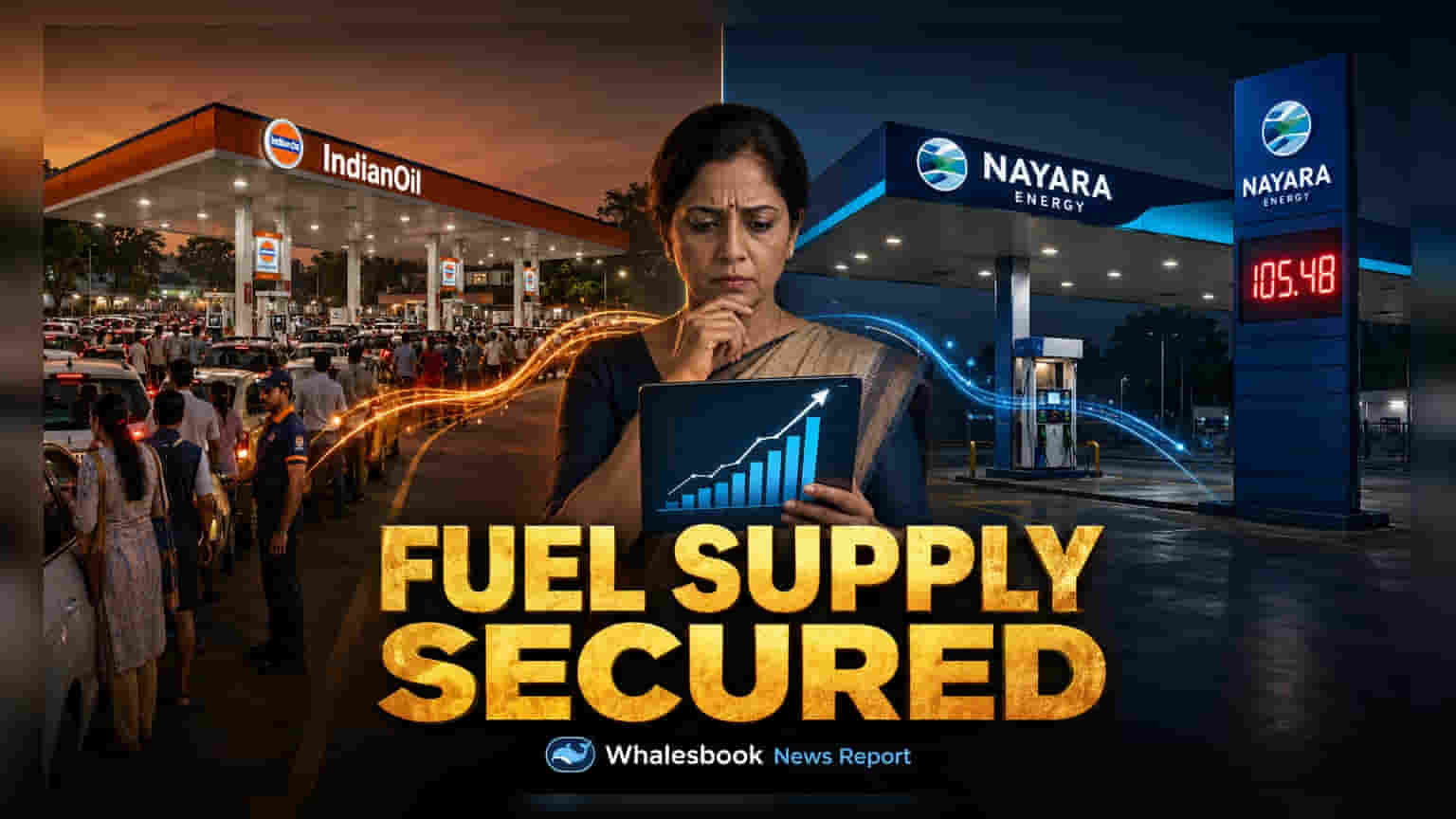


India's government is strategically managing fuel availability at public sector outlets to counter market volatility caused by private retailers' steep price increases. This situation highlights the challenge of balancing market-driven prices with the need to ensure essential fuel supplies, especially during the peak agricultural season.
Private Retailers Shift Strategy Amid Price Hikes
Nayara Energy and Shell have significantly raised prices, a move that has redirected consumers. In April, Nayara Energy reported a 30% drop in petrol sales and a 46% decrease in diesel sales year-over-year. Shell's diesel sales plummeted by 77%. In contrast, state-run fuel retailers experienced a nearly 9% rise in sales for both petrol and diesel, signaling a strong consumer shift towards more affordable options. Public sector undertakings are reportedly losing money on every liter sold at current prices. The significant gap of about ₹40-42 per liter between bulk diesel and retail diesel prices is a major driver for this surge in demand at PSU outlets.
Government Confirms Ample Fuel Stocks
The Ministry of Petroleum and Natural Gas has stated that India has sufficient reserves of crude oil, petrol, diesel, and natural gas. Joint Secretary Sujata Sharma mentioned that increased agricultural demand is a key factor in fuel sales growth. The government is monitoring distribution channels and conducting checks to prevent fuel diversion. India has secured fuel supplies for the next two months and maintains a total reserve of 74 days, including strategic reserves and company inventories, which is vital given global supply route uncertainties.
Market Dynamics and Consumer Behavior
Private retailers are adjusting prices to offset rising global crude oil costs, influenced by geopolitical events. This creates a price advantage for consumers favoring state-run stations. While Nayara Energy and Shell lost market share in April, RIL-BP, another private player, saw strong sales growth, showing varied strategies within the private sector. Agricultural sector demand also contributes to the overall surge. The government's assurance of stable supply and distribution monitoring aims to prevent panic buying.
Financial Strain on State-Owned Companies
State-owned oil marketing companies (OMCs) are facing financial pressure, absorbing losses by selling fuel below cost to maintain stable retail prices. Reports indicated daily losses of around ₹750 crore, which peaked at ₹1,000 crore before a recent ₹3 per liter price increase. Cumulative losses are substantial, raising concerns about OMCs' financial health and investment capacity. A bailout package for these losses is not currently planned, despite past government support for subsidized LPG. India's high reliance on imported crude oil, around 88% of its needs, exacerbates the impact of global price volatility.
Outlook for Fuel Supply
The government plans to ensure sufficient fuel availability and encourage bulk consumers to use their usual supply channels. Persistent agricultural demand and private retailers' pricing strategies will continue to influence the market. The government's active monitoring and assured reserves aim to maintain stability and prevent consumer inconvenience. Long-term strategies include promoting ethanol blending and alternative energy to reduce dependence on crude oil imports.