

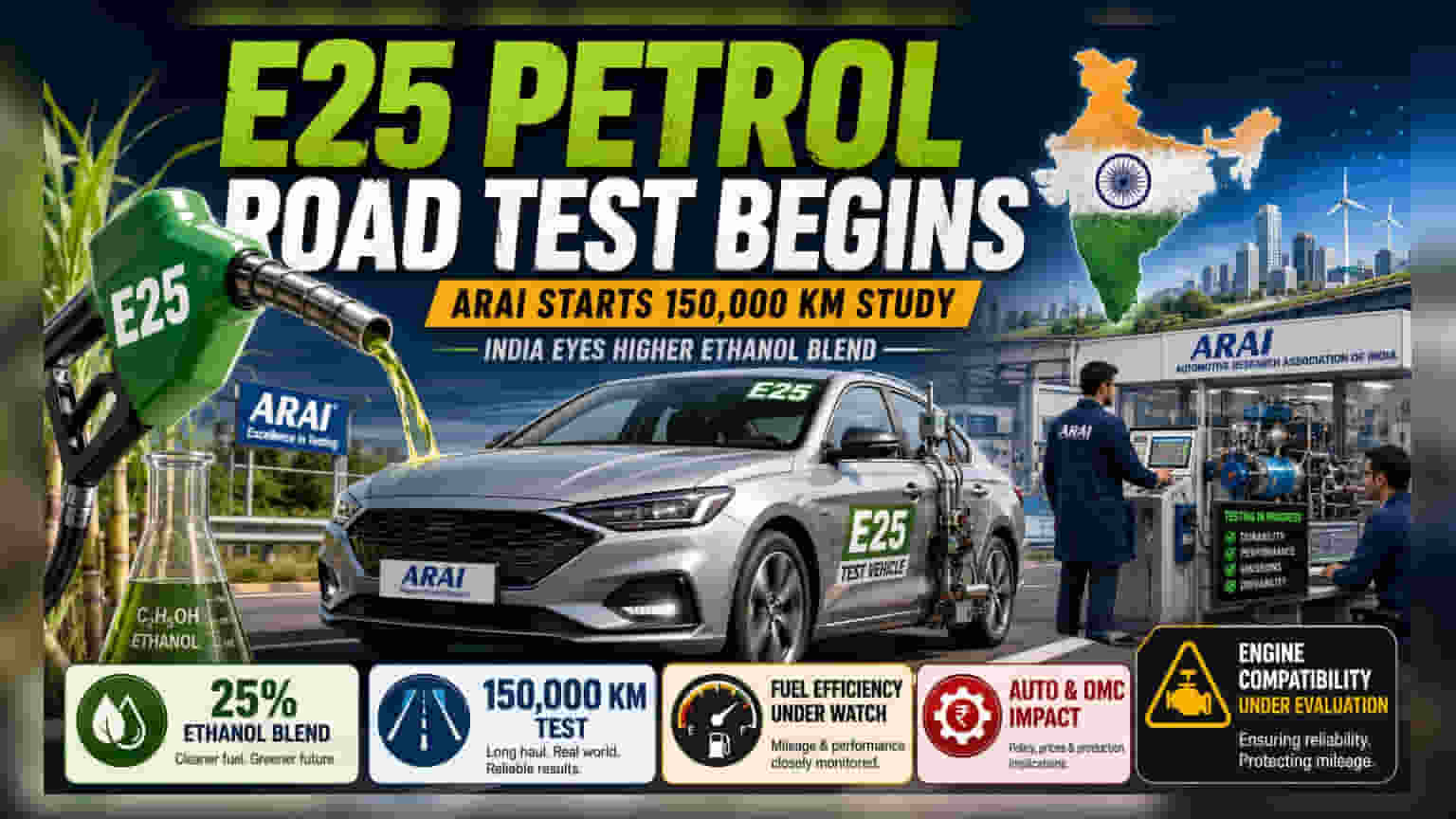
India has launched trials for E25 fuel (25% ethanol blend) via the Automotive Research Association of India. This testing follows the full rollout of E20 petrol, which has faced consumer complaints regarding fuel efficiency and engine health. Investors are watching this shift for potential impacts on automotive manufacturing costs and demand, as well as the outlook for biofuel producers and oil marketing companies.
What Happened
The Indian government has commenced road testing for E25 petrol, a fuel mixture containing 25% ethanol. The Automotive Research Association of India (ARAI) is managing this evaluation, which involves testing the performance and fuel efficiency of vehicles over a distance of 150,000 kilometers. This initiative is part of a broader government strategy to reduce dependency on imported crude oil by increasing the use of domestically produced biofuel.
The Consumer And Auto Context
This testing comes at a time when the earlier mandate of E20 petrol—which contains 20% ethanol—is still being absorbed by the market. Since the rollout of E20, many vehicle owners have reported concerns regarding lower fuel efficiency and potential damage to engines in vehicles not specifically optimized for higher ethanol blends. While government and industry officials have largely addressed these complaints, the concerns highlight the technical challenges of moving to higher ethanol mixtures.
Impact On Automotive Manufacturers
For the Indian automotive sector, the move toward E25 raises questions about engineering and manufacturing requirements. Vehicle manufacturers have been producing E20-compliant vehicles since April 2023. If the government decides to shift toward E25, automakers might face pressure to further adjust engine designs and fuel systems to ensure durability and performance. Any additional technical requirement could lead to higher research and production costs, which investors may monitor closely.
Ethanol Producers And Oil Companies
On the other side of the spectrum, the push for higher ethanol blends is generally seen as a potential growth area for the Indian sugar and distillery sector, which supplies the ethanol. Companies involved in ethanol production often view higher blending mandates as a signal of sustained demand. Meanwhile, Oil Marketing Companies (OMCs) stand to benefit from reduced import bills if ethanol blending succeeds, though they must also manage the logistics of distributing these blends nationwide.
What Investors Should Track
The next significant phase will be the completion of the ARAI study, which is expected by the end of next year. After the report is finished, the International Centre for Automotive Technology (ICAT) will conduct an independent review. The government’s final decision on mandating E25 will depend on these findings. Investors may keep an eye on official updates regarding vehicle compatibility, potential changes in manufacturing standards, and any new policies that could affect the profitability or operating costs of automakers and fuel retailers.