

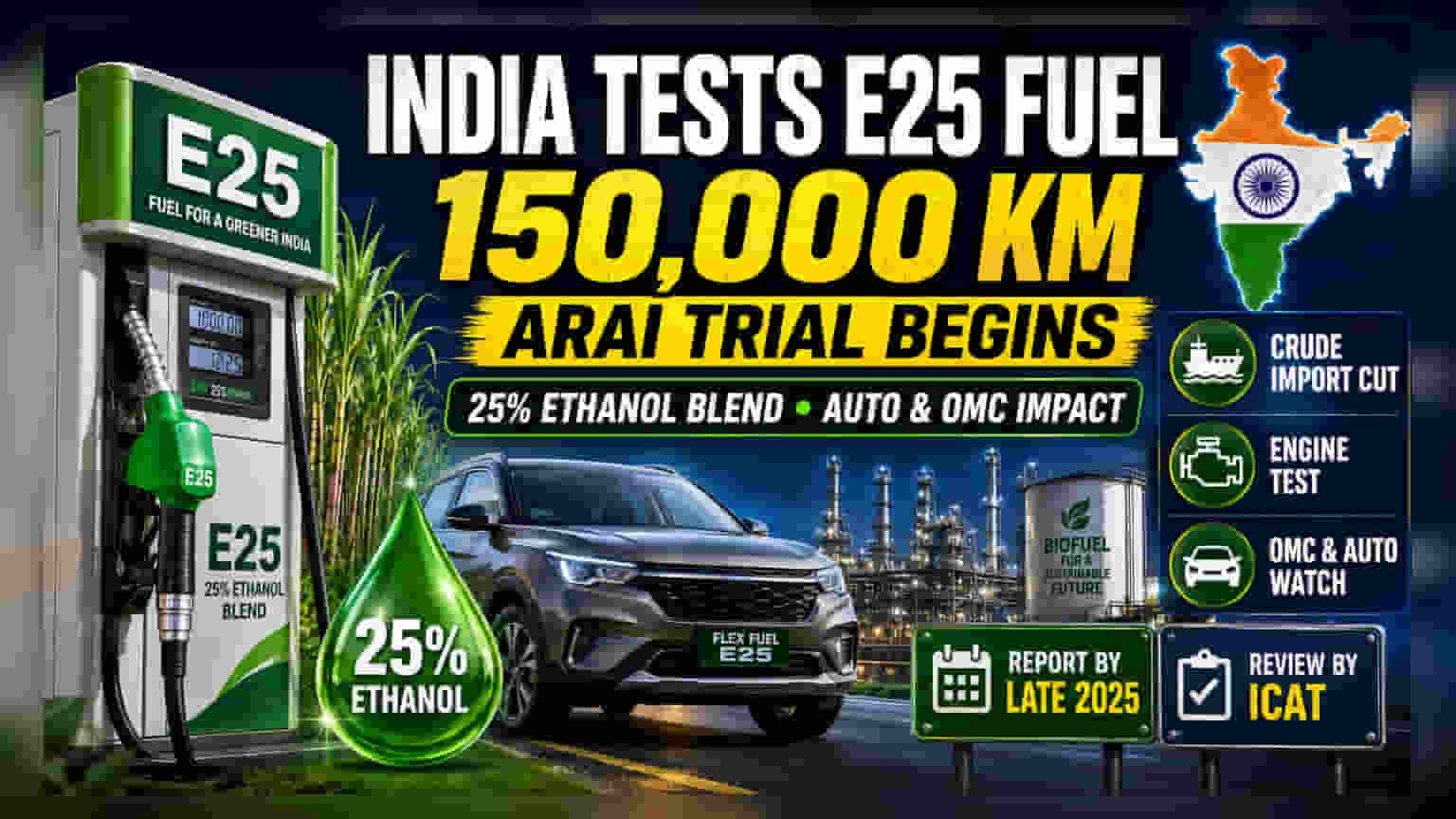
India has commenced testing E25 petrol, a fuel blend containing 25% ethanol, as part of its effort to reduce dependence on crude oil imports. The Automotive Research Association of India is conducting rigorous vehicle performance assessments. This move arrives while consumers continue to express concerns regarding fuel efficiency and engine compatibility associated with the existing E20 mandate.
What Happened
The Indian government has launched testing for E25 fuel, a petrol blend consisting of 25% ethanol. The Automotive Research Association of India (ARAI) is managing this trial, which involves a comprehensive 150,000-kilometer assessment to evaluate how vehicles handle this higher ethanol concentration. This initiative is a strategic step to promote domestic biofuels and reduce the country’s high dependence on imported crude oil. The final report from the ARAI is expected by late 2025, after which it will be reviewed by the International Centre for Automotive Technology (ICAT) before the Ministry of Petroleum & Natural Gas makes a final decision on a national mandate.
Why This Matters For The Business
This shift carries significant implications for several sectors. For Oil Marketing Companies (OMCs) like Indian Oil, HPCL, and BPCL, the push for higher ethanol blending is a key regulatory driver that influences their long-term fuel strategy and operational costs. For automobile manufacturers, the transition requires engineering vehicles that can handle the specific chemical properties of higher ethanol blends without sacrificing performance or longevity. If E25 becomes mandatory, automakers may need to invest in engine modifications or materials compatible with this blend, which could impact their capital expenditure and R&D budgets.
The E20 Experience And Technology Risks
The move toward E25 comes while the market is still adjusting to the E20 mandate—petrol with 20% ethanol—which was implemented in April 2023. Since the rollout of E20, many vehicle owners have reported concerns regarding lower fuel efficiency and potential long-term engine damage in non-compliant models. While industry and government officials have stated that E20 is safe for compliant vehicles, the public perception and technical feedback remain mixed. Investors should note that a transition to E25 could intensify these concerns if technical performance does not meet consumer expectations or if the costs of maintaining vehicle engine health increase.
What Investors Should Track
Going forward, the primary factor for investors is the outcome of the ARAI study. The findings will provide clarity on whether the current engine technology used in E20-compliant vehicles can be adapted for E25 or if entirely new modifications are required. Additionally, market participants will monitor the government's approach to the rollout, specifically whether it will be gradual or aggressive, as this affects the timeline for automotive companies to upgrade their fleets. Furthermore, any official communication regarding fuel efficiency and engine durability testing results will be crucial for understanding potential market resistance or acceptance of higher ethanol blends.