

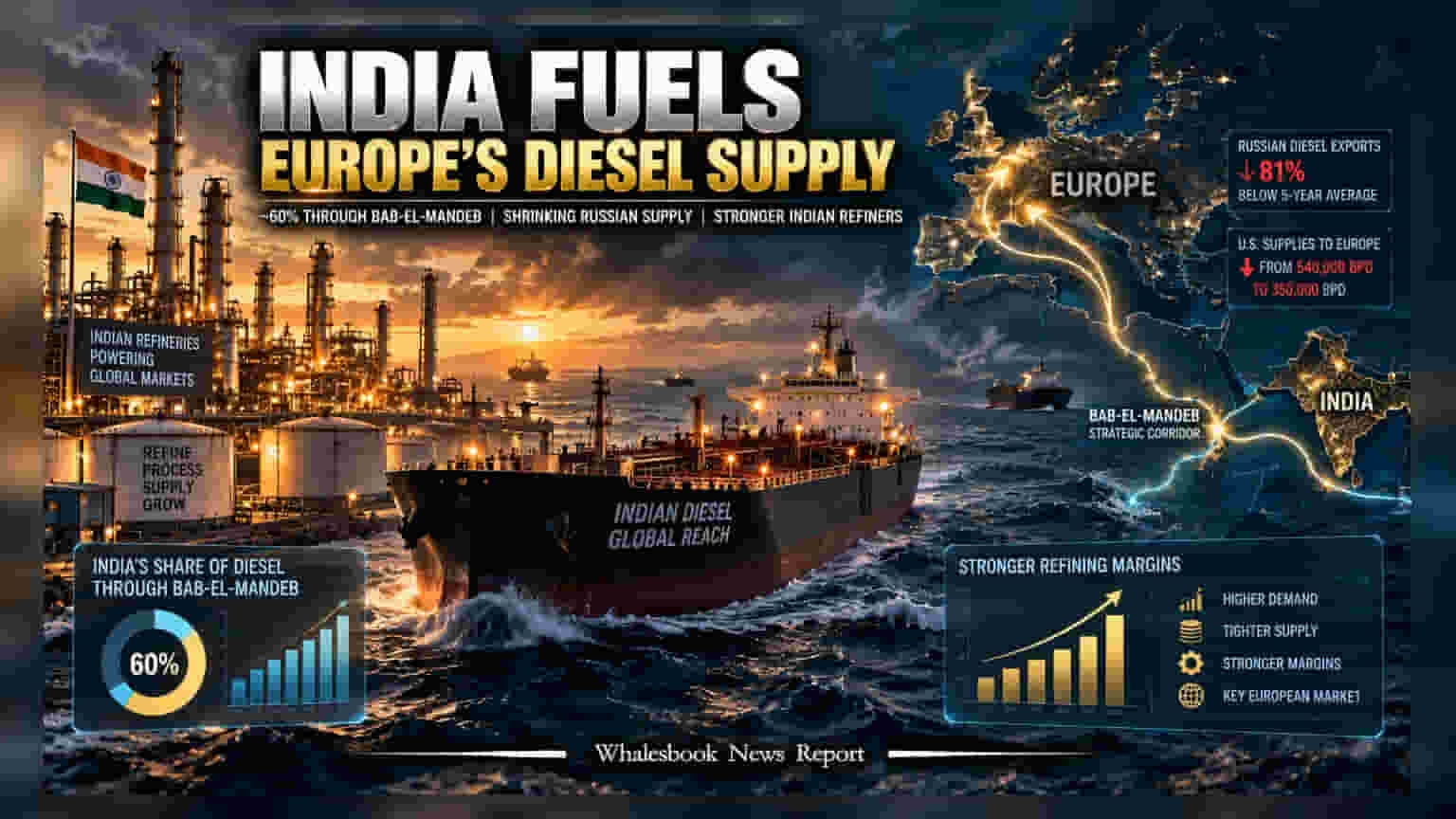
India now provides 60% of diesel moving through the Bab-el-Mandeb route as Europe faces a critical fuel shortage before winter. With Russian exports down by 81% and US shipments declining, Indian refineries are seeing higher export demand. While this shift could support refining margins, investors should monitor geopolitical risks and crude supply constraints that may affect future output.
India has rapidly increased its role as the primary supplier of diesel to Europe, supplying roughly 60% of the fuel passing through the strategic Bab-el-Mandeb maritime corridor as of August 2026. This realignment follows a significant reduction in alternative global supplies, positioning Indian refineries as a critical source for Europe as it prepares for high fuel demand in the upcoming winter season.
The supply vacuum in Europe is primarily driven by the sharp decline in Russian gasoil and diesel exports, which have fallen 81% below their five-year seasonal average. Persistent disruptions to Russian refining infrastructure, combined with an extension of Russia’s domestic diesel export ban until September 30, 2026, have effectively removed a massive volume of fuel from the global market. Concurrently, US shipments to Europe have also contracted, falling from a peak of 540,000 barrels per day in early August to around 350,000 barrels per day by the end of the month.
For investors, the immediate impact of this supply gap is on refining margins. When global supply is constrained, the gap between the cost of crude oil and the price of finished products like diesel—known as the crack spread—often widens. For Indian refiners, this environment can lead to stronger profitability on export sales. Large energy companies and public sector oil marketing firms are currently operating in a market where their product is highly sought after by European buyers, potentially boosting revenue from export-oriented refining operations.
However, this export-heavy scenario brings specific risks that investors should monitor. While demand is high, India’s crude oil intake has shown signs of volatility, falling to 3.8 million barrels per day in August compared to 4.8 million a year earlier. Any sustained difficulty in sourcing crude or maintaining high utilization levels at refineries could limit the ability to fully capitalize on export opportunities. Furthermore, the supply chain remains highly sensitive to geopolitical tensions. Key maritime routes like the Strait of Hormuz and the Bab-el-Mandeb are critical for trade; any escalation in regional conflict could disrupt tanker movements, increase freight costs, and create supply chain bottlenecks that offset the benefits of higher diesel demand.
As Europe heads into the winter months with lower-than-average fuel stocks, the pressure on the global supply chain is unlikely to ease immediately. The key monitorables for the coming quarters will be the stability of refining operations, the consistency of crude oil imports, and the evolution of geopolitical conditions that govern global energy shipping lanes. Investors may also track whether Indian refiners prioritize domestic energy security requirements against the lure of higher margins from lucrative European export orders.