

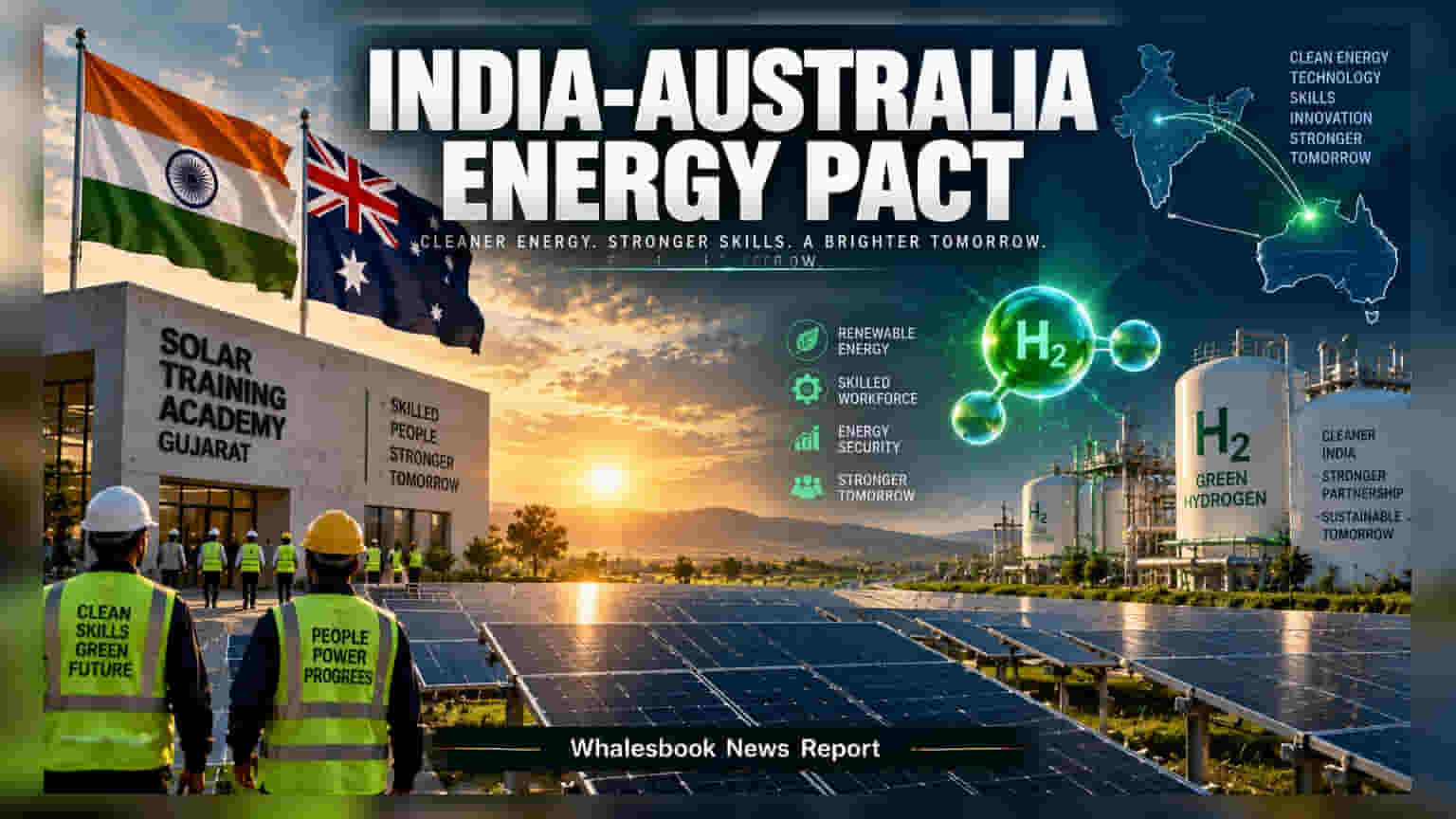
India and Australia are strengthening their renewable energy partnership with a new training facility in Gujarat. The academy will upskill 2,000 technicians to support the rapid growth of solar infrastructure. This collaboration focuses on building secure green energy supply chains to reduce dependence on external energy sources.
India and Australia have expanded their energy cooperation with the launch of a new solar training academy in Gujarat. This facility aims to bridge a critical gap in the renewable energy sector by training 2,000 technicians. The initiative comes as India aggressively pursues its target of 500 gigawatts of non-fossil fuel capacity by 2030, a goal that requires a massive, skilled workforce to install and maintain solar projects.
Beyond basic solar infrastructure, the two nations are aligning their research and development efforts in green hydrogen. This collaboration is designed to increase industrial capacity in both countries while securing supply chains against global market volatility. Such partnerships are increasingly important as India works to localize the production of renewable components to reduce import reliance, which has historically been a challenge for the domestic solar sector.
Energy security remained a focal point of discussions between Australian Climate Minister Chris Bowen and Indian policymakers. The dialogue included leaders from domestic industry giants, such as Reliance Industries, which is currently investing heavily in its own solar manufacturing and green energy ecosystem. These discussions highlight how large private sector players are key to executing India’s energy transition. The focus is not just on generating power, but on building a self-sustaining supply chain that can withstand geopolitical pressures.
Australia also clarified its stance on its role as a resource exporter. While committing to the green energy transition, the country continues to maintain that coal remains a necessary part of the current energy mix. This pragmatic approach acknowledges the economic reality of the coal trade while aiming to support the global move toward decarbonization through managed transitions. For investors, this balance is a critical monitorable, as it dictates the pace at which traditional energy infrastructure is replaced by cleaner alternatives in global trade.
The partnership also looks ahead to the upcoming COP31 summit in Antalya, Turkey. The focus is shifting toward practical climate finance and ensuring that resources actually reach the countries that need them most for resilience. For the Indian renewable sector, the success of this collaboration will depend on whether the training programs can effectively scale to meet industry demand and whether the technology transfers from Australia result in lower costs for Indian manufacturers. Investors should monitor the commissioning of this training facility and the progress of joint green hydrogen projects, as these will serve as early indicators of the partnership's operational effectiveness.