

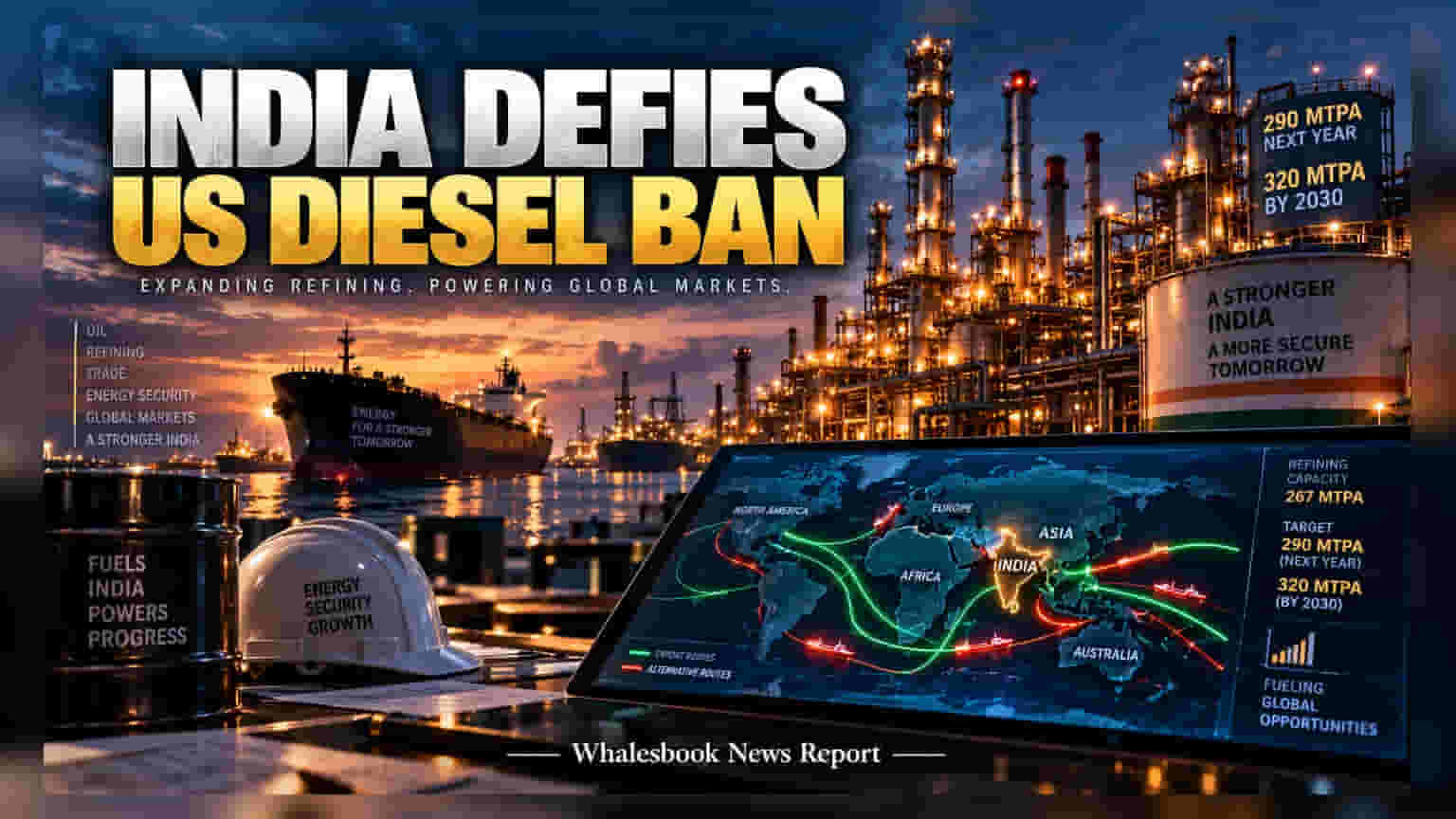
Oil Minister Hardeep Singh Puri has confirmed that India will maintain its global diesel supply commitments, targeting a refining capacity of 320 MTPA by 2030. This expansion strategy aims to solidify India's role as a major energy supplier, which is important for the long-term revenue outlook of companies like Reliance Industries, Indian Oil, BPCL, and HPCL.
India is set to aggressively expand its oil refining infrastructure to secure a larger share of the global energy market. Oil Minister Hardeep Singh Puri stated that the country aims to increase its refining capacity to 290 million tonnes per annum (MTPA) within the next year, with a long-term goal of reaching 320 MTPA by 2030. This infrastructure push is designed to ensure that India can meet both rising domestic fuel needs and international supply contracts, regardless of potential fluctuations in global trade policies.
Scaling Up Refining Infrastructure
The current refining capacity in India stands at approximately 267 MTPA. By increasing this capacity, state-owned giants such as Indian Oil Corporation (IOC), Bharat Petroleum (BPCL), and Hindustan Petroleum (HPCL), along with private refiners like Reliance Industries, are positioning themselves to capture more value from international trade. India currently handles about 10% of global seaborne diesel shipments, effectively filling a supply gap created by geopolitical instability and shifting trade flows in markets like Russia and Europe.
For investors, this capacity expansion is a significant long-term factor. Larger throughput allows these refineries to potentially process more crude oil when margins are favorable. However, the profitability of these refining businesses remains sensitive to international crude prices and Gross Refining Margins (GRM), which fluctuate based on global demand and geopolitical conditions in West Asia and other regions. The ability to maintain steady operations, even during times of maritime tension, has been a key selling point for attracting foreign investment into the sector.
Strengthening India's Global Energy Role
The government’s commitment to honoring international fuel contracts is viewed as a strategy to build long-term credibility as a reliable energy partner. By securing state-to-state agreements, such as the recent five-year diesel supply contract with Mauritius, India is reducing its vulnerability to the volatility often seen in open spot markets. This reliability is critical, as it encourages partnerships with global energy leaders and ensures that Indian refiners have a steady outlet for their products.
While the expansion plans are ambitious, investors often track how effectively these companies execute such large-scale projects and manage their debt levels during these capital-intensive phases. As India continues to integrate further into global energy supply chains, the ability of domestic refineries to navigate shifting geopolitical landscapes and maintain efficient operations will be the primary monitorable for the energy sector in the coming years.