

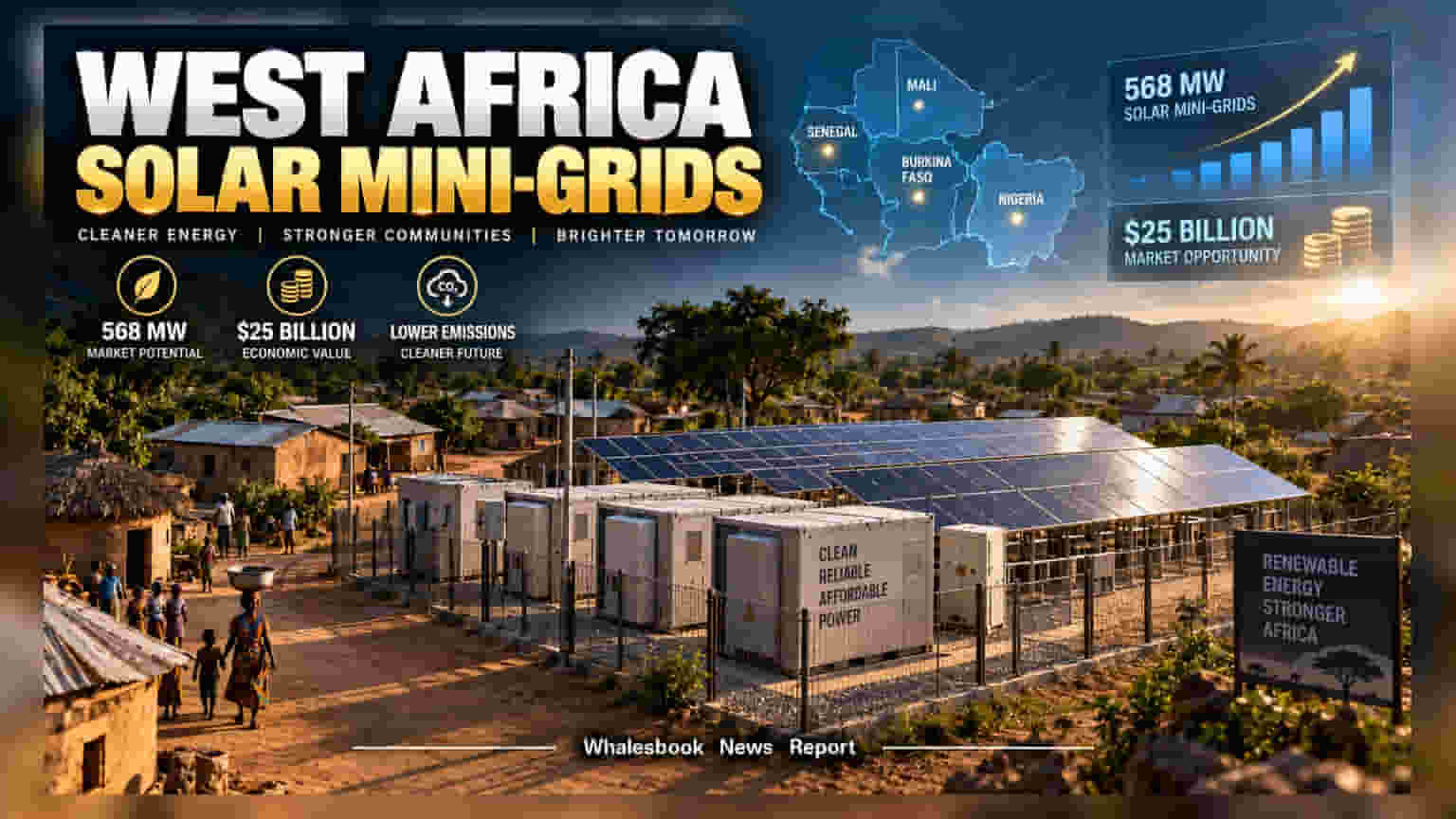
The International Renewable Energy Agency (IRENA) identifies a 568-megawatt market opportunity for solar mini-grids in West Africa, holding a potential economic value of $25 billion. As countries like Nigeria move to displace diesel power, this emerging region is becoming a new growth area for global energy infrastructure players, including Indian solar firms with expertise in renewable technology and large-scale project execution.
A new analysis by the International Renewable Energy Agency (IRENA) has spotlighted a significant shift in West African power infrastructure. The agency has identified a market potential for 568 megawatts of solar photovoltaic mini-grids across Nigeria, Burkina Faso, Mali, and Senegal. This transition is aimed at replacing costly and carbon-heavy diesel generators with battery-integrated solar systems, offering a potential economic value of up to $25 billion in regions where traditional grid expansion is not feasible.
The Shift from Diesel to Renewables
The economic case for this transition is driven by the sharp decline in technology costs. According to industry data, the cost of solar photovoltaic modules and battery storage systems has fallen by approximately 93% since 2010. This drop has made renewable mini-grids competitive, especially in remote areas that rely on expensive imported fuel. Nigeria holds the largest share of this identified capacity, accounting for roughly 400 megawatts of the total target, as the nation seeks to provide reliable electricity to rural areas that are currently off the conventional grid.
Implications for Indian Solar Players
For the Indian solar sector, this development is relevant as Indian companies have established themselves as global leaders in both solar manufacturing and engineering, procurement, and construction services. Many domestic firms that have mastered the deployment of solar parks and rooftop systems in India are increasingly looking toward export markets in emerging economies. The West African drive for decentralized energy could provide a growing market for Indian-made components like solar panels, inverters, and battery management systems. Furthermore, Indian engineering firms with experience in challenging rural electrification projects are well-positioned to bid for technical consultancy and infrastructure development contracts in these regions.
Risks and Execution Challenges
While the $25 billion estimate highlights a major long-term opportunity, the path to implementation faces several structural hurdles. The sector requires substantial upfront capital, which necessitates the use of blended finance models and de-risking mechanisms to attract private investors. Additionally, success depends on the establishment of clear regulatory frameworks and the availability of local technical training to ensure that the systems remain operational. Without these foundational elements, the gap between the planned capacity and actual deployment may remain wide, regardless of how low technology costs become.
Investors tracking the renewable energy sector should monitor how these West African nations structure their energy tenders and financing agreements. The pace of project awards and the ability of regional governments to implement the required policy reforms will be the primary indicators of whether this $25 billion potential translates into actual order books for global energy and infrastructure companies.