

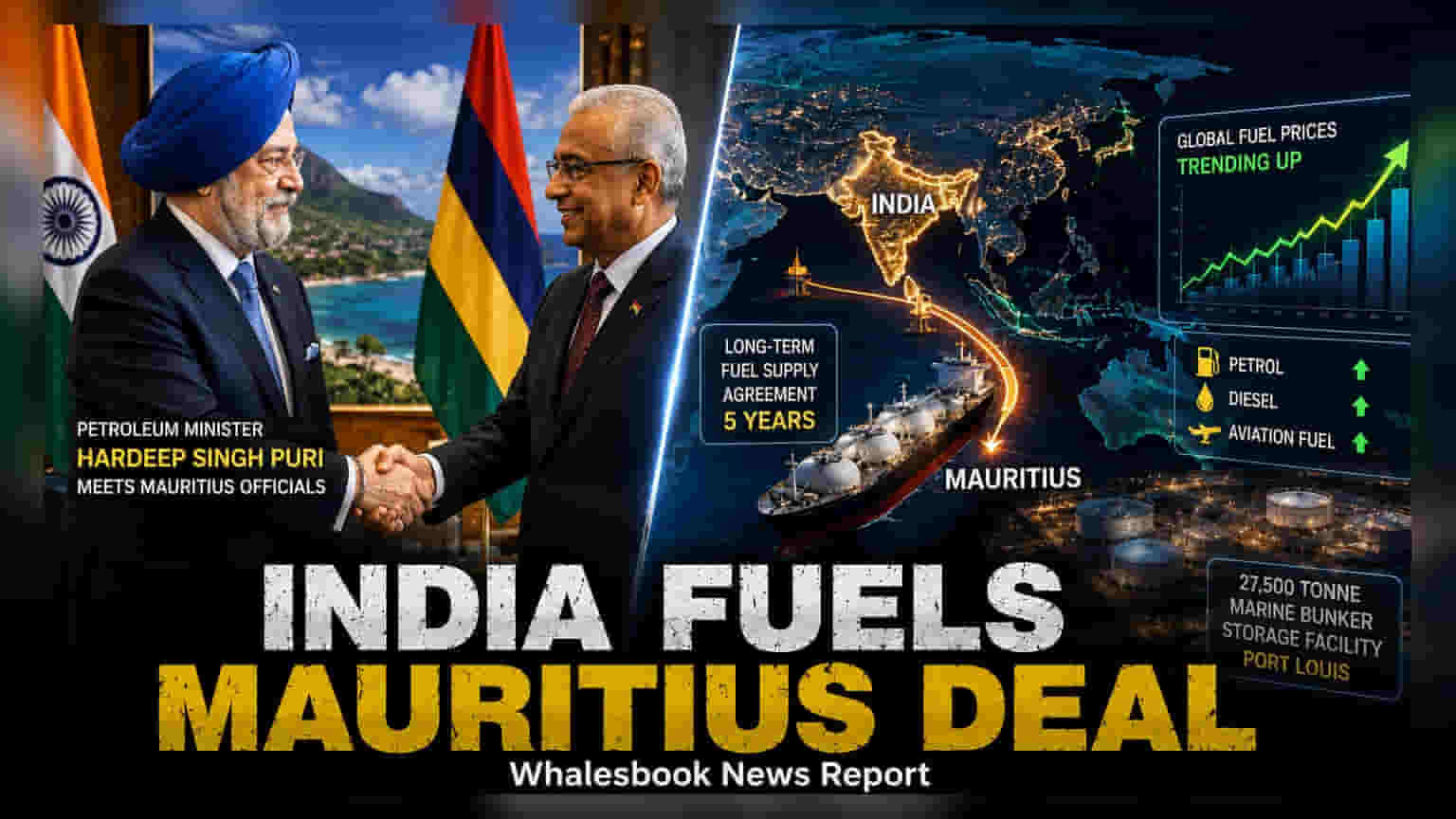
Indian Oil Corporation has secured a landmark five-year agreement to become the exclusive fuel supplier for Mauritius. The deal, covering petrol, diesel, and aviation fuel, marks a significant export expansion for the company. While the financial details remain undisclosed, the move strengthens India's energy footprint in the Indian Ocean.
Indian Oil Corporation (IOC) has entered a multi-year energy partnership with Mauritius, marking a significant step in the company's export strategy. Under this agreement, the state-owned refiner will serve as the sole supplier for the island nation's total import requirements of petrol, diesel, and aviation turbine fuel for the next five years. This arrangement was formalized during Petroleum Minister Hardeep Singh Puri’s visit to Mauritius earlier this week.
This agreement is notable as it represents the first long-term fuel supply contract signed by an Indian public sector oil marketing company with a country outside of South Asia. While India has long provided steady fuel supplies to neighbors like Nepal and Bhutan, this expansion into the Indian Ocean region signals a broader shift to position India as a dependable energy hub for its maritime partners.
The collaboration extends beyond simple supply. IOC is also working on a 27,500-tonne marine bunker fuel storage facility in Port Louis, for which a groundbreaking ceremony was recently held. This infrastructure project is designed to bolster Mauritius' fuel storage capabilities, which may improve the efficiency of IOC's distribution network in the region.
For investors, the immediate impact of this deal remains to be seen, as the specific financial volumes and pricing mechanisms have not been publicly disclosed by the company. Shareholders may want to monitor how this partnership influences IOC's export margins in future quarterly reports. Profitability in such long-term export contracts often depends on international fuel price trends and the efficiency of logistics. Shipping and freight expenses can be a major variable in these agreements, and global maritime routes remain sensitive to geopolitical factors that can cause price volatility.
The next important update for investors will be any management commentary regarding the pricing structure and whether this contract sets a framework for similar agreements in other international markets. Investors may also track how the company balances this export commitment with domestic demand requirements, as India's primary focus remains on securing fuel for its own rapidly growing economy.