 Whalesbook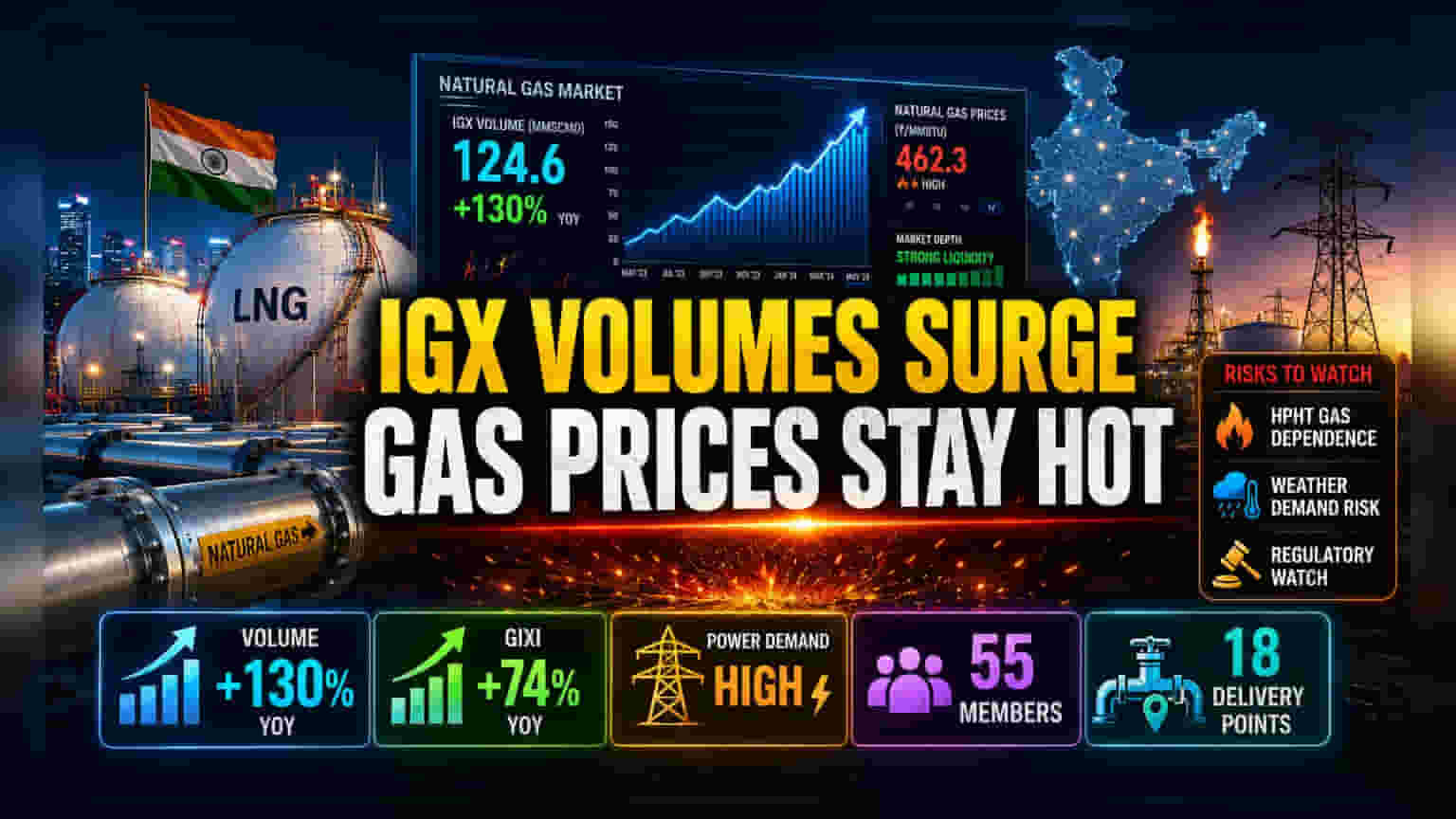


The Shift to Exchange-Based Procurement
The rapid escalation in IGX trading activity indicates a structural transition in how India sources its energy. Rather than relying solely on traditional long-term bilateral contracts, utility providers are increasingly turning to spot market mechanisms to meet immediate baseload requirements. This liquidity influx suggests that the exchange is no longer a peripheral utility but a primary venue for price discovery, as market participants seek to hedge against the volatility inherent in domestic gas supply chains.
Analyzing the Price-Volume Divergence
While the 130% jump in volume commands attention, the 74% year-on-year increase in the GIXI index points to a systemic supply strain that transcends simple seasonality. As temperatures remain elevated, the power sector's desperate need for fuel has allowed producers to command premium pricing. When comparing this to broader commodity benchmarks, the GIXI-Dahej performance remains critical; despite rising 15.83% month-on-month, it continues to trade at a discount to traditional landed LNG prices. This spread is precisely why industrial consumers and city gas distributors are flocking to the platform, viewing the exchange as a cost-efficient alternative to imported cargoes that are subject to global freight and arbitrage fluctuations.
The Forensic Bear Case
Despite the growth, reliance on exchange-traded gas carries significant downside risks. The high concentration of trading in government-notified HPHT gas, which accounts for roughly 40% of the volume, suggests that the market’s liquidity is tethered to administrative pricing rather than pure market-clearing equilibrium. Should government policies shift regarding these ceiling prices, the exchange could experience a sharp decline in attractiveness. Furthermore, the reliance on weather-dependent power demand creates a cyclical weakness. If the cooling season subsides or if coal-based generation capacity increases, the sudden withdrawal of power-sector demand could lead to a liquidity vacuum. Investors should also monitor the regulatory environment, as IGX operates under the strict oversight of the Petroleum and Natural Gas Regulatory Board, which could impose stricter margin requirements or trading limits if market volatility begins to threaten the stability of the broader domestic energy market.
Future Outlook
As registered membership climbs to 55 with the addition of major players like Trafigura, the long-term outlook for IGX rests on its ability to expand pipeline interconnections and integrate more delivery points. Analysts anticipate that as the infrastructure footprint widens, the exchange will become more resilient to localized supply shocks. The ongoing expansion of the 18 existing delivery points is expected to facilitate better arbitrage opportunities, potentially stabilizing prices even as national consumption patterns remain erratic.