 Whalesbook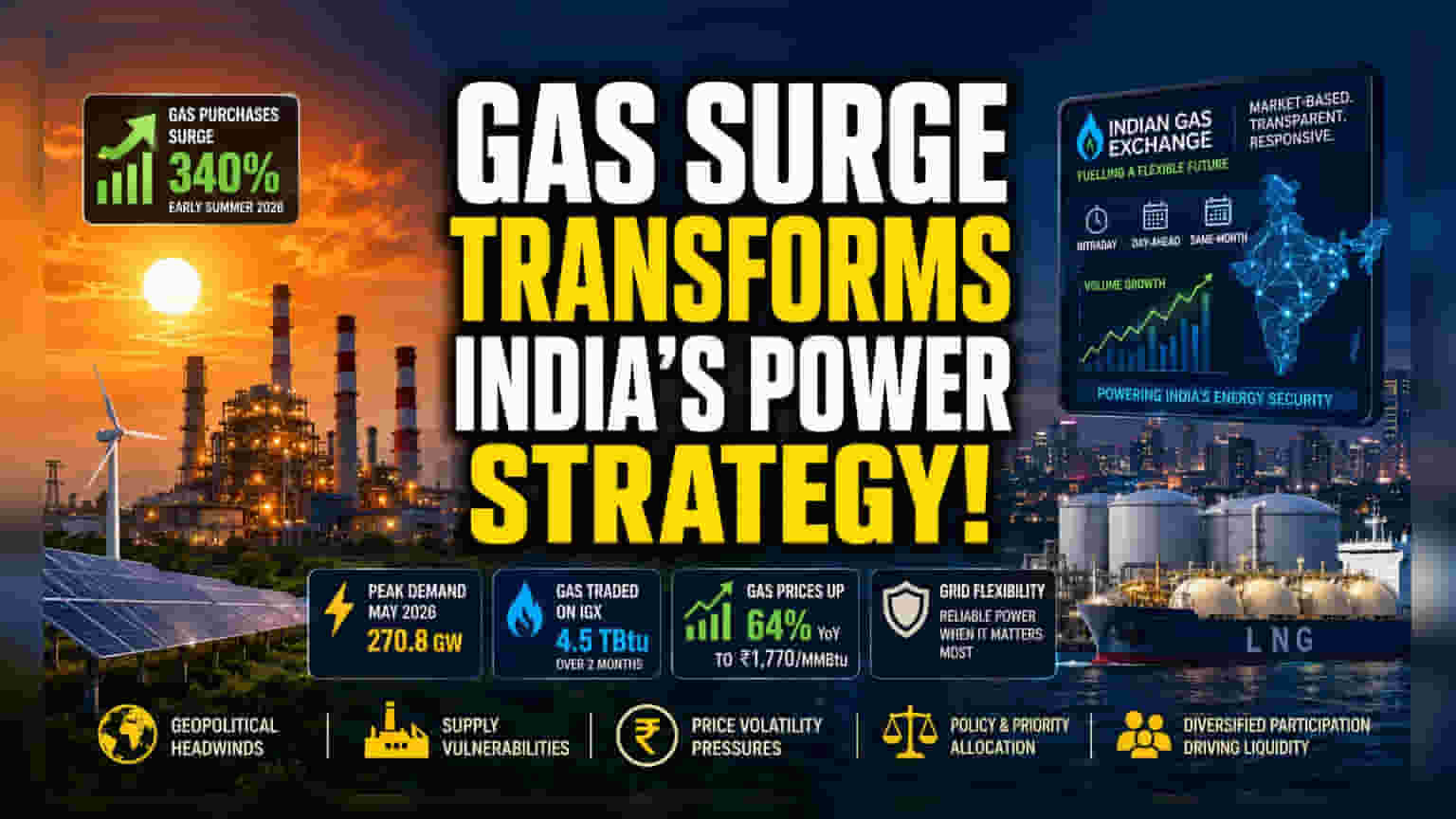


The Catalyst: Grid Flexibility in a Heatwave
The 340% increase in gas purchases on the Indian Gas Exchange during the early summer of 2026 highlights a critical evolution in India’s power management strategy. While coal remains the primary baseload source and solar energy dominates daytime capacity, gas-fired plants have transitioned into a strategic necessity for grid balancing. With India’s peak electricity demand scaling to 270.8 GW in May 2026, the absence of solar generation during evening and night hours has forced grid operators to rely on the rapid-response capabilities of gas-based plants. This operational shift is reflected in the 4.5 TBtu of natural gas transacted on the IGX platform over two months, a move that signals a transition away from traditional, rigid procurement models toward more responsive, market-based mechanisms.
Analytical Deep Dive: The Market Infrastructure Pivot
Unlike traditional bilateral power purchase agreements, the rise in IGX activity reflects a structural change in how generation companies approach fuel procurement. The platform’s ability to offer intraday, day-ahead, and same-month delivery options allows participants to hedge against both price volatility and real-time generation requirements. This growth is occurring despite significant headwinds in the global energy environment. Geopolitical tensions in West Asia—a region that traditionally supplies a significant portion of India's LNG—have created supply unpredictability, resulting in a 64% year-on-year increase in average gas prices on the exchange to Rs 1,770 per MMBtu. While this price surge threatens profitability for independent power producers, the necessity of maintaining grid uptime during peak cooling cycles has effectively prioritized volume over cost, positioning the exchange as a vital barometer for domestic energy security.
The Bear Case: Structural Vulnerabilities
Despite the recent volume growth, the reliance on gas-fired generation carries substantial risks. The 2026 supply crisis, precipitated by disruptions at major maritime chokepoints, demonstrated that India’s gas system remains acutely vulnerable to import dependencies. Government directives have frequently reallocated gas supplies to priority sectors like fertilizer production and city gas distribution, periodically leaving power generators with insufficient fuel. Furthermore, the economic viability of gas-based power is inherently fragile; high global LNG prices and limited domestic production often force a pivot toward coal to keep end-user tariffs manageable. Investors should also note that while IGX has demonstrated strong volume growth and fee-based revenue expansion, the platform’s long-term success is tethered to the government's 15% energy basket target, which has faced historical implementation hurdles and competition from cheaper, subsidized energy sources.
Future Outlook
Market consensus suggests that while current volumes are driven by short-term summer demand, the exchange is building a more robust financial and infrastructure framework to support long-term liquidity. As the government continues to promote a market-based gas economy, the focus for IGX will likely shift toward increasing the availability of forward contracts and expanding participation from diverse industrial sectors. With an IPO anticipated by the end of 2026, the company’s ability to maintain these volume gains amidst shifting geopolitical landscapes remains the primary indicator for future valuations.