 Whalesbook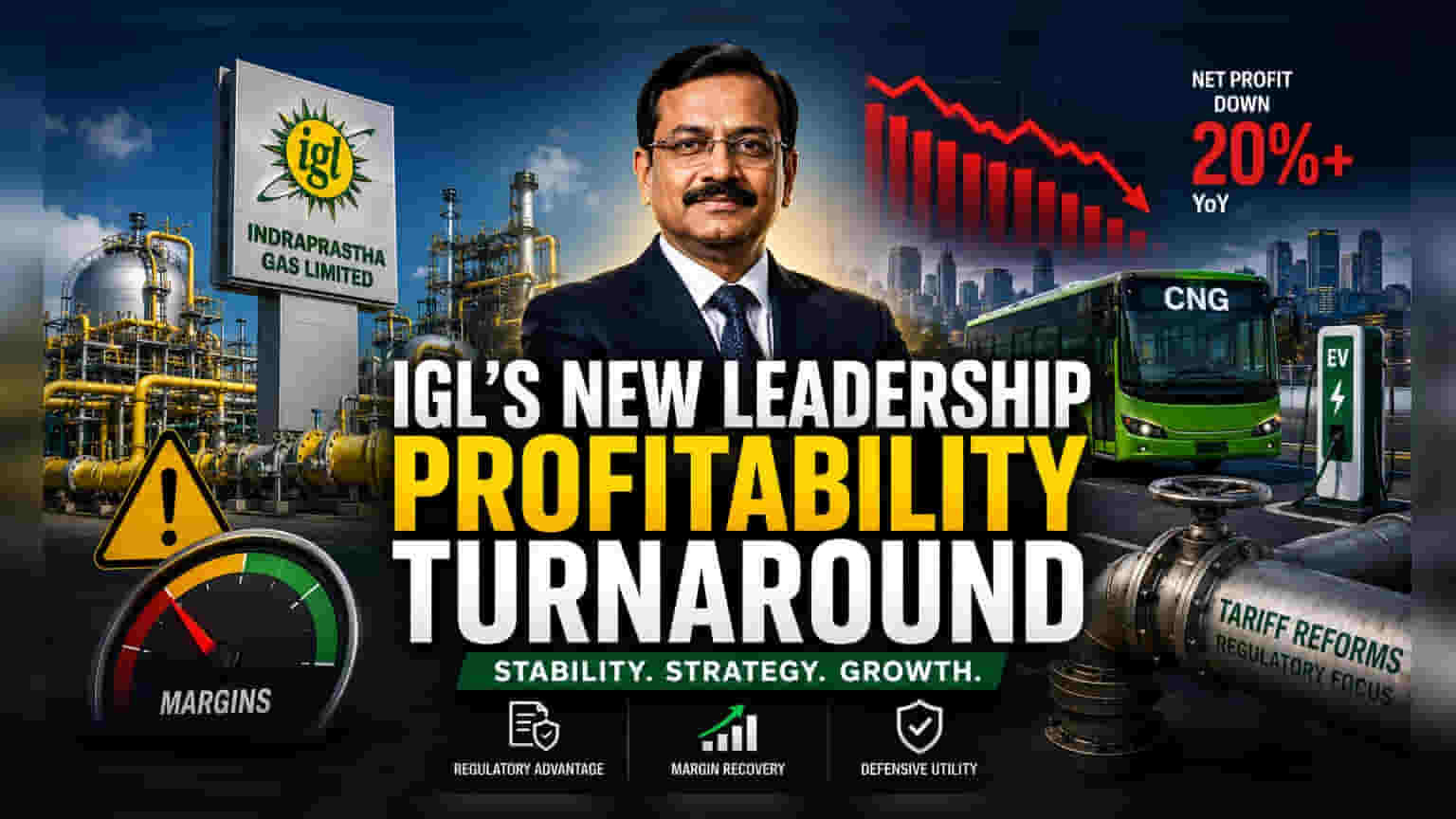


The Shift to Regulatory Resilience
The appointment of Kumar Shanker as Managing Director of Indraprastha Gas marks a pivot from general operational management to a strategy rooted in regulatory navigation and structural efficiency. While outgoing MD Kamal Kishore Chatiwal managed the company during a period of record top-line growth, that performance was heavily undercut by persistent margin contraction. Shanker, a chemical engineer with three decades of experience at GAIL and a successful tenure at Maharashtra Natural Gas, enters with a mandate to reverse the slide in profitability that defined IGL’s fiscal year 2026.
The Profitability Gap
IGL currently faces a paradox: it is generating its highest-ever revenues, yet its bottom line has failed to keep pace. Recent quarterly data highlights a stark divergence, where consolidated net profit dropped by over 20% year-on-year, driven by rising operational expenses and competitive pricing pressures in the city gas distribution sector. Unlike previous years, where volume growth easily masked cost inefficiencies, the market is now punishing the firm for its eroding EBITDA margins per standard cubic meter (SCM). Shanker’s background in pipeline open access and tariff reform suggests the company may prioritize securing regulatory advantages—such as favorable gas allocation and tariff rationalization—to create the necessary breathing room that volume growth alone can no longer provide.
Competitive and Structural Risks
The fundamental threat to IGL’s long-term thesis is the accelerating migration of public transit, particularly Delhi’s bus fleet, toward electric propulsion. This "EV disruption" is not theoretical; it is already reflected in the slowing growth rates of the CNG segment, which serves as the bedrock of IGL’s monopoly. While competitors like Adani Total Gas are aggressively pursuing geographic expansion to diversify their risk, IGL remains tethered to the mature Delhi-NCR market. This geographic concentration, once a massive advantage, is now a liability as the company attempts to defend its territory against both electrification and the aggressive encroachment of industrial PNG (Piped Natural Gas) alternatives that threaten to commoditize its high-margin segments.
The Management Challenge
Shanker inherits a balance sheet that is robust but increasingly sensitive to cost volatility. His previous work on digital pipeline access and tariff reforms indicates a highly technical, risk-averse leadership style. For shareholders, the immediate question is whether Shanker will continue the aggressive, CAPEX-heavy expansion strategy or pivot toward asset optimization and margin protection. With the company's valuation currently reflecting skepticism regarding its ability to pass on gas costs to consumers without further eroding demand, the new leadership must prove that they can navigate the tightening regulatory environment without losing the company's defensive utility status.