

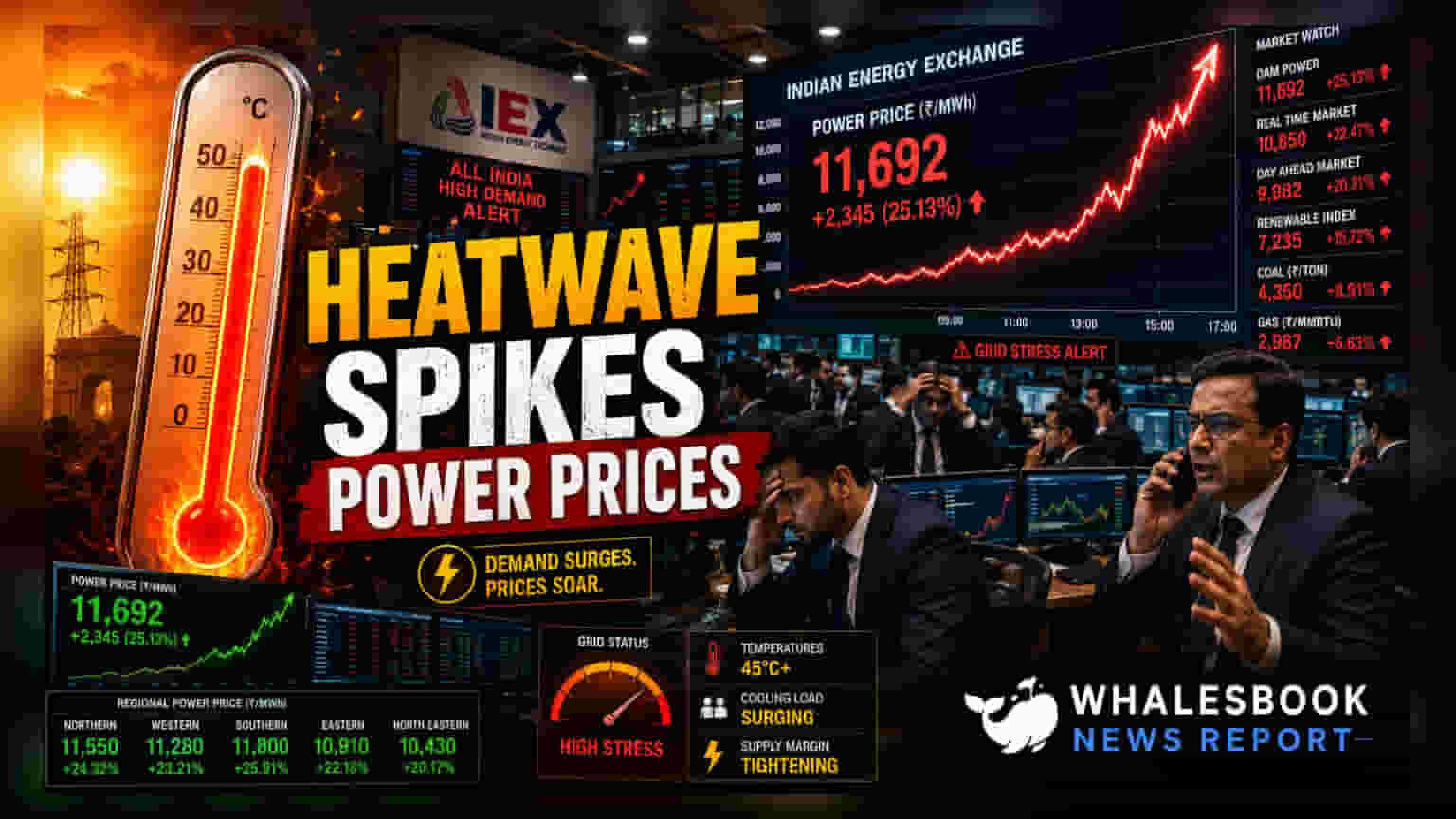
Indian Energy Exchange (IEX) reported a 15.9% increase in traded volumes for Q1 FY27, reaching 37,534 million units as peak power demand hit a record 270.8 GW. Higher electricity consumption and tighter supply conditions also drove a double-digit rise in spot market prices, impacting the exchange's core operational metrics.
What Happened
Indian Energy Exchange (IEX) saw its total power trading volumes grow by 15.9% year-on-year to 37,534 million units during the first quarter of the 2026-27 financial year. This increase was driven by sustained high temperatures and record-breaking peak electricity demand, which touched an all-time high of 270.8 GW in May. Increased consumption across the country led to tighter supply conditions, resulting in higher electricity prices on the exchange's spot markets.
Price And Volume Trends
The increased demand for power forced electricity prices higher during the quarter. The Day-Ahead Market clearing price rose 15.7% to Rs 5.1 per unit compared to the same period last year. Similarly, the Real-Time Market, which allows buyers and sellers to trade electricity on short notice, saw prices climb 13.8% to Rs 4.5 per unit. These price hikes reflect the costs associated with meeting sudden spikes in national energy requirements.
Segment Performance
The Real-Time Market was a standout performer for the exchange, recording a 23.5% growth in volumes to reach 16,019 million units for the quarter. While the Day-Ahead Market grew by 7.6% overall, it faced some pressure in June, recording a 6.6% dip in volumes for that month alone. Conversely, other segments like term-ahead contracts grew by 22.9%, and the Green Market saw a modest volume increase of 6.3%. A notable decline was seen in the Renewable Energy Certificate segment, which recorded an 81.4% drop in quarterly volumes.
Business Context and Risks
IEX operates as a marketplace where electricity is traded, meaning its revenue is tied to the volume of power transacted. While higher demand and volatility typically benefit the exchange through increased trading activity and higher clearing prices, the business remains sensitive to regulatory changes and government policies regarding power sector competition. Investors often watch for competition from other exchanges and shifts in how states procure power. Furthermore, while the current heatwave boosted volumes, the exchange's performance can fluctuate based on seasonal weather patterns, fuel availability for power plants, and grid-level constraints.
What Investors Should Track
Moving forward, the key monitorables include the sustainability of high trading volumes as monsoon patterns evolve and the impact of potential regulatory shifts in the power market. Investors may track monthly volume disclosures to see if the growth in the Real-Time Market continues to offset any volatility in the Day-Ahead segment. Additionally, management commentary regarding the recovery of the Renewable Energy Certificate segment and the overall price trend in the spot market will be important for assessing the company's fee-based income potential.