

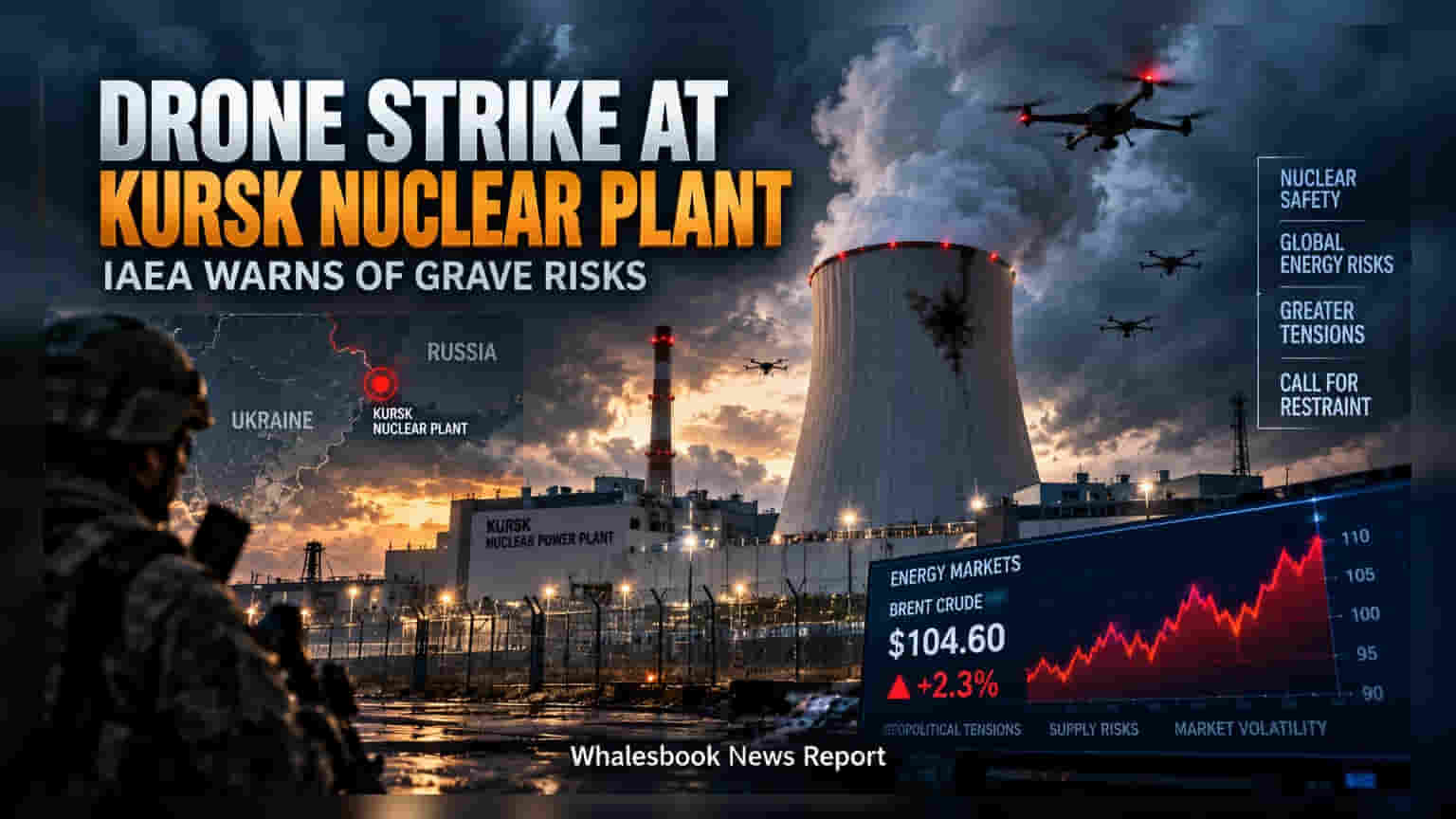
The International Atomic Energy Agency has condemned a drone attack on Russia's Kursk Nuclear Power Plant. While the reactor remains operational, the incident highlights rising geopolitical risks to critical energy infrastructure. For Indian investors, such escalations are important to track as they can impact global energy prices and trigger market volatility.
The International Atomic Energy Agency (IAEA) has issued a formal warning following a drone strike that targeted a cooling tower at the Kursk Nuclear Power Plant in Russia. While the facility's reactor continues to function without interruption and no fire was reported, the incident marks a significant escalation in the ongoing conflict between Russia and Ukraine, drawing international concern regarding the safety of nuclear installations.
IAEA Director General Rafael Mariano Grossi stated that military actions targeting nuclear facilities are unacceptable. He has called for maximum restraint from all parties, noting that the risk of a nuclear accident poses severe humanitarian and environmental threats to the region. This incident took place during a broader wave of aerial activity across various regions, including strikes reported in Kyiv, Zaporizhzhia, and Odesa, as well as separate drone activity targeting an oil refinery in the Yaroslavl region.
For Indian investors, these developments are relevant primarily through the lens of energy security and global market stability. India is a significant importer of energy, and its economy remains sensitive to fluctuations in global commodity prices. Geopolitical instability often leads to increased volatility in international crude oil benchmarks, such as Brent, which can influence domestic inflation and corporate input costs. While the direct impact of this specific event on the Indian stock market may be limited, heightened tensions in regions critical to global energy supply chains typically contribute to a risk-off sentiment in equity markets.
Investors may continue to track how such geopolitical developments influence global crude oil trends and broader commodity prices. Stability in energy infrastructure is vital for controlling supply chain disruptions, and any escalation that threatens these assets can lead to sudden price swings. For now, market participants are likely to watch for any further reports on infrastructure security and the resulting impact on global energy trade routes.