 Whalesbook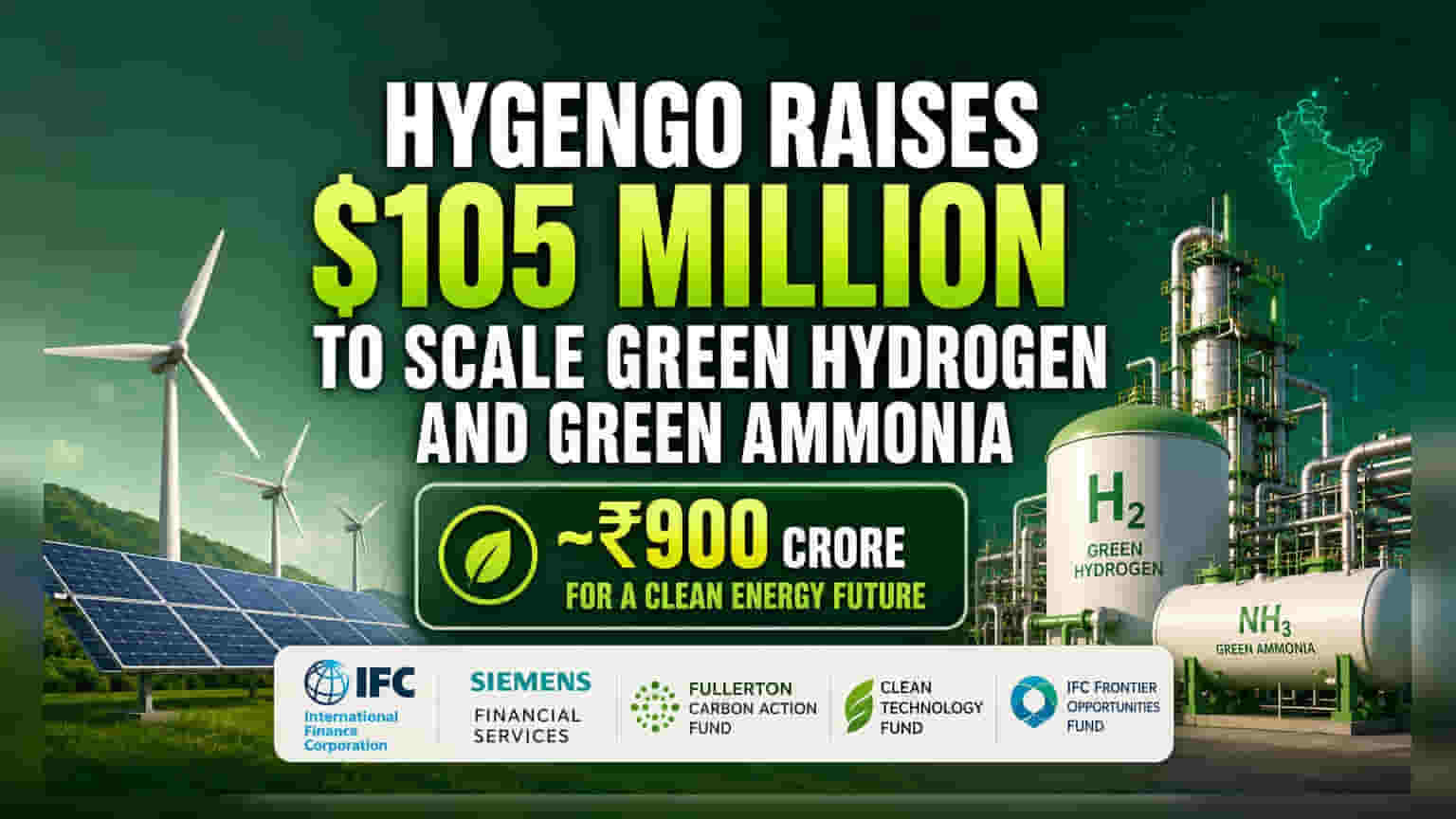


Hygenco Green Energies has secured $105 million from a global consortium led by the IFC, Siemens Financial Services, and Fullerton Carbon Action Fund. This funding will support the development of commercial green hydrogen and ammonia production systems in India. The deal highlights growing institutional interest in the green hydrogen sector as India pushes to meet its 2030 production targets under the National Green Hydrogen Mission.
What Happened
Hygenco Green Energies Private Limited has raised $105 million (approximately ₹900 crore) in a fresh equity funding round. The investment is led by a consortium comprising the International Finance Corporation (IFC), Siemens Financial Services, and the Singapore-based Fullerton Carbon Action Fund. Additional support comes from the Clean Technology Fund and the IFC Frontier Opportunities Fund, providing blended finance to help de-risk the company's platform. This capital infusion marks a significant milestone for the firm, which specializes in developing commercial-scale green hydrogen and green ammonia production systems.
Why This Matters For Investors
For the broader energy and industrial sector, this deal is a key indicator of institutional confidence in India’s green hydrogen ecosystem. While green hydrogen is still in a relatively early commercial stage, such large-scale private capital commitments suggest that global investors see long-term potential in India as a production hub. The funds are earmarked for scaling production capacity and strengthening supply chains, directly supporting the government's National Green Hydrogen Mission, which aims to achieve a production capacity of 5 million metric tons per annum by 2030. For the company, this allows for the development of new projects and the expansion of its "Hydrogen-as-a-Service" model, which aims to provide industrial consumers with a reliable, zero-emission fuel source.
How Investors May Read This
Investors often view such developments as a signal of the sector's maturity. While Hygenco is a private entity, the entry of major players like Siemens and the IFC provides a level of validation to the underlying business model. The primary focus for the industry at large remains the ability to transition from pilot projects to commercial viability. The move also highlights a shift in capital allocation, where global funds are actively backing infrastructure-heavy, decarbonization projects in India. For companies operating in this space, success depends on their ability to manage high capital costs and ensure they can compete with traditional, cheaper, fossil-fuel-based hydrogen.
The Industry Context and Challenges
While the momentum is positive, the green hydrogen sector faces significant hurdles. The production of green hydrogen through electrolysis—using renewable energy to split water molecules—remains expensive compared to traditional "grey" hydrogen produced from natural gas. Industry data indicates that green hydrogen production costs are currently several times higher than grey hydrogen. Factors such as the cost of renewable electricity, the high capital expenditure required for electrolyzers, and the need for sophisticated electrical infrastructure to stabilize power supply are key challenges. Additionally, companies must navigate the need for land, water resources, and stable distribution networks. The government’s SIGHT program (Strategic Interventions for Green Hydrogen Transition) and various state policies are critical in bridging the cost gap, but the long-term success of these companies relies heavily on sustained policy support and technological advancements that bring down electrolyzer costs over time.
What Investors Should Track
Moving forward, the success of this capital deployment will be measured by specific operational milestones. Investors and sector analysts will likely track the commissioning timelines for the planned production facilities and the company’s ability to secure long-term, high-quality offtake agreements with industrial customers in hard-to-abate sectors like steel, chemicals, and fertilizers. Further, any updates regarding domestic electrolyzer manufacturing capacity and the actual cost-competitiveness of the produced green molecules against conventional fossil fuels will be essential monitorables to gauge the long-term growth trajectory of the sector.