

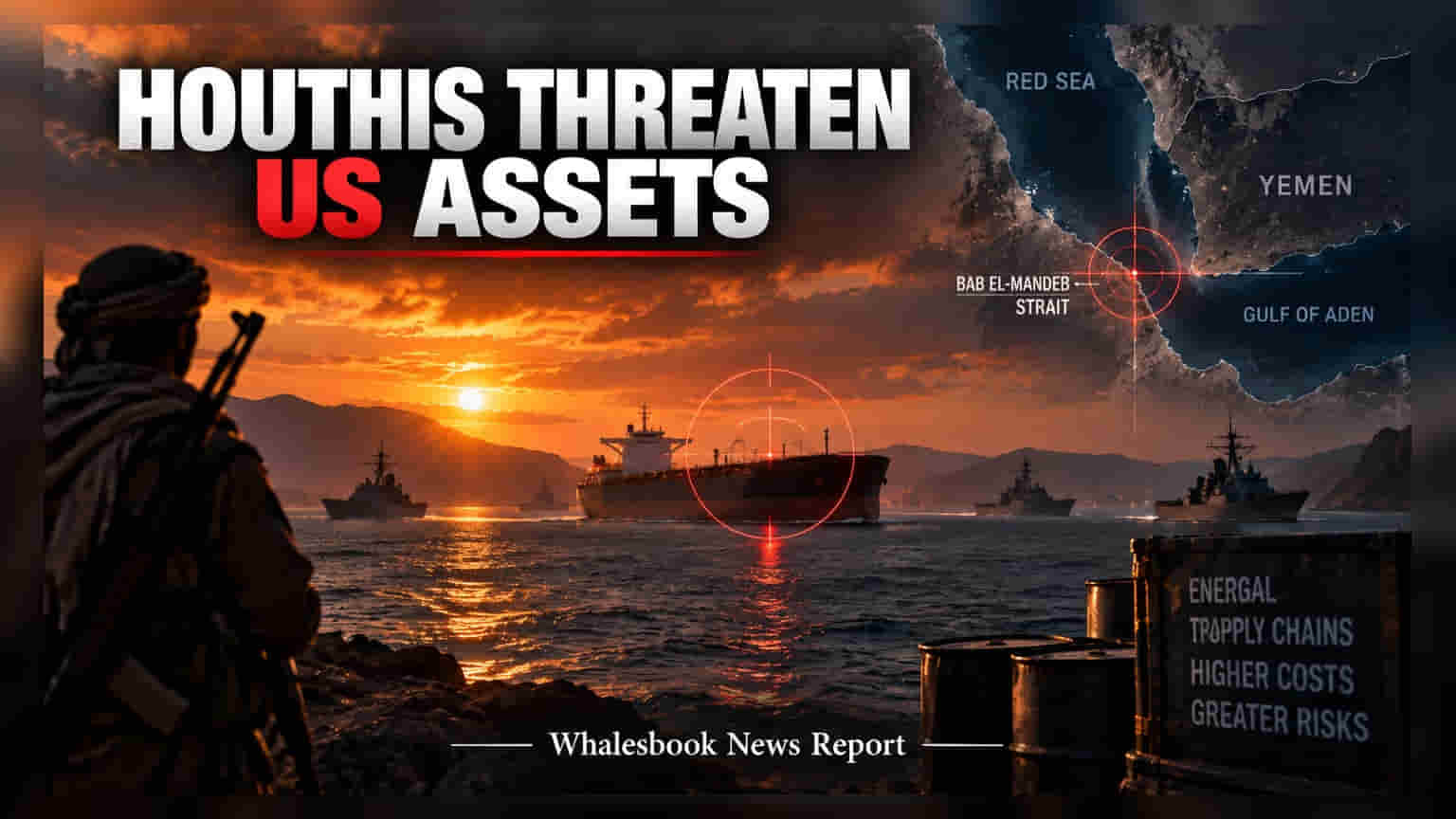
Yemen's Houthi militia has warned that US support for Saudi-led strikes will make American interests potential targets, specifically threatening the vital Bab el-Mandeb Strait. This maritime chokepoint is critical for global energy and trade flows. Investors should be aware that any disruption here could lead to higher shipping costs, increased insurance premiums, and potential volatility in global energy markets.
The Houthi militia in Yemen has issued a stern warning that it will view any US military support for the Saudi-led coalition as a hostile act against its interests. This development has heightened security concerns surrounding the Bab el-Mandeb Strait, a narrow but essential maritime passage that connects the Red Sea to the Gulf of Aden. This chokepoint is one of the world's most important routes for oil and liquid natural gas shipments.
Impact On Global Trade And Energy
The Bab el-Mandeb Strait serves as a major artery for global energy transit. A significant portion of the world's daily oil and gas supply passes through this region. When tensions rise in this corridor, shipping companies often face higher operational risks. For global investors and businesses, the immediate concern is the potential for an increase in shipping insurance premiums and transit costs. If shipping lanes are perceived as unsafe, insurance providers may raise costs significantly, or vessels may be forced to take longer, more expensive alternative routes to avoid the conflict zone.
Investor Perspective For India
For Indian investors, the stability of this region is significant due to the country's reliance on energy imports. Crude oil and gas imported from the Middle East and beyond often traverse these critical chokepoints. Any supply chain disruption or surge in freight costs can impact the input costs for oil marketing companies, fertilizer manufacturers, and logistics firms. When shipping costs rise, businesses may face pressure on their profit margins unless they can pass these costs on to consumers, which can in turn contribute to inflationary pressure.
Managing The Risk
The geopolitical situation remains fluid, involving complex dynamics between the Houthi leadership, Saudi Arabia, and the United States. While the militia has previously provided some assurances regarding safe passage, this latest statement marks a shift in their stance. As the situation evolves, investors may want to monitor developments regarding global crude oil prices, as they are often sensitive to any threats targeting major energy supply routes. Additionally, tracking any official updates from international maritime authorities or shipping insurance indices can provide clearer signals on the extent of the risk to global supply chains. The primary focus for the market will be on whether these threats lead to actual disruptions or remain diplomatic warnings.