

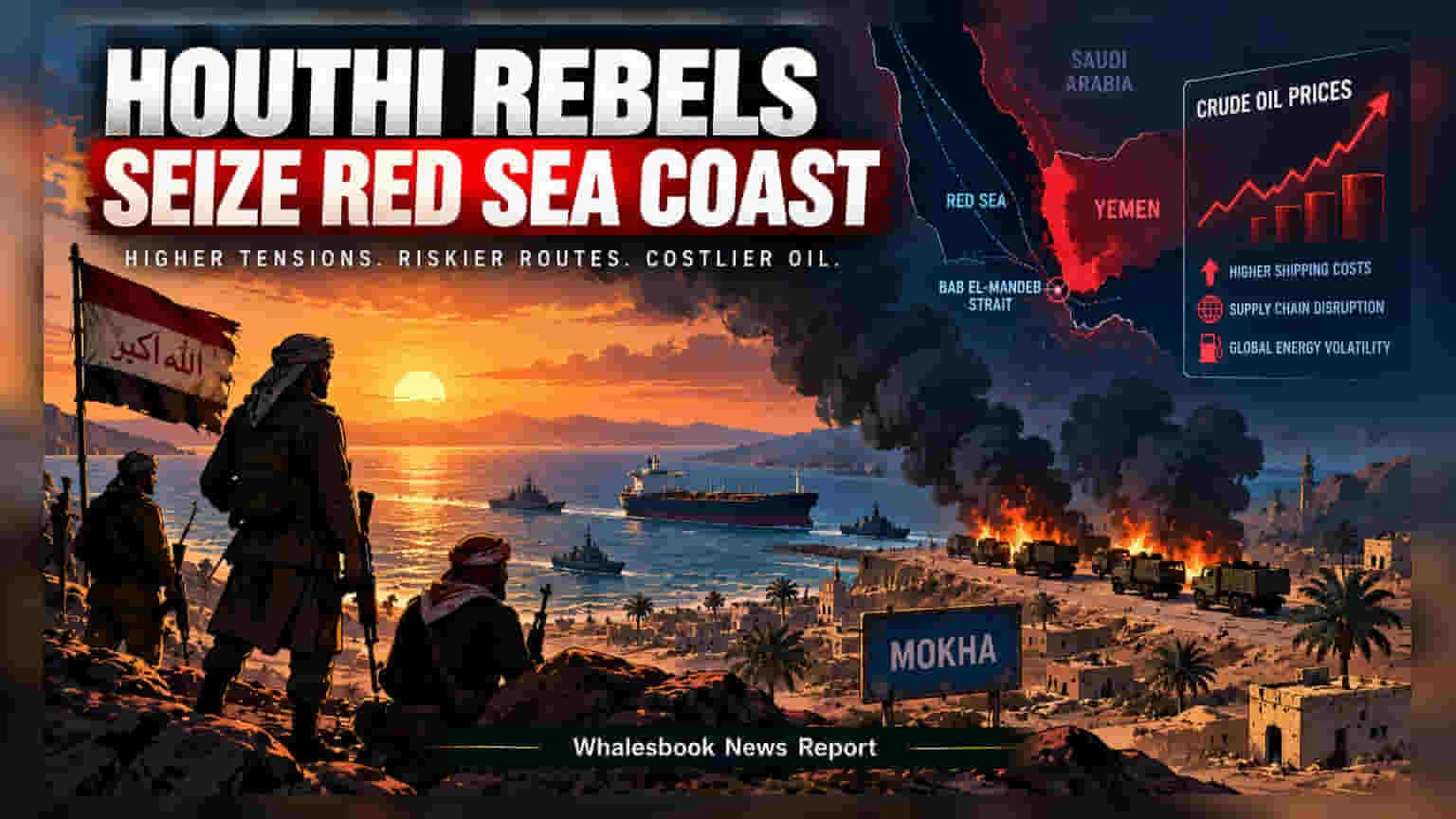
Houthi rebels have captured Yemen's Red Sea coast in a 48-hour offensive, threatening global shipping and energy transit routes. Investors are monitoring the situation as potential supply chain bottlenecks and rising crude oil costs could impact inflation and energy-dependent sectors in India.
Houthi rebels have secured control of Yemen’s critical Red Sea coastline, including the port of Mokha, following a rapid 48-hour offensive. This shift in territorial control has created immediate uncertainty for global shipping and energy transport. For Indian investors, the focus shifts to how this geopolitical escalation might influence global crude oil prices and the stability of supply chains.
The Red Sea and the nearby Bab el-Mandeb Strait function as a vital artery for international trade, with a significant volume of global oil and liquefied natural gas passing through these waters. By gaining control of this coastline, the rebels now possess a position that allows them to disrupt these critical routes. Any credible threat to oil tankers in this area can trigger immediate volatility in global energy benchmarks.
India remains one of the world's largest importers of crude oil, making its economy sensitive to disruptions in maritime trade routes. Prolonged instability in this region typically creates two primary concerns for the domestic market. First, a sudden increase in global oil prices directly expands India's import bill, which can put pressure on the rupee and overall inflation. Second, shipping companies may face higher insurance premiums and longer transit times if vessels are forced to reroute to avoid the area, adding to logistics costs for companies across various sectors.
Market analysts often view such geopolitical shifts as potential drivers of volatility for energy-intensive industries. While oil companies may experience price fluctuations, sectors that rely heavily on petroleum products—such as aviation, paints, and logistics—often face profit margin pressure when fuel costs rise. In the past, similar disruptions have forced the market to price in the risk of supply chain bottlenecks, leading to immediate swings in commodities.
The primary monitorables for the coming weeks will be the movement in Brent crude oil prices and any official updates from global shipping authorities regarding transit safety in the Red Sea. Investors may look for clarity on whether this development leads to a sustained disruption in oil supply or if the geopolitical situation stabilizes. Additionally, updates from the Indian government regarding energy security and supply availability will be key to understanding the potential impact on the domestic economy.