

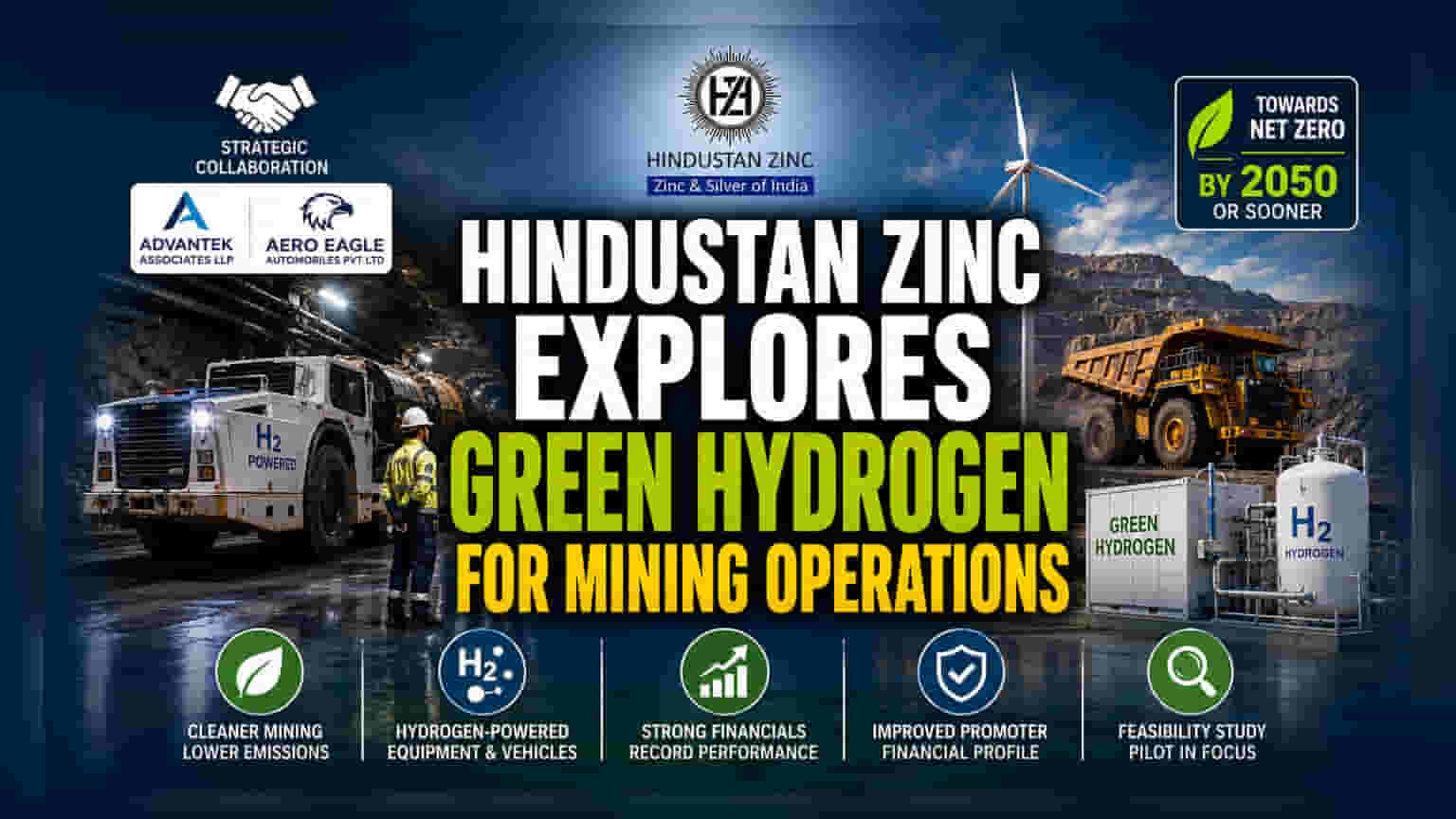
Hindustan Zinc has partnered with Advantek Associates and Aero Eagle Automobiles to pilot green hydrogen technology for underground mining. The project aims to support the company's Net Zero 2050 goals by testing hydrogen-powered equipment. Investors should note that this is an early-stage feasibility initiative and not an immediate driver of financial results.
What Happened
Hindustan Zinc Limited has signed a Memorandum of Understanding (MoU) with Advantek Associates LLP and Aero Eagle Automobiles Pvt Ltd. The primary objective is to explore the use of green hydrogen across the company’s extensive mining operations. This initiative focuses on evaluating the technical and financial feasibility of integrating hydrogen-based solutions, such as Hydrogen Internal Combustion Engines (H2-ICE) and fuel cell technology, into mining equipment and underground vehicles. The collaboration aims to replace traditional fossil-fuel-dependent machinery with cleaner alternatives as part of the company's long-term sustainability roadmap.
Why Hydrogen in Mining Matters
Mining is widely considered a hard-to-decarbonize sector because heavy earth-moving machinery, generators, and underground vehicles typically require high energy density, which is difficult to achieve with current battery-electric technology. By exploring green hydrogen, Hindustan Zinc is attempting to solve a specific operational challenge: how to power energy-intensive, heavy-duty mining equipment without the carbon footprint of diesel. If successful, this would be a step toward cleaner mining environments, potentially reducing ventilation loads and harmful diesel particulates in underground operations.
Strategic Context and Sustainability
This partnership aligns with Hindustan Zinc’s broader commitment to becoming a Net Zero carbon business by 2050 or sooner. The company has been aggressively pursuing ESG (Environmental, Social, and Governance) targets, including securing renewable energy through round-the-clock power agreements and deploying LNG-powered transport vehicles. The move toward hydrogen represents a transition from high-level climate pledges to pilot-stage technological exploration. While the initiative is ambitious, it remains at the feasibility study stage, meaning the actual deployment and scaling of this technology will depend on pilot outcomes, cost-effectiveness, and the maturity of hydrogen infrastructure in India.
Financial Standing and Promoter Strength
Investors may view this sustainability push against the backdrop of the company's robust financial position. In the fiscal year ended March 2026, Hindustan Zinc reported record financial performance, with an all-time high annual revenue and EBITDA. The company has maintained an industry-leading EBITDA margin, supported by structural cost efficiencies. Additionally, the broader Vedanta Group recently improved its financial profile by clearing share pledges on its stake in Hindustan Zinc, which was finalized in June 2026. This move has reduced the promoter group’s encumbrance profile, providing a cleaner capital structure for the company. While the green hydrogen initiative involves capital spending, the company's strong cash flow generation and improved balance sheet provide a foundation to fund such innovation without immediate liquidity strain.
What to Watch Next
For investors, the key monitorables are the progress of the feasibility studies and the timeline for any pilot deployments. As this is an R&D-led project, there is no immediate impact on earnings or margins. Investors may track future exchange filings for updates on project milestones, cost assessments, or any shifts from pilot studies to actual asset procurement. The success of this initiative will ultimately depend on whether hydrogen-powered equipment can be scaled reliably and cost-effectively compared to conventional mining machinery.