

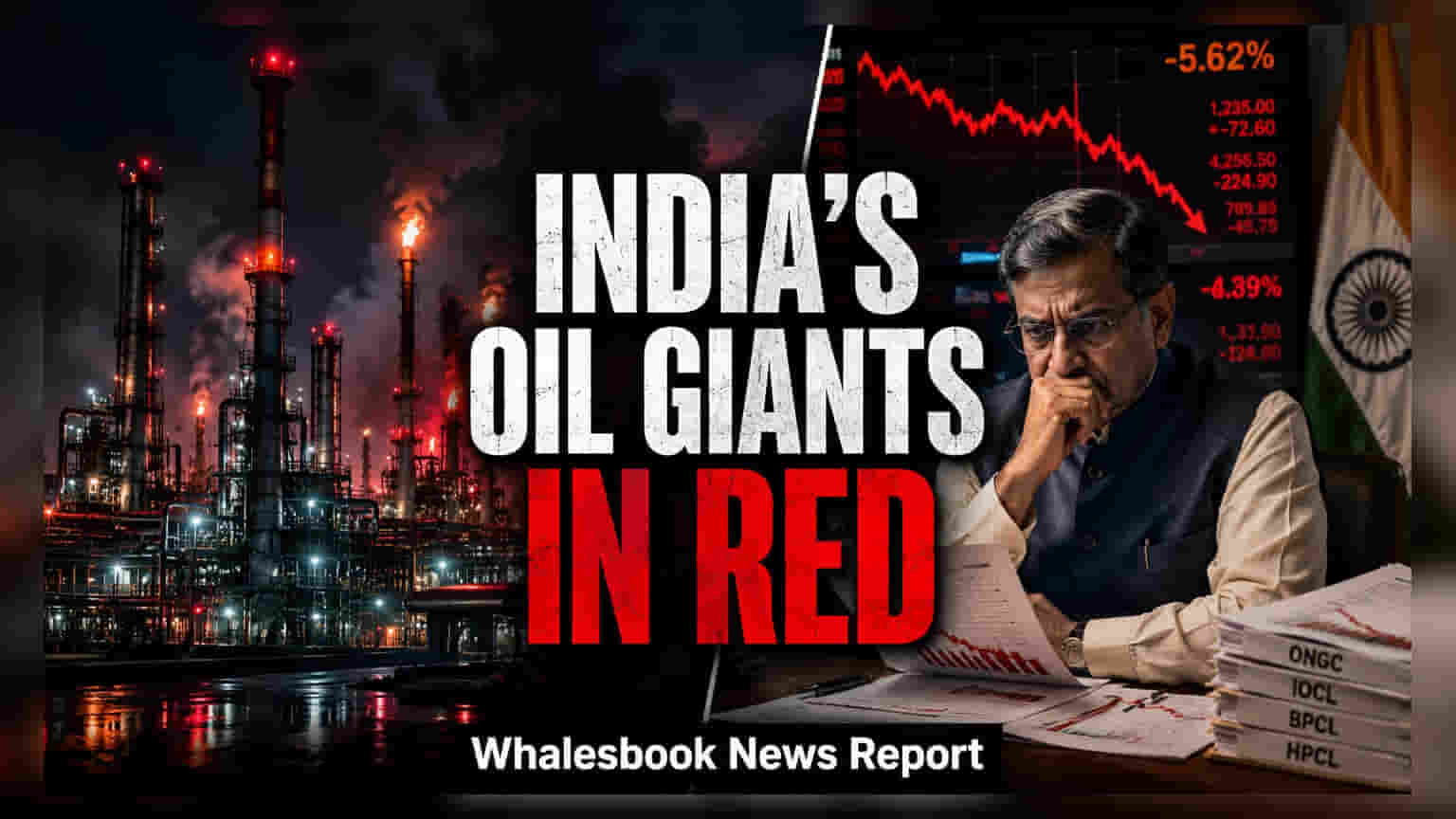
State-run oil companies HPCL and BPCL reported significant losses in the April-June quarter as fuel prices remained steady despite rising global crude costs. The government is currently evaluating a relief package to compensate these firms for selling petrol, diesel, and LPG below market rates. Investors are now tracking potential government intervention and the trend in global oil prices.
Detailed Coverage
Hindustan Petroleum Corporation Ltd (HPCL) and Bharat Petroleum Corporation Ltd (BPCL) have reported major standalone losses for the first quarter ending June 2026. HPCL recorded a loss of ₹11,526.41 crore, while BPCL reported a loss of ₹3,962 crore during the same period. These losses have occurred because the companies have been selling petrol, diesel, and LPG at prices lower than the cost of importing and processing crude oil.
Impact of Rising Global Crude Prices
The financial pressure on these oil marketing companies (OMCs) is primarily driven by the ongoing geopolitical tensions in West Asia, which have kept global crude oil prices high. While petrol and diesel are technically deregulated in India, allowing companies to change prices based on market conditions, the current pricing trend suggests that prices have not moved in line with the sharp rise in crude costs. This gap, known as under-recovery, has directly reduced the profitability of these companies. The Ministry of Petroleum and Natural Gas has noted that the three state-run OMCs, including Indian Oil Corporation (IOC), collectively faced losses of ₹74,781 crore during this quarter.
Government Compensation and Market Dynamics
The oil ministry is currently evaluating a proposal to provide a compensation package to the OMCs to help manage these losses. Historically, the government has provided financial support to cover losses specifically on LPG, but it has generally avoided compensating for petrol and diesel to maintain the structure of fuel deregulation. Any direct cash injection or compensation for motor fuels could raise questions about the long-term effectiveness of the deregulation policy.
Industry analysts have pointed out differences in how these companies are impacted. Due to differences in their business mix, HPCL has faced a greater financial hit than BPCL and IOC. Estimates from analysts indicate that HPCL's losses per barrel were significantly higher during the June quarter compared to its peers. While a recent price increase of ₹3 per litre for fuel was implemented, its impact on profitability will depend on whether global oil prices continue to rise or begin to stabilize.
Future Monitorables for Investors
The outlook for downstream oil companies remains closely linked to global crude oil trends and government policy decisions. Investors will be watching for official announcements regarding the proposed relief package, as this will determine the immediate cash flow impact on these firms. Beyond government action, the ability of these companies to restore their marketing margins will depend on whether they increase fuel prices further or if global crude prices decline from current levels. The market will also track the quarterly performance of IOC to compare the extent of the impact across the sector.