

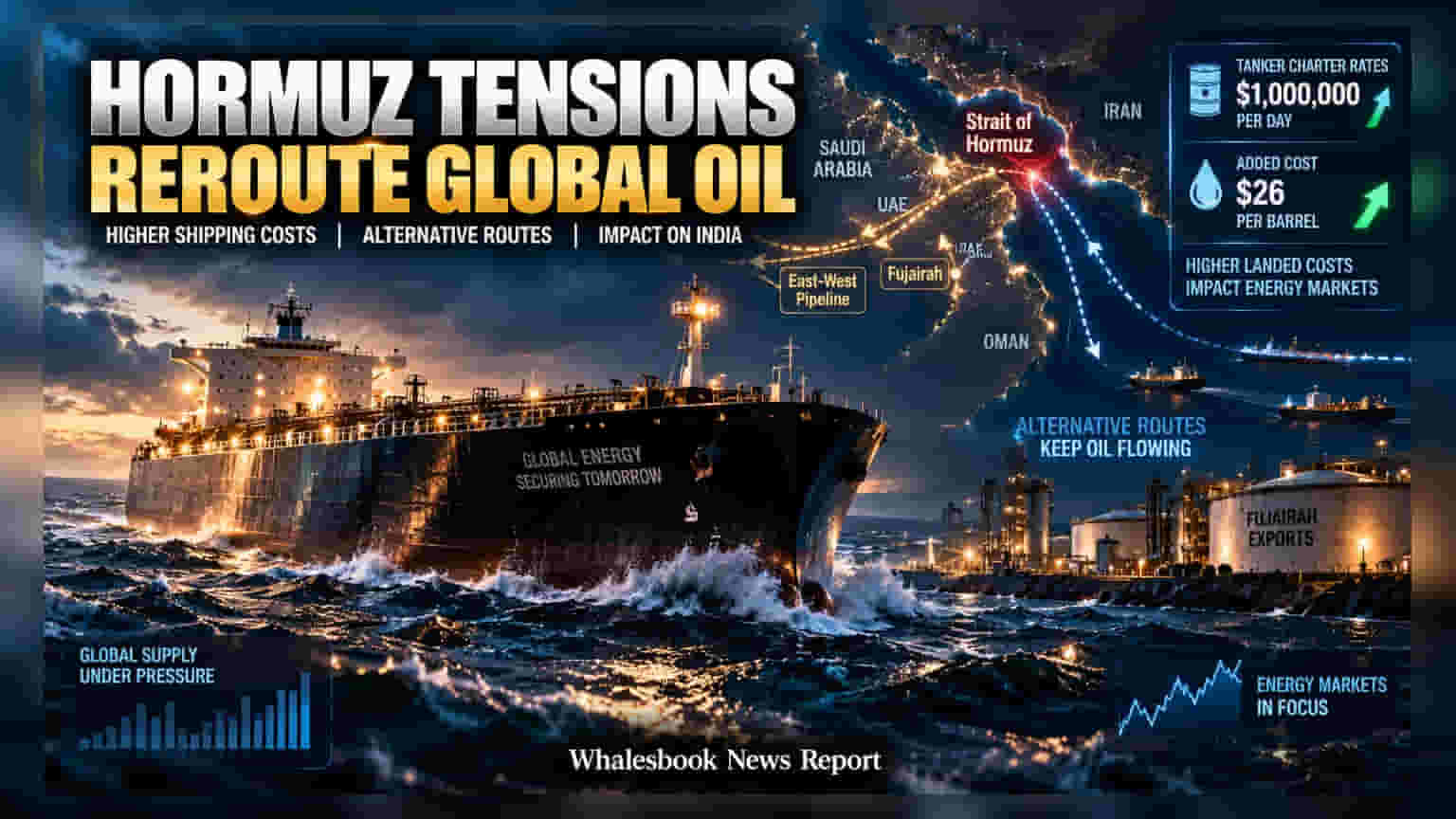
Gulf oil producers are using costly alternative routes to bypass the Strait of Hormuz, adding $26 per barrel in shipping premiums. This logistical burden keeps oil prices elevated and increases cost pressures for major importers like India, as reliance on pipelines and inventories creates a fragile energy supply balance.
Global energy markets are currently navigating a complex logistical challenge as conflict in the Strait of Hormuz forces Gulf oil producers to alter their shipping patterns. To keep oil flowing, producers in Saudi Arabia and the United Arab Emirates are shifting exports toward alternative infrastructure, such as the East-West pipeline and the port of Fujairah, rather than using traditional tanker routes through the narrow waterway.
While this strategy has successfully restored a significant portion of the oil supply, it comes with a high financial cost. Shipping premiums have surged, with tanker charter rates climbing to approximately $1 million per day. For the final price of oil, this translates into an added premium of $26 per barrel. Currently, this extra cost is being absorbed by global markets, but it represents a significant increase in the expenses required to move energy from the Gulf to international customers.
For Indian investors, this situation carries implications for energy-importing sectors. India relies heavily on crude oil imports, and higher landed costs—driven by shipping premiums—can impact the profit margins of Oil Marketing Companies (OMCs) like Indian Oil Corporation, Bharat Petroleum, and Hindustan Petroleum. Additionally, sustained high crude prices can influence the broader Indian economy by impacting the trade deficit and inflationary pressures, as energy costs are a key input for retail inflation calculations.
The market is currently balancing supply through a mix of inventory drawdowns and lower demand in some regions, keeping crude prices in the $85 to $90 range. However, this is a fragile equilibrium. The reliance on pipelines to bypass the strait creates its own vulnerability; regional instability means that land-based infrastructure is not fully immune to conflict. As the situation persists, the global energy supply remains sensitive to any further disruptions or capacity constraints.
Investors monitoring the energy sector should focus on future crude price trends and any updates on refinery margins. The long-term stability of these alternative routes and the sustainability of inventory usage remain the key factors that could determine whether energy costs stabilize or face further upward pressure in the coming months.