 Whalesbook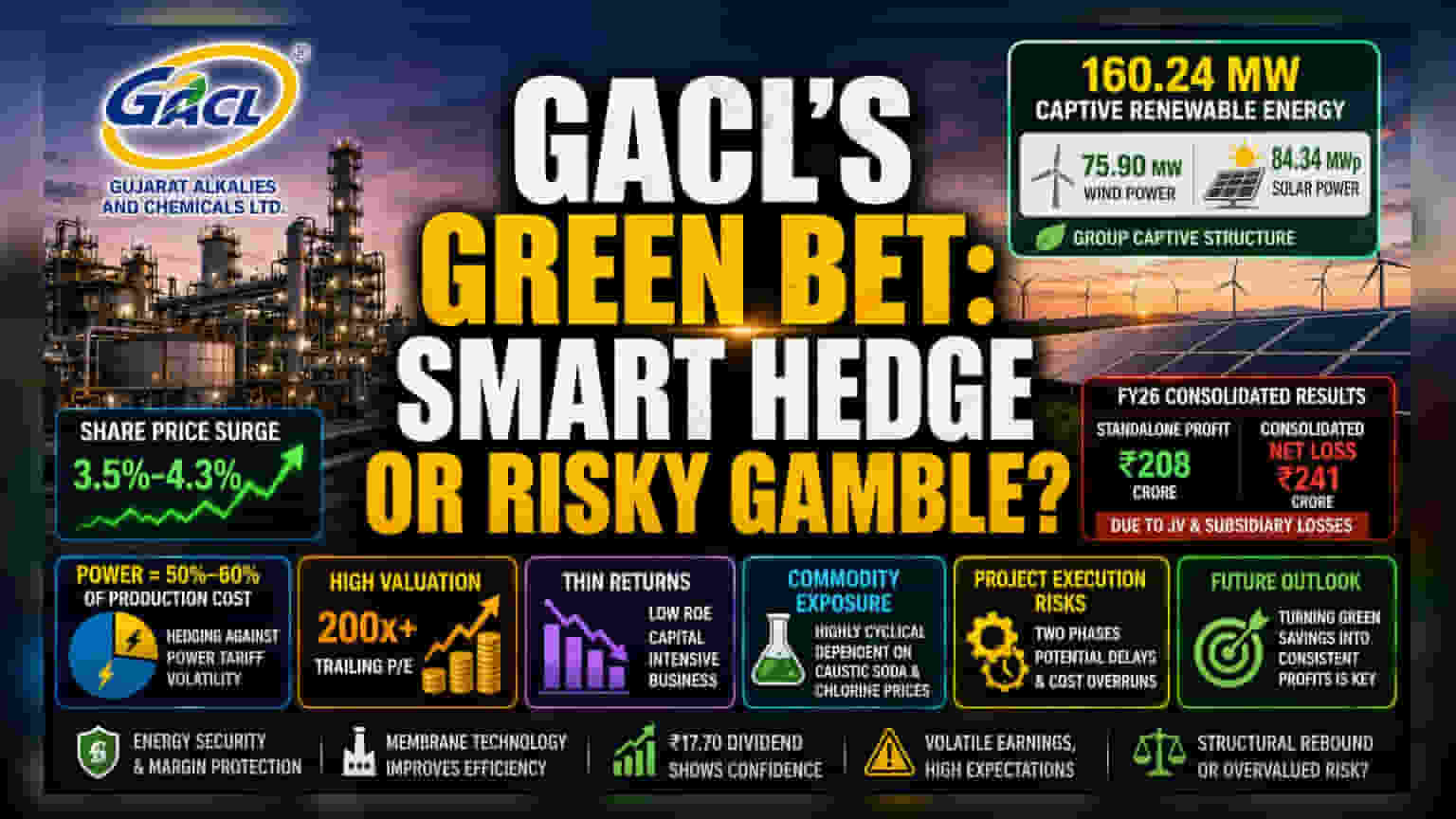


The Operational Cost Calculus
The pivot toward hybrid renewable energy represents a calculated effort to stabilize the cost structure of Gujarat Alkalies and Chemicals (GACL). In the chlor-alkali sector, electricity typically consumes 50% to 60% of total production costs. By securing this 160.24 MW captive deal—comprising 75.90 MW of wind and 84.34 MWp of solar capacity—the company aims to create a hedge against the volatile power tariffs that have historically plagued the industry. With energy-intensive processes at its Dahej and Vadodara facilities, the move is less about environmental optics and more about protecting operating margins against future energy price spikes.
Analyzing the Structural Risk
While the market responded with a 3.5% to 4.3% bump in share price, the broader financial context presents a more complex narrative. GACL’s recent annual report for FY26 showed a standalone profit of ₹208 crore, yet consolidated figures revealed a net loss of ₹241 crore, largely due to ongoing losses within its joint ventures and subsidiaries. The stock is trading at a high trailing P/E ratio, often exceeding 200x, which signals that investors are pricing in a significant turnaround rather than current earnings performance. Furthermore, the company’s return on equity remains thin, and its reliance on capital-intensive expansion projects, such as the new hydrogen peroxide plant, requires consistent capital allocation in an environment where cash flow from operations has been inconsistent.
Competitive and Sectoral Context
Unlike industry peers that have diversified into higher-margin derivatives, GACL remains heavily tethered to the commodity cycle of caustic soda and chlorine. The chlor-alkali market is notoriously cyclical, heavily influenced by global construction demand and regional energy prices. While CleanMax’s 844 MW operational capacity in Gujarat provides a robust partner for this group captive structure, the project’s execution over two phases introduces risks of delays or cost overruns. Sectoral indicators suggest that even with improved energy efficiency from membrane technology, the industry remains sensitive to global supply chain disruptions and input cost volatility, which can quickly erase the gains from renewable power savings.
Future Outlook
The market’s current sentiment towards GACL is balanced between hope for a structural rebound and skepticism regarding its recent earnings volatility. The dividend of ₹17.70 per share highlights management's attempt to retain shareholder confidence, but the forward-looking guidance relies heavily on sustaining the current realization rates for caustic soda. Unless the company can translate its green energy savings into a consistent contraction in the consolidated bottom-line deficit, the stock may continue to face resistance near its 52-week highs.