

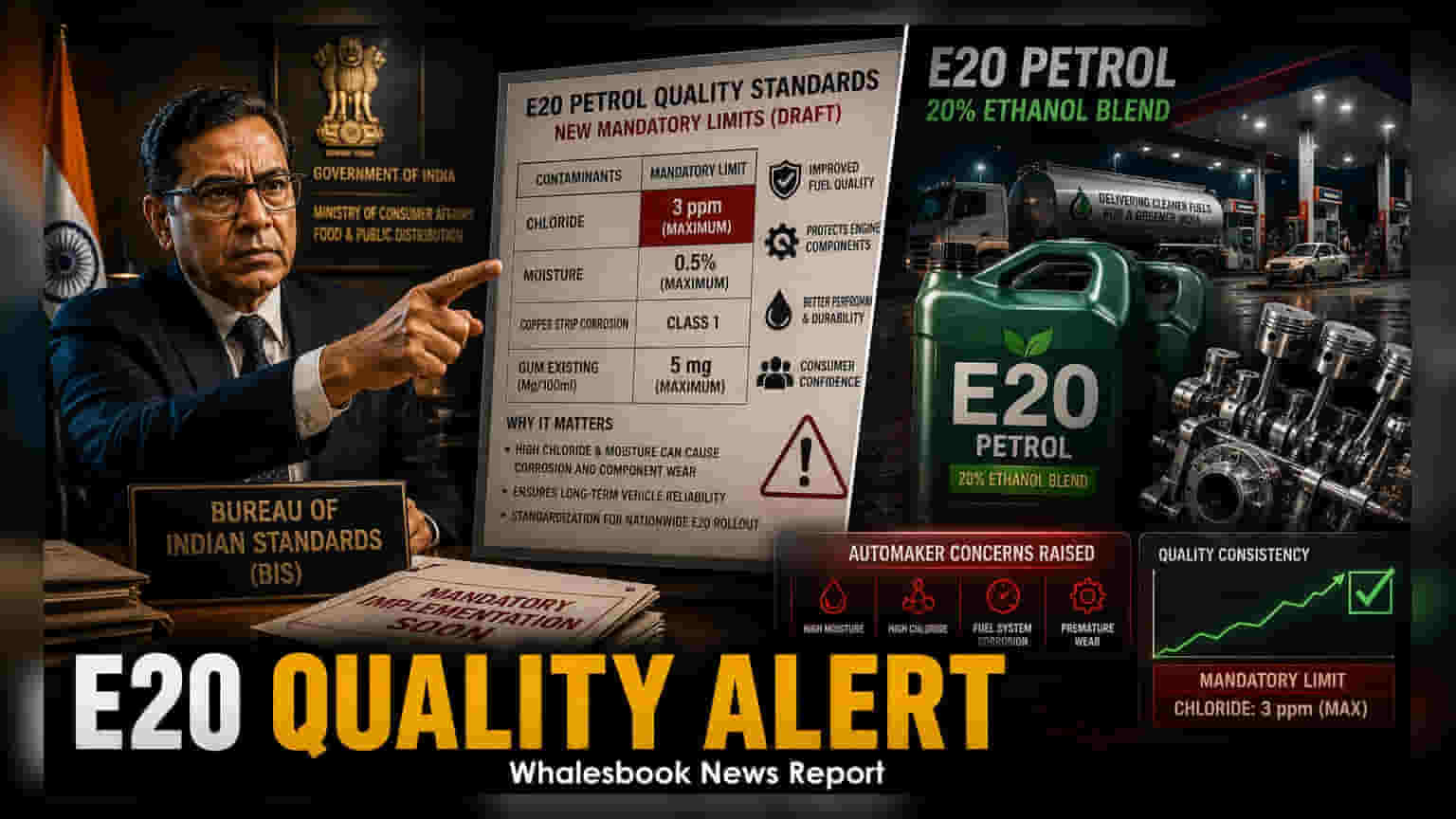
The Bureau of Indian Standards is transitioning voluntary quality guidelines for E20 petrol into mandatory rules, specifically enforcing a chloride contamination limit of less than 3 ppm. This move aims to address automaker concerns regarding fuel quality and its impact on engine components, potentially increasing compliance and testing focus for Oil Marketing Companies.
The Bureau of Indian Standards (BIS) is moving to make stringent quality control measures compulsory for E20 petrol, the fuel blend containing 20% ethanol that became mandatory across India on April 1, 2026. While quality limits for contaminants like chloride were previously treated as voluntary guidelines, authorities are now preparing to enforce a mandatory ceiling of 3 parts per million (ppm) to ensure higher fuel consistency.
Addressing Automaker Quality Concerns
This regulatory push follows industry feedback regarding the performance of ethanol-blended fuel in vehicles. Automakers have previously flagged concerns that fuel supplied at various retail outlets contained elevated levels of moisture and chloride. Manufacturers suggested these contaminants could lead to premature wear in sensitive fuel system components, impacting long-term vehicle durability. While the Society of Indian Automobile Manufacturers (SIAM) has engaged with the government on these topics, the move by the BIS indicates a broader effort to standardize fuel quality to eliminate any ambiguity for both vehicle manufacturers and consumers.
Compliance Impact for Oil Marketing Companies
For major public sector entities like Indian Oil Corporation (IOC), Bharat Petroleum (BPCL), and Hindustan Petroleum (HPCL), this regulatory update means a sharper focus on quality control across the supply chain. Oil Marketing Companies (OMCs) have consistently maintained that fuel quality is within prescribed limits, citing rigorous testing at various stages, from refineries to retail dispensing units. The shift from voluntary to mandatory compliance implies that these companies will need to document and potentially enhance their testing frequency and monitoring systems to ensure strict adherence to the 3 ppm limit.
While OMCs argue that their current infrastructure is already delivering compliant fuel, the formalization of these rules could lead to increased operational costs related to ongoing quality verification and laboratory testing. For investors, the development underscores the complexity of India’s biofuel transition, where OMCs must balance the logistical scale of nation-wide E20 distribution with high quality-assurance standards.
What Investors Should Monitor
The central factor to track is the official gazette notification from the government regarding the implementation timeline for these mandatory norms. Additionally, investors may keep an eye on management commentary from OMCs regarding any potential capital expenditure required to upgrade storage and testing infrastructure at older retail sites. While the E20 program remains a strategic priority for India, the ability of oil companies to maintain strict quality standards while scaling supply will be essential for keeping public trust and meeting automotive industry expectations.