

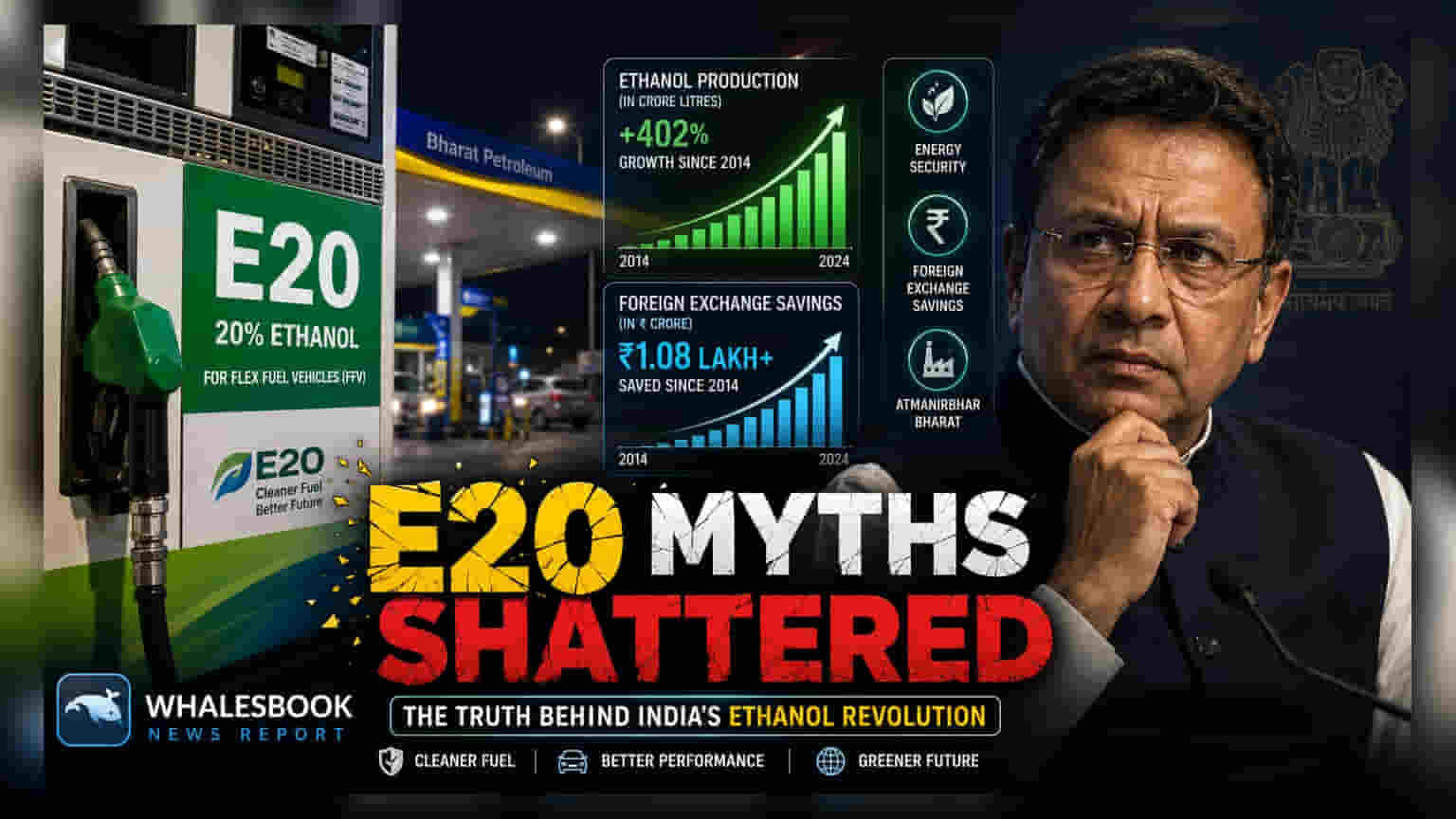
The Ministry of Petroleum has officially rejected viral claims regarding the E20 ethanol blending program, citing extensive vehicle trials and environmental safety. The initiative, designed to lower import costs and support farmers, has already saved the nation over ₹1.9 lakh crore in foreign exchange.
What Happened
India’s Ministry of Petroleum and Natural Gas has issued a formal 10-point clarification to address and dismiss viral misinformation circulating about the E20 ethanol blending program. The government explicitly countered claims suggesting that the use of 20% ethanol in petrol causes severe engine damage, excessive water consumption, or environmental hazards. The official statement aims to reassure consumers and stakeholders that the national blending program is backed by rigorous testing and aligns with global fuel standards. This clarification comes as the government pushes to maintain its momentum in reducing crude oil import dependency.
Vehicle Performance and Compatibility
To address concerns regarding vehicle health, the government highlighted studies conducted by the Automotive Research Association of India (ARAI). Trials involving both two-wheelers and passenger cars showed no significant negative impact on engine performance. While the government acknowledged that ethanol’s chemical properties may necessitate earlier replacement of certain older rubber components in older vehicle models, it maintained that modern vehicles calibrated for E20 perform efficiently. In fact, due to ethanol's higher octane rating, some engines may experience improved combustion characteristics.
Addressing Resource and Environmental Concerns
The ministry specifically addressed the criticism regarding water usage in ethanol production. It clarified that feedstock is sourced from surplus rice—only after national food security requirements are met—and increasingly from maize, which requires less irrigation than traditional paddy. Furthermore, the government noted that modern ethanol distilleries are actively implementing Zero Liquid Discharge systems, which allow for extensive water recycling, minimizing the environmental footprint of the production process.
Economic Impact for the Nation
The E20 program serves as a critical pillar in India's energy strategy. By integrating domestically produced ethanol, the country has reduced its reliance on imported crude oil. According to government data, this program has contributed to a saving of over ₹1.9 lakh crore in foreign exchange. Additionally, the initiative has created a new income stream for the agricultural sector, with more than ₹1.6 lakh crore transferred to farmers since the program's inception. India met its initial 20% blending targets faster than originally projected, significantly expanding its domestic production capacity.
What Investors Should Track
For investors in the energy and sugar sectors, the government's continued commitment to the E20 program provides regulatory clarity. The primary monitorable remains the future procurement targets for the upcoming supply year and the government's stance on feedstock diversification—specifically the balancing of food security needs with ethanol production requirements. Additionally, tracking the pace of infrastructure upgrades at fuel retail outlets to accommodate higher ethanol blends will be essential for assessing the long-term scalability of the program.