 Whalesbook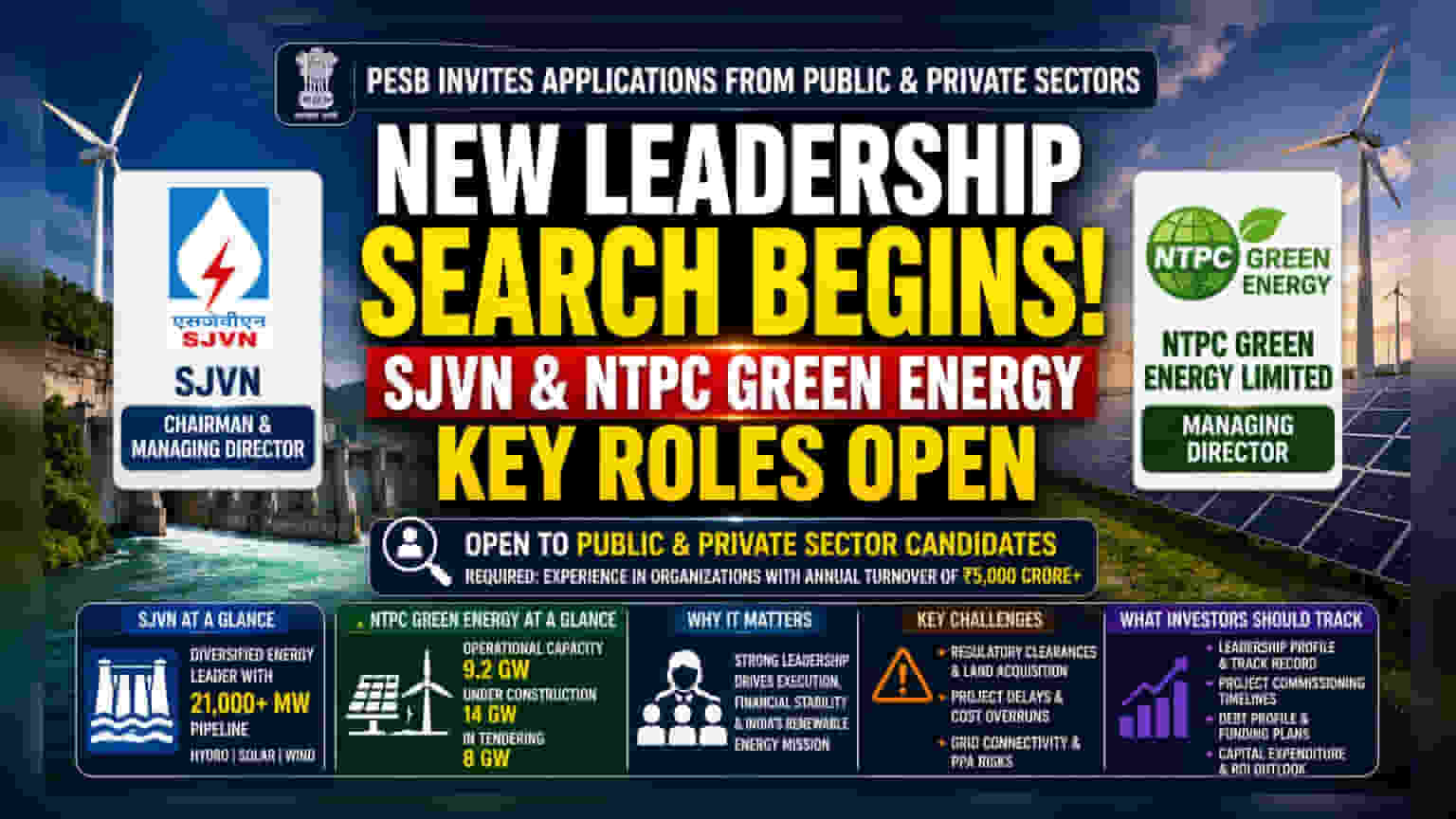


The government is inviting applications for top leadership roles at SJVN and NTPC Green Energy, opening the door to private sector candidates. As both firms manage massive renewable energy portfolios, the search for experienced leaders comes at a critical time. Investors may watch how this change influences project execution, capital spending, and long-term strategic direction in a capital-intensive sector.
What Happened
The Indian government, through the Public Enterprises Selection Board (PESB), has launched a search for top leadership positions at two major renewable energy giants: Satluj Jal Vidyut Nigam (SJVN) and NTPC Green Energy Limited (NGEL). The authorities are inviting applications for the position of Chairman and Managing Director (CMD) at SJVN and Managing Director (MD) at NTPC Green Energy. Crucially, the government has widened its search scope, explicitly inviting candidates from both the public and private sectors, provided they meet specific requirements such as having experience in organizations with an annual turnover of at least ₹5,000 crore.
Why Leadership Matters Now
Leadership stability is vital for utility companies operating in the energy sector, which is currently undergoing a massive shift toward renewable sources. SJVN is a diversified energy firm with a project pipeline exceeding 21,000 MW, covering hydro, solar, and wind power. Similarly, NTPC Green Energy, a subsidiary of NTPC, is handling a major portion of India's solar and wind capacity expansion. As of early 2026, NGEL reported an operational capacity of 9.2 GW, with another 14 GW under construction and 8 GW in the tendering phase. The appointment of new, high-caliber leaders is expected to be a key factor in ensuring these large-scale projects stay on track.
The Capital Expenditure and Execution Context
For investors, these companies represent heavy capital-intensive businesses. Building renewable energy infrastructure—especially large hydro projects for SJVN and solar parks for NGEL—requires immense financial outlay and complex project management. These companies must manage debt levels while simultaneously deploying large amounts of capital for expansion. The effectiveness of the future leadership will directly impact how efficiently the companies manage their balance sheets, control costs during project construction, and navigate the transition to green energy without compromising financial health.
Potential Risks and Challenges
While the expansion plans are ambitious, investors should keep in mind the inherent risks of the power sector. Renewable energy projects, particularly hydro, often face risks related to complex regulatory clearances, land acquisition, and geological challenges that can cause delays and cost overruns. For solar and wind, while execution is faster, the sector faces challenges regarding grid connectivity, transmission infrastructure, and, occasionally, PPA (Power Purchase Agreement) renegotiations. If project commissioning is delayed, it can hurt return ratios and increase interest costs on borrowed money. The incoming leadership will need to navigate these operational hurdles effectively to maintain profitability.
What Investors Should Track
Going forward, the market will likely watch for the profile and track record of the candidates selected for these roles. A leader with a background in managing large infrastructure projects or complex energy portfolios may be viewed as a positive development. Investors may also want to monitor the pace of project commissioning, any changes in the companies' debt profiles, and updates on major projects like the Khavda renewable park. Management commentary regarding future funding and capital spending plans will also remain important monitorables for long-term holders of these stocks.