

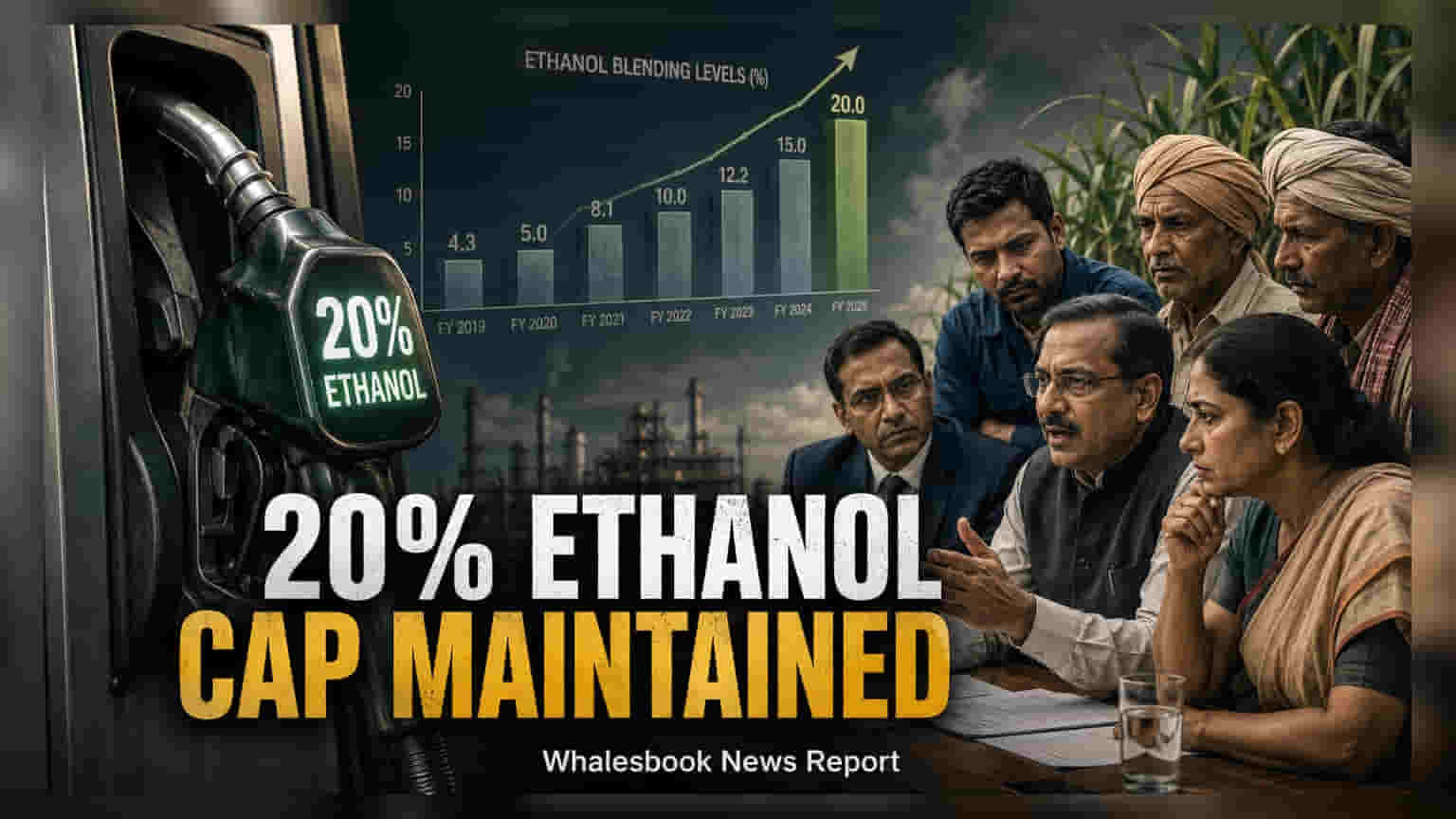
The Indian government has no current plans to increase ethanol blending in petrol beyond the existing 20% limit. Officials confirmed that future decisions will depend on thorough scientific studies and industry feedback regarding vehicle performance and fuel efficiency.
Detailed Coverage
The Ministry of Petroleum and Natural Gas has officially clarified that India will maintain its ethanol blending target at 20%, known as E20, with no immediate plans to raise this threshold. Minister of State for Petroleum and Natural Gas, Suresh Gopi, stated in the Rajya Sabha that any potential move to increase blending percentages will be contingent upon rigorous technical research and detailed consultations with all stakeholders, including automotive manufacturers and fuel retailers.
E20 Target and National Impact
India achieved its 20% blending goal well ahead of the original timeline. Data from the government indicates that the average ethanol blending rate in petrol has grown significantly, rising from just 1.53% in the 2013-14 supply year to a 20% average projected for the 2025-26 period. This transition has been a central pillar of India's energy policy, aimed at reducing the nation's high dependence on imported crude oil.
According to official reports, this program has resulted in foreign exchange savings exceeding ₹1.97 lakh crore since 2014-15. Furthermore, the initiative has reduced crude oil imports by roughly 316 lakh tonnes and contributed to environmental goals by lowering carbon dioxide emissions by an estimated 952 lakh tonnes. For the rural economy, the surge in ethanol demand has provided over ₹1.66 lakh crore in additional income for farmers engaged in sugarcane and grain production.
Addressing Vehicle Compatibility
Questions regarding the long-term impact of E20 fuel on engine health and performance remain a key focus for investors in the automotive sector. While there have been theoretical concerns regarding potential engine corrosion or fuel pump issues, the government reported that it has not received substantiated data or widespread complaints from manufacturers regarding failures directly tied to E20 usage. Currently, more than 20 crore two-wheelers and over three crore four-wheelers are operating on higher blended fuel.
Automobile manufacturers continue to honor warranties for vehicles compatible with E20 fuel, which suggests that the industry has largely adapted its technology to the current blending standards. While vehicles designed for lower ethanol content may see a 3-5% drop in fuel efficiency, the government noted that E20 offers higher octane levels and cleaner combustion, which are positive trade-offs for fuel quality.
Next Monitorables for Stakeholders
For investors, the key monitorable will be the future trajectory of the sugar and grain-based distillery sector. Companies involved in ethanol production have invested heavily in capacity expansion to meet the 20% target. Investors should track whether the government eventually initiates new technical studies for higher blends, as this would require further capital spending from distillery players. Additionally, the continued policy stability remains crucial for maintaining the current demand levels from oil marketing companies.