

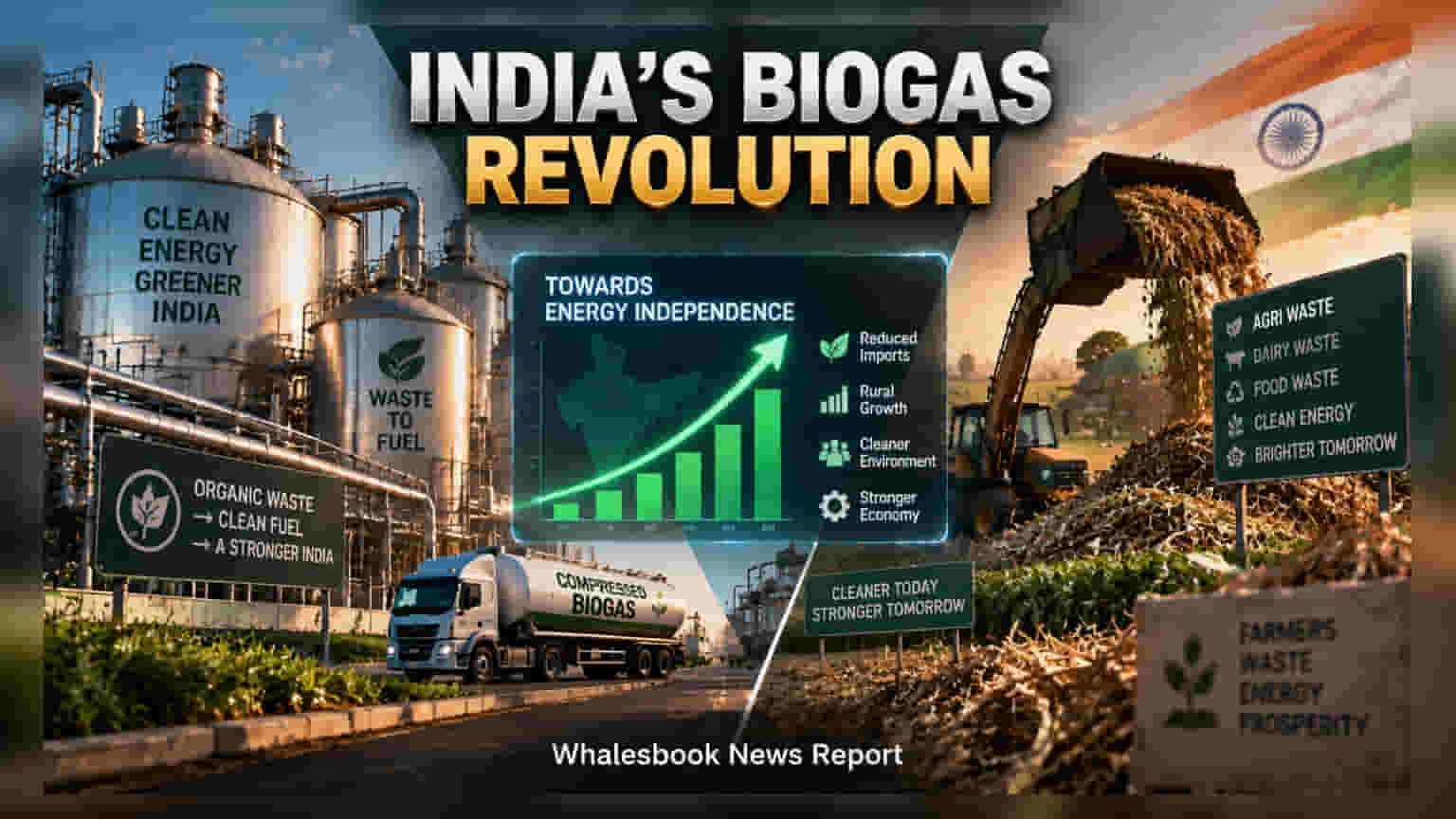
India has earmarked ₹23,731 crore for the GOBARdhan scheme through 2035-36 to boost compressed biogas production and cut energy imports. While the move aims to strengthen energy security, investors should note the execution challenges faced by past programs like SATAT. Success will hinge on fixing biomass supply chains and establishing viable markets for bio-slurry byproducts.
The Indian government has approved a ₹23,731 crore financial package through fiscal year 2035-36 to support the GOBARdhan scheme. This initiative focuses on converting organic waste into compressed biogas, an alternative to natural gas, to help reduce India's heavy reliance on imported energy. By turning agricultural and organic waste into fuel, the government aims to create a more self-reliant energy ecosystem.
Energy companies and infrastructure players are the primary entities expected to lead the implementation of these projects. The funding is designed to offset high initial costs and support the development of processing plants across the country. However, the sector faces significant operational hurdles that could impact project timelines and profitability.
Learning from Past Execution Challenges
A key investor concern is the historical performance of similar initiatives, such as the 2018 Sustainable Alternative Towards Affordable Transportation (SATAT) scheme. While that program targeted the commissioning of 5,000 plants, progress has been slow, with only 217 plants operational to date. This gap suggests that capital allocation alone may not guarantee results. Major bottlenecks have included unreliable access to raw materials, high logistics costs, and difficulty in selling the bio-slurry, which is a byproduct of the biogas process.
To address these issues, the current plan emphasizes the role of public sector fertilizer companies. These entities are expected to provide the infrastructure needed to collect, market, and distribute fermented organic manure to farmers. Integrating biogas production with fertilizer distribution is a strategic move intended to provide a steady revenue stream for plant operators, potentially lowering the financial risk for developers.
Strategic Resource Mapping
The government is also pushing for a data-driven approach to plant location. By using satellite imagery and groundwater data, authorities aim to place processing units in regions where residue is abundant and water stress is low. This strategy is intended to reduce the distance biomass must travel, thereby cutting logistics costs—a major expense that has hindered the viability of past projects.
Investors monitoring the sector should track the actual commissioning rate of these new plants rather than just the announced funding. Key monitorables include the effectiveness of the biomass supply chain, the speed of land acquisition for plant sites, and the ability of producers to find sustainable buyers for the resulting bio-slurry. The financial health of companies participating in these projects will depend on their ability to overcome these operational logistics and achieve stable production levels.