

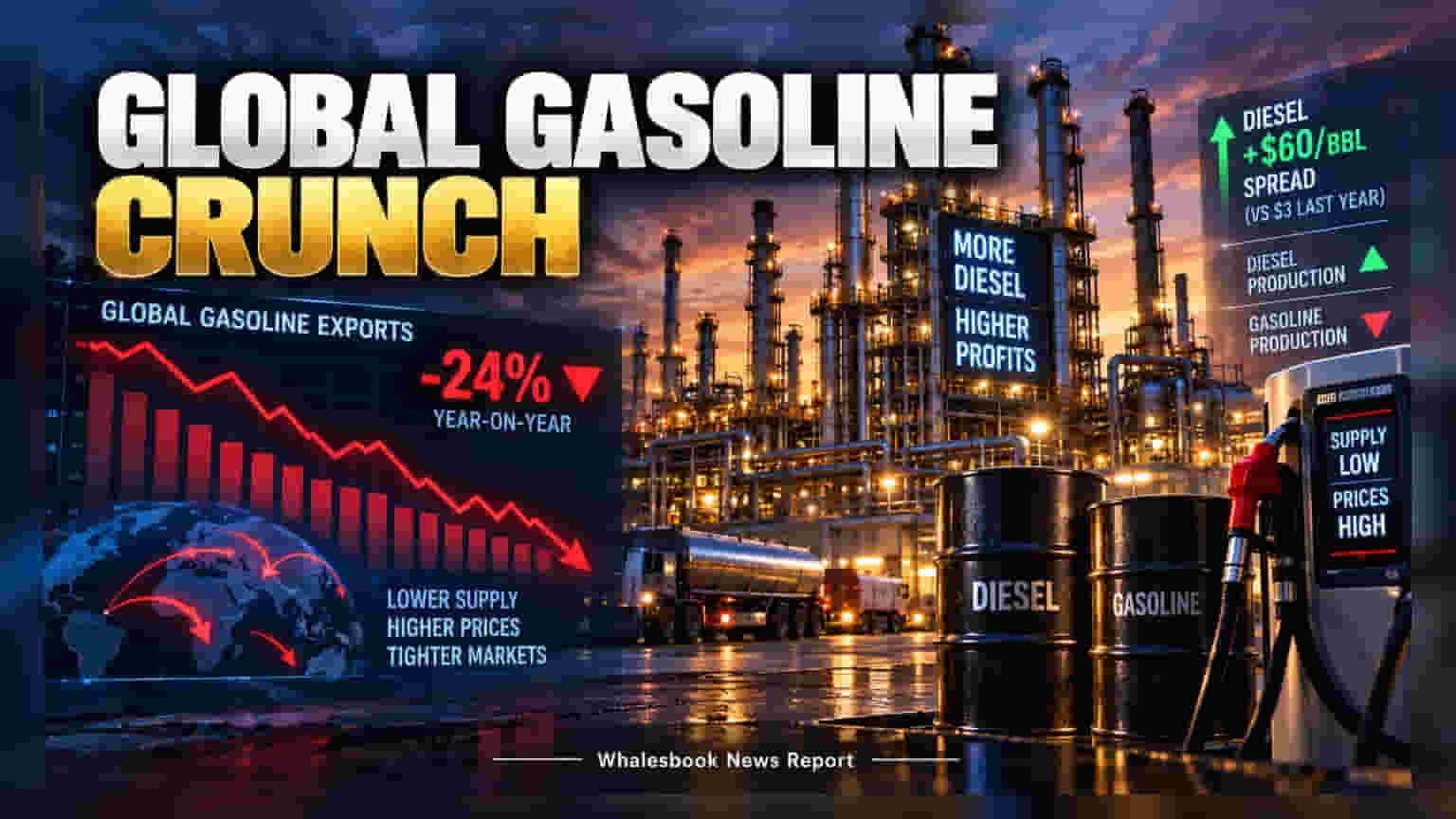
Global gasoline exports have dropped 24% as refiners focus on diesel to capture higher profit spreads. This shift, driven by a record price gap between the two fuels, has tightened gasoline inventories. For investors, this creates volatility in refining margins and potential supply risks for major oil companies like Reliance Industries, IOCL, BPCL, and HPCL.
Global energy markets are seeing a major change in how oil refineries operate. Facilities worldwide are prioritizing diesel production to chase better profits, which has resulted in a 24% year-on-year drop in global gasoline exports. This decision is driven by structural economics; in the United States, the price gap between diesel and gasoline has jumped to over $60 per barrel, compared to a spread of under $3 just one year ago. Because diesel is currently much more profitable to produce, refiners are adjusting their production lines to maximize output of this industrial fuel.
This trend is not isolated. Data from OECD nations shows that gasoline production fell nearly 2% in the second quarter, while diesel production has increased. The result is a sharp decline in gasoline inventories, which are now near the bottom of their seasonal range. This leaves little room for error if supply disruptions occur. While high fuel costs have slowed down diesel demand, gasoline consumption has remained unexpectedly strong. This creates a difficult situation where the market may need even higher prices to balance the supply-demand gap.
For Indian investors, this trend impacts the Gross Refining Margins (GRM) of domestic oil giants. Companies like Reliance Industries, Indian Oil Corporation (IOCL), Bharat Petroleum (BPCL), and Hindustan Petroleum (HPCL) constantly manage their 'product slate,' or the mix of fuels they produce from each barrel of crude oil. When price spreads between diesel and gasoline become this wide, efficient refiners attempt to tilt their production toward the more profitable fuel. However, if they cannot adjust their production quickly or if global fuel prices rise sharply, it can affect their overall profitability.
The situation is made more complex by the declining availability of naphtha, a component used to blend gasoline. A 30% drop in global naphtha exports has raised blending costs, making it harder and more expensive to produce finished gasoline. Furthermore, geopolitical tensions, particularly in the Middle East and the Russia-Ukraine conflict, remain significant risks. Any further disruption to oil infrastructure could tighten inventories even more, putting upward pressure on fuel prices.
Investors should closely track the 'crack spreads,' which is the difference between the price of crude oil and the refined products. Widening or narrowing of these spreads directly dictates the profitability of refining companies. Additionally, management commentary from Indian oil marketing companies regarding their operational flexibility and inventory management will be a key area to monitor in upcoming quarterly earnings reports.