

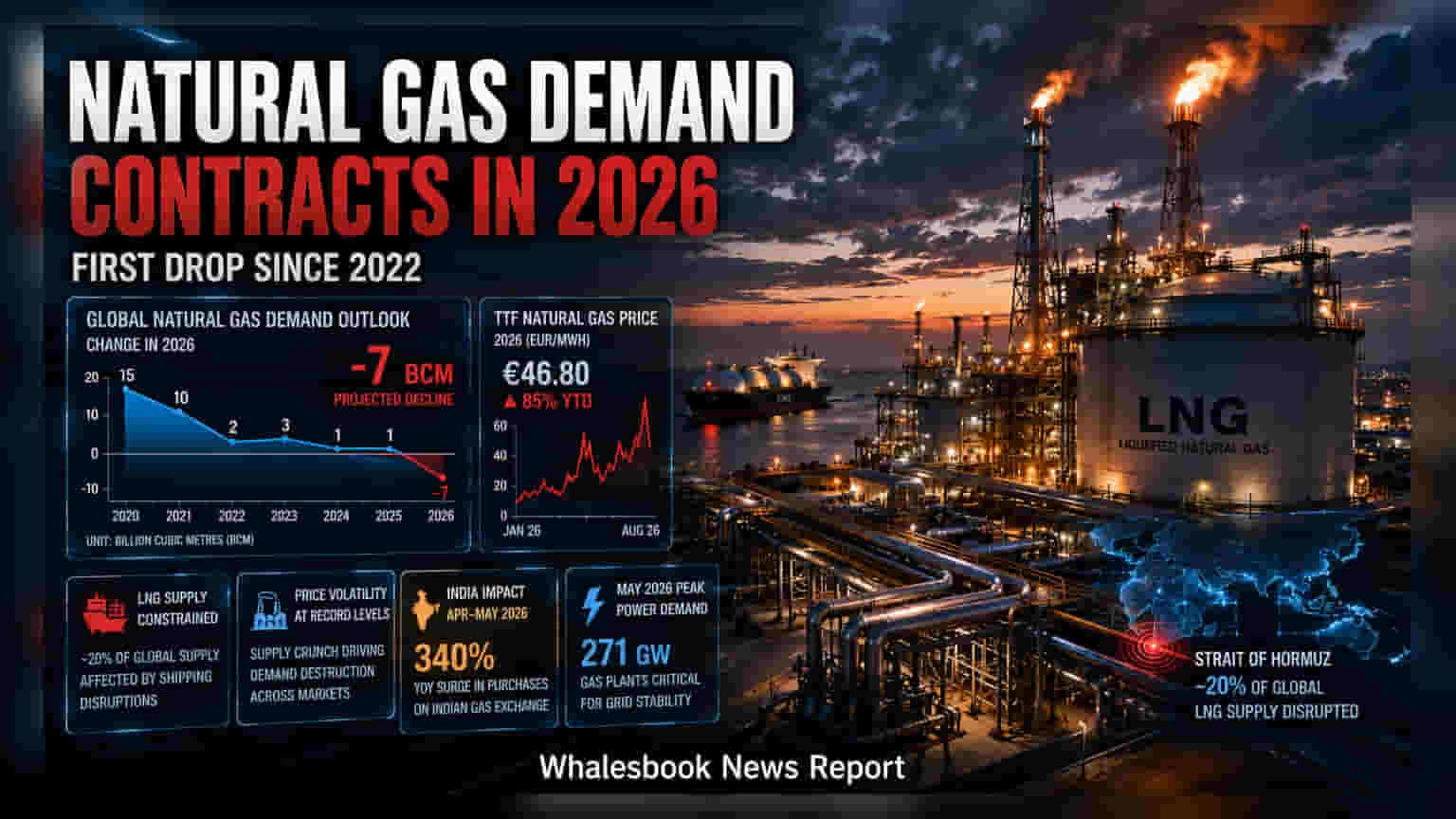
Global natural gas demand is set to contract by 7 billion cubic metres in 2026, the first decline since 2022. The ongoing Strait of Hormuz crisis has disrupted 20% of global LNG supply, leading to high prices that are forcing emerging markets to curtail usage. For Indian investors, the primary concern remains how this volatility impacts gas-fired power costs and energy import bills.
The global energy market is undergoing a rare shift in 2026, with natural gas demand projected to shrink by 7 billion cubic metres (bcm). This contraction marks the first drop in consumption since 2022, primarily driven by the ongoing geopolitical tensions in the Strait of Hormuz. As a vital chokepoint for international energy trade, the crisis has effectively constrained nearly 20 percent of global liquefied natural gas (LNG) supply, creating a ripple effect of higher costs and reduced availability across energy-importing nations.
Price Volatility and Market Strain
The supply disruption has led to significant price volatility in international gas benchmarks. When supply is restricted, prices often rise to levels that price-sensitive economies cannot sustain, leading to a phenomenon known as demand destruction, where industries and power plants reduce or stop usage due to prohibitive costs. While North American production has acted as a partial buffer, it has not been enough to offset the global deficit created by the shipping constraints in the Middle East. Major pricing markers, such as the Dutch Title Transfer Facility (TTF), have experienced sharp peaks in 2026, creating an unpredictable environment for global importers.
Impact on India’s Energy Sector
For India, this global crisis presents a complex challenge. The country relies on natural gas to balance its power grid, particularly during extreme weather events. In May 2026, India experienced a surge in electricity demand, with peak usage touching 271 gigawatts. Gas-fired plants are critical during these times to compensate for the lack of solar power at night. As a result, the Indian Gas Exchange saw a 340 percent year-on-year increase in purchases between April and May 2026.
However, the combination of high international gas prices and the need to maintain grid stability places pressure on the financial health of power utilities and gas-dependent industries. Companies that rely on gas as a primary raw material, such as fertilizer manufacturers and city gas distributors, may face margin pressure if they cannot fully pass on these higher input costs to consumers.
What Investors Should Monitor
The immediate investor focus is on how this price environment affects corporate balance sheets. For gas-dependent firms, the key concern is whether they can manage higher fuel costs without significant profit erosion. Investors should track management commentary regarding fuel sourcing strategies, as companies with long-term supply contracts may be better insulated than those relying on volatile spot markets.
Additionally, the longer-term trend to watch is the shift in India's energy mix. While the government continues to support infrastructure expansion, the high cost of imported gas may accelerate the need for alternative energy solutions or domestic production capacity to reduce reliance on the international market. The persistence of the Strait of Hormuz crisis and its subsequent effect on shipping insurance and freight rates will remain the most significant variable determining the cost of gas imports for the remainder of the year.