

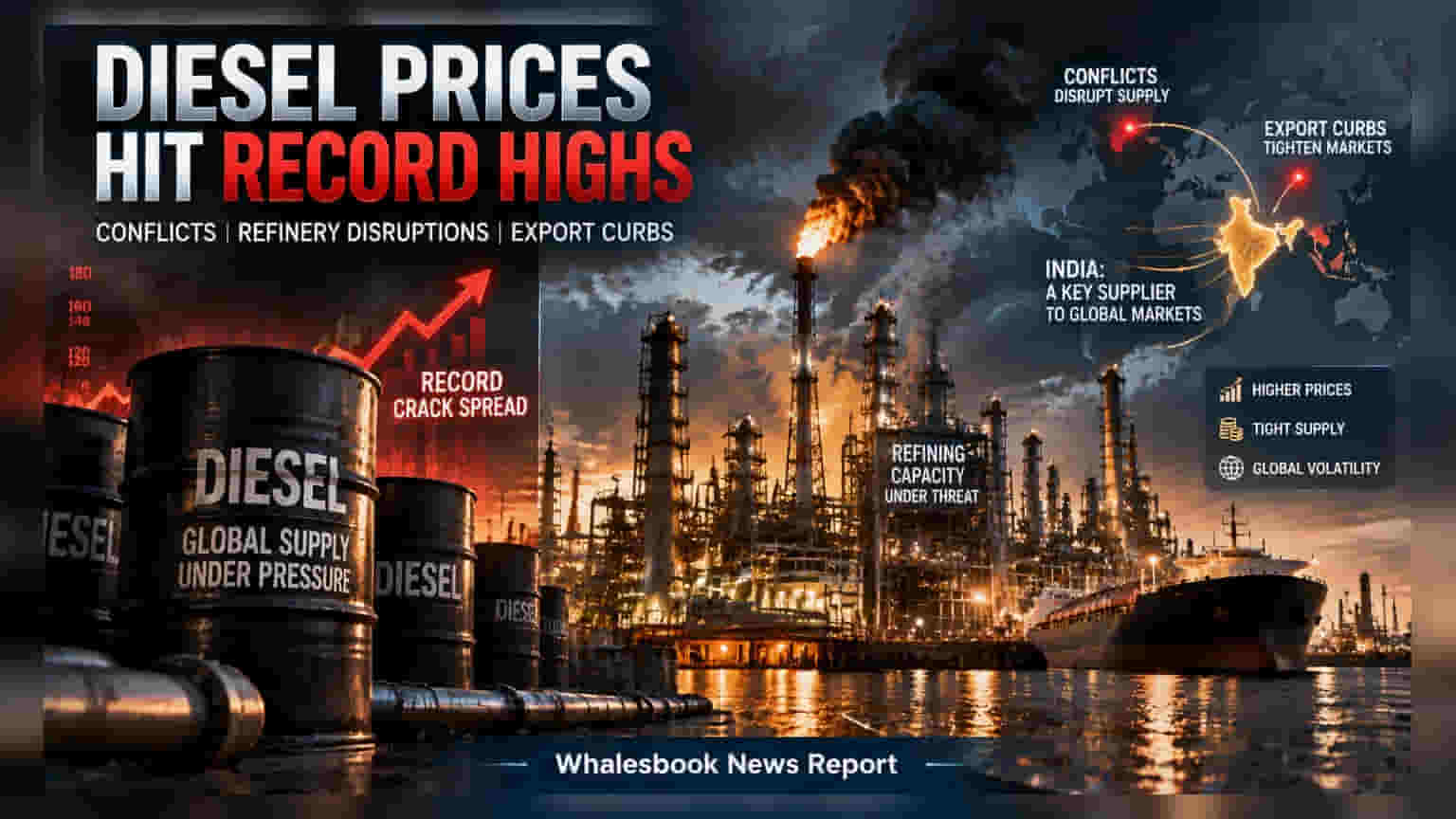
High global diesel prices are creating an energy supply crunch due to geopolitical refinery attacks and export bans. While India remains better placed than many nations due to its massive refining capacity, investors should watch how global crude price volatility impacts the margins of domestic refining companies and the broader inflationary outlook.
The global energy market is currently facing a sharp spike in diesel prices. This rise is driven by two main factors: geopolitical conflicts that have turned oil refineries into targets, and export restrictions from key producers like Russia. As infrastructure faces direct hits, the capacity to convert crude oil into usable diesel has dropped, creating a shortage that is pushing prices to record levels. The difference between the cost of raw crude and the price of refined diesel, known in the industry as the crack spread, has hit record highs, signaling a strained global supply chain.
Why Global Markets Are Volatile
The crisis is rooted in the lack of buffer in the global refining system. In regions like the United States, refineries are operating at nearly full capacity, leaving almost no room to handle any sudden supply gaps. When refineries are damaged, or when countries limit their exports to ensure they have enough fuel for their own people, the entire global market reacts with high price swings. The recent strikes on refineries have removed hundreds of thousands of barrels of daily output from the market, making it difficult for other regions to compensate for the loss.
India’s Position in the Energy Map
India is distinct in this environment. With a total annual refining capacity of approximately 258.1 million tonnes, the country produces more fuel than it consumes. This allows Indian refiners to act as a crucial source of diesel for global markets, including routes leading toward Europe. In the 2025-26 fiscal year, India exported roughly 61.5 million tonnes of petroleum products, showcasing its importance in the global energy trade. This production surplus helps the country stay better insulated from the immediate shortages that are driving up costs in other parts of the world.
What Investors Should Monitor
While India is a surplus producer, it is important for investors to understand that this does not mean the economy is entirely immune to global energy trends. India remains a significant importer of crude oil. If global crude oil prices rise sharply due to this diesel shortage, it increases the import bill for India, which can lead to inflationary pressure within the domestic economy.
For investors following energy stocks, the current environment presents a complex picture. Companies with large refining capacities, such as Reliance Industries, are typically net exporters and can benefit from higher global margins when the gap between crude prices and product prices widens. In contrast, public sector oil marketing companies like Indian Oil Corporation, Bharat Petroleum, and Hindustan Petroleum often have a higher focus on domestic distribution. The government’s approach to domestic fuel pricing remains a key factor that can influence the profitability of these firms. Investors should keep an eye on how these companies manage their refining margins amid this global volatility and track any changes in official fuel pricing policies, which are critical for determining the earnings of the oil marketing sector.