

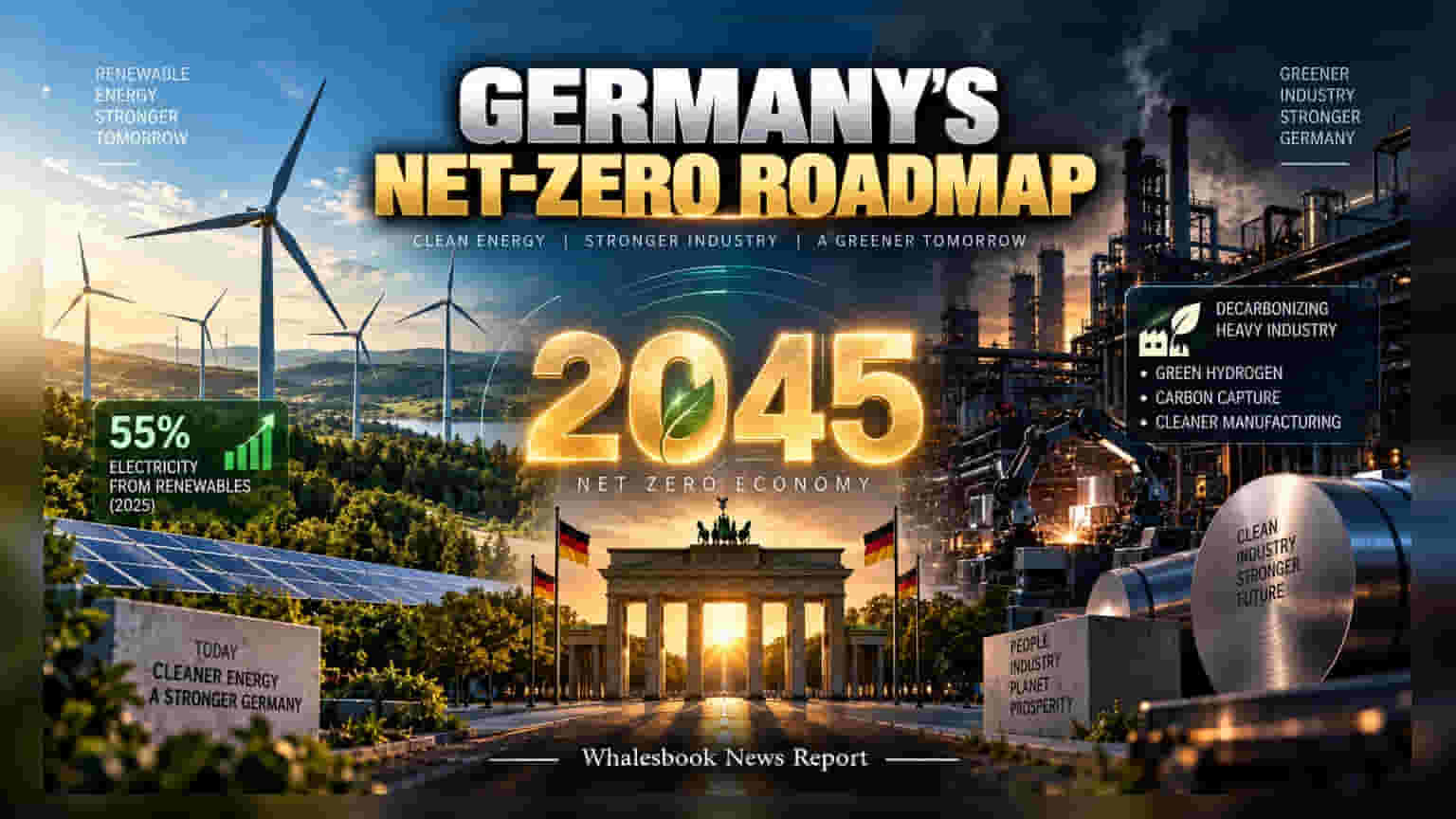
Germany has launched its 2026 Climate Action Programme, a 67-measure plan targeting net-zero emissions by 2045. While aiming for significant wind and hydrogen expansion, the country remains reliant on fossil fuels. This transition is relevant for global investors as it shapes new industrial standards, green technology demand, and future trade policies that could impact companies with ties to European markets.
Germany has officially introduced its 2026 Climate Action Programme, a major strategy aimed at reaching a net-zero economy by 2045. The roadmap details 67 specific measures designed to shift the country away from its deep-rooted dependency on coal, oil, and gas. While the nation has made progress—with renewable energy supplying roughly 55% of electricity consumption as of 2025—fossil fuels still accounted for about 65% of total energy consumption in 2024. The new plan seeks to address this by accelerating wind energy capacity by 12 gigawatts and increasing the integration of hydrogen and electricity across the industrial sector.
Industrial Transition and Carbon Costs
A critical component of this roadmap is the focus on heavy industry, which has historically been difficult to decarbonize. The German government is signaling support for carbon capture, utilisation, and storage technologies. Additionally, the plan introduces carbon contracts for difference, a mechanism intended to provide financial support to industries as they transition to cleaner but potentially more expensive production methods. For global investors, these measures are important because they set new benchmarks for manufacturing processes. Companies operating in or exporting to Europe may need to align with these stricter carbon standards, which could lead to shifts in demand for green technology and renewable energy equipment.
Global Trade and Fossil Fuel Finance
Beyond domestic policy, the roadmap faces scrutiny regarding Germany's international fiscal footprint. Critics have pointed out a contradiction between the country’s internal environmental goals and its continued financing of fossil fuel infrastructure projects abroad. This includes the persistence of long-term liquefied natural gas contracts and gas-fired power plant financing. Furthermore, proposed changes to export credit guarantees could potentially lower the number of projects subject to rigorous climate assessments by nearly 40%. This tension is a point of concern for investors, as it could lead to future changes in trade policy or international climate finance rules.
The debate over the country’s coal phaseout timeline also remains active. While the government targets 2045 for net zero, the discussion continues on whether to accelerate the coal phaseout date from 2038 to 2030. Policymakers face the complex task of managing this transition while balancing the economic health of industrial regions against urgent climate mandates. For investors, the most important next steps to track include the actual implementation of carbon-based industrial incentives, the progress of hydrogen infrastructure, and any regulatory changes regarding carbon border taxes that may impact trade with industrial partners.