 Whalesbook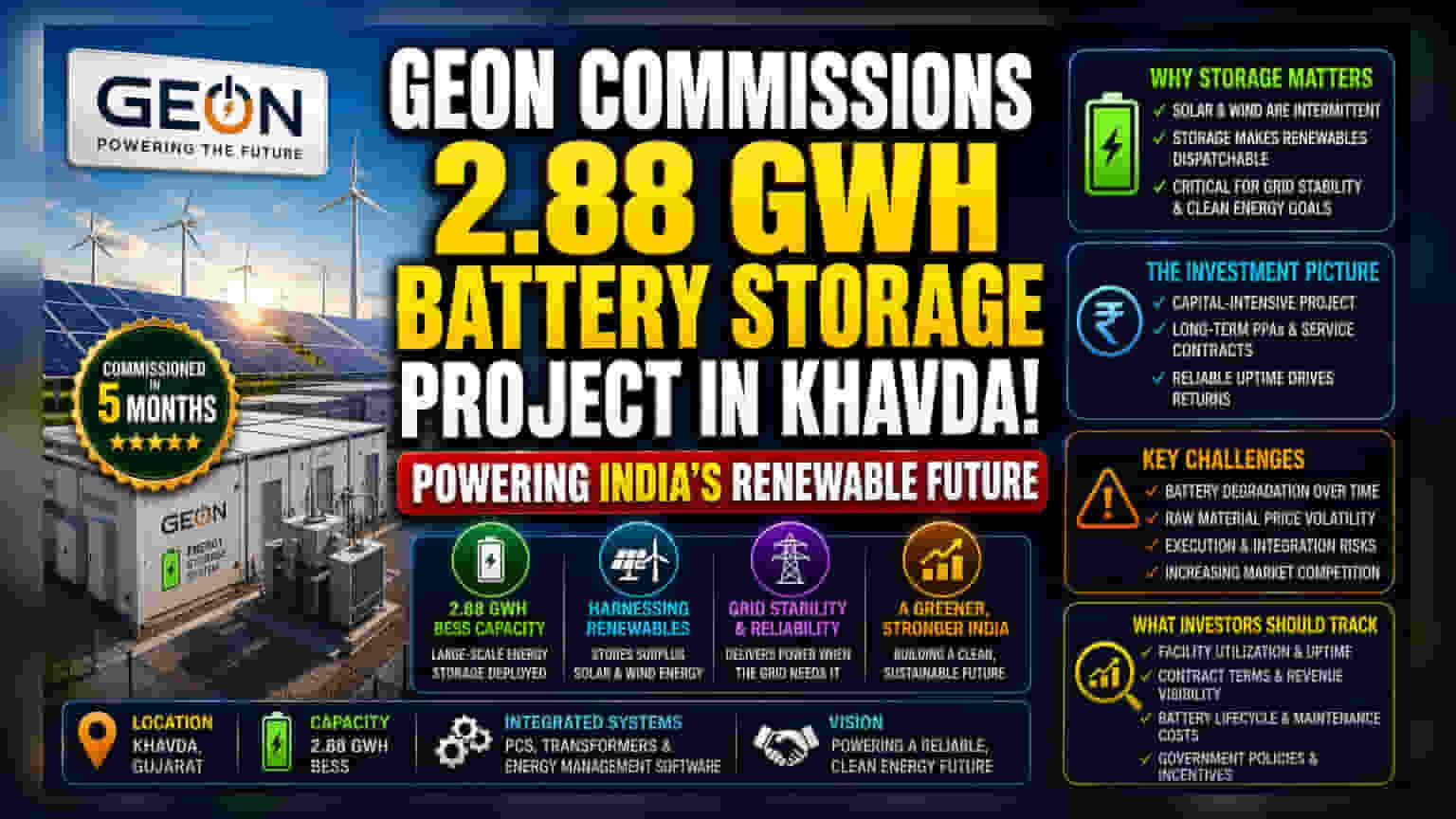


Mumbai-based Geon has commissioned a 2.88 GWh Battery Energy Storage System in Khavda, Gujarat, aiming to stabilize renewable power. This large-scale project marks a push into utility-scale storage, a sector crucial for managing intermittent solar and wind energy. Investors are monitoring the long-term impact of such high-capex projects on the company's cash flow and the evolving economics of energy storage contracts in India.
What Happened
Geon, a Mumbai-based power solutions firm, has commissioned a 2.88 GWh Battery Energy Storage System (BESS) in Khavda, Gujarat. The project, which was completed in five months, is designed to store surplus energy generated by renewable sources. As part of this deployment, the company has integrated Power Conditioning Systems, transformers, and energy management software to ensure the system can effectively supply power to the grid when needed.
Why Storage Is Critical for Renewables
The Khavda region is rapidly emerging as a massive hub for solar and wind energy. However, these energy sources are intermittent, meaning they do not produce power around the clock. Without storage, the grid cannot rely on them to meet peak demand consistently. By adding large-scale battery storage, the company aims to turn renewable energy into a dispatchable resource, effectively allowing it to function similarly to traditional, reliable power sources like coal or gas. This transition is essential for India’s broader clean energy goals, where grid stability is a primary challenge as more renewable capacity is added.
The Capital and Operational Challenge
Battery Energy Storage projects are highly capital-intensive. They require significant upfront spending on lithium-ion batteries and other power electronics. For an investor, the key question is how the company balances this heavy initial cost with long-term revenue. Unlike traditional manufacturing, BESS projects often rely on long-term Power Purchase Agreements (PPAs) or specialized service contracts with distribution companies. The financial success of such a project will depend on the utilization rate of the batteries and the specific terms of these long-term contracts. High capital spending can put pressure on a company’s cash reserves, so efficiency in execution and operational uptime are vital for maintaining profit margins.
How Investors May Read This
Investors typically view large-scale energy storage projects as both a growth opportunity and a technical challenge. While these projects secure a position in the growing green energy sector, they come with risks. Battery technology faces the challenge of degradation over time, which affects the efficiency of energy discharge. Furthermore, the cost of raw materials for batteries, such as lithium, nickel, and cobalt, can be volatile, potentially impacting project margins. The successful integration of this project demonstrates technical capability, but future performance will be tied to the reliability of these systems in real-world grid conditions.
What Investors Should Track
Moving forward, shareholders may monitor a few specific indicators regarding this project and the company’s broader storage business. First, the effective utilization of the Khavda facility will be important; the system needs to operate efficiently to provide the expected returns. Second, any commentary from management regarding the cost structure of these BESS projects and the nature of their long-term supply contracts will offer insight into profitability. Finally, investors should watch for updates on how the company manages the lifecycle cost of the batteries, as replacements or upgrades in the future could represent a significant maintenance expense. Keeping an eye on sectoral trends, such as government policies on battery storage subsidies or grid integration incentives, will also provide context for the company's future growth strategy.