

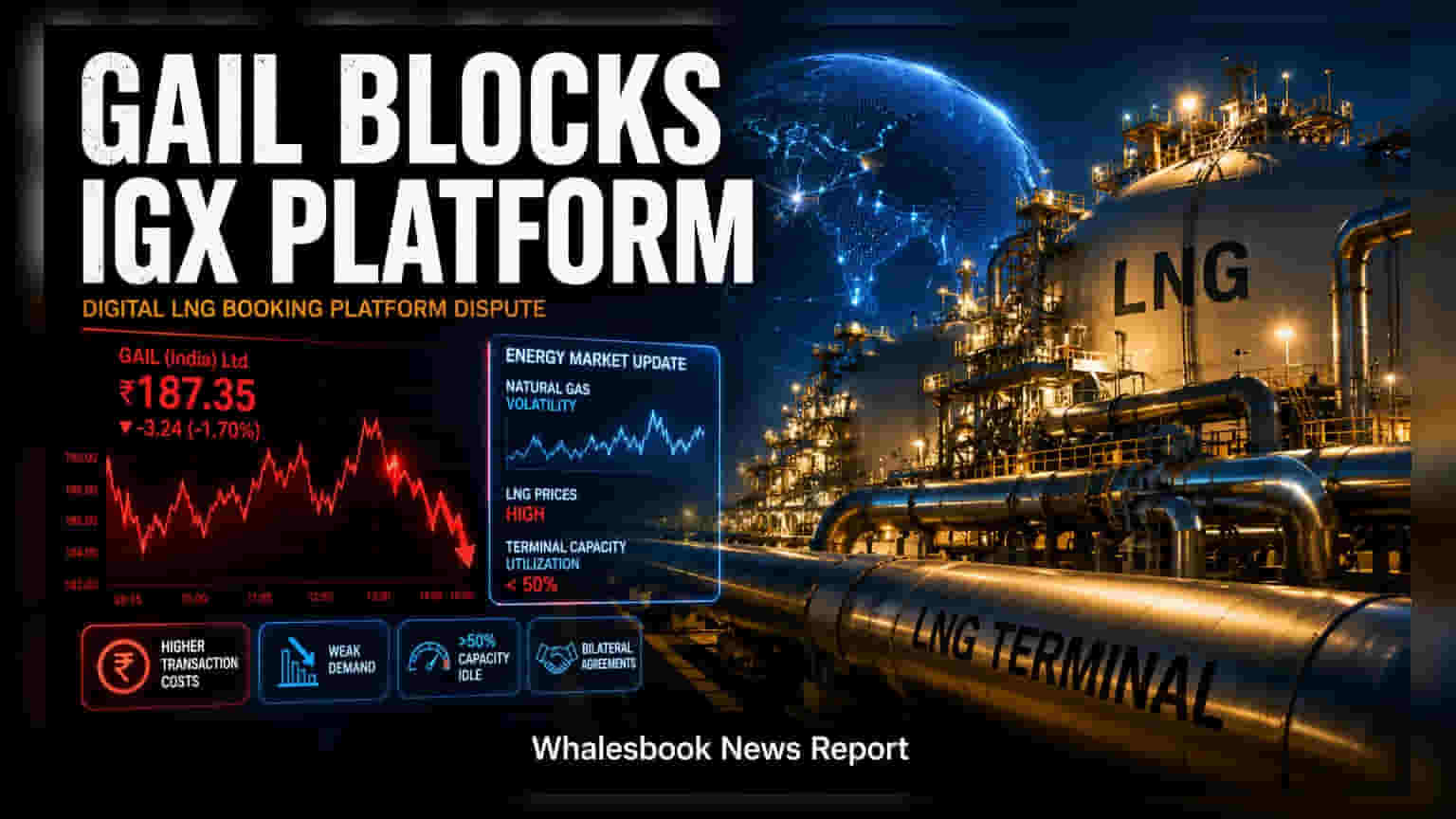
GAIL (India) Limited has formally told the energy regulator, PNGRB, that it opposes the Indian Gas Exchange's proposed digital platform for booking LNG terminal capacity. The gas major argued that the move would impose unnecessary transaction costs on consumers without addressing the core problem of low demand. With over 50% of India's LNG capacity currently sitting idle, the company believes the new platform would be redundant.
GAIL (India) Limited, the country's dominant natural gas marketer, has officially pushed back against a proposal by the Indian Gas Exchange (IGX) to launch a centralized digital platform for booking regasification capacity at Liquefied Natural Gas (LNG) terminals. The dispute has been submitted for consideration to the Petroleum and Natural Gas Regulatory Board (PNGRB) as part of a formal consultation process.
The core of GAIL's opposition centers on the financial impact for downstream consumers. The company argued that introducing this booking interface would create an unnecessary layer of transaction costs. In a market where industries and power plants are already managing the pressure of volatile global gas prices, GAIL contends that these extra intermediary fees would provide negligible operational benefits while unfairly burdening the end-user.
Beyond the cost concerns, GAIL pointed to a significant structural issue within the Indian energy sector: weak demand. India currently has a total LNG regasification capacity of approximately 57.5 million tonnes per annum (MTPA). According to data highlighted during the regulatory discussions, more than half of this capacity remains idle. GAIL argues that a digital booking platform does not solve the fundamental challenge of low consumption, making the proposed infrastructure ineffective under current market conditions.
The disagreement highlights a broader tension between traditional gas trading methods and the push toward exchange-based platforms. GAIL, which manages its own terminal infrastructure, relies on established, long-term bilateral agreements to manage supply and logistics. On the other hand, platforms like IGX aim to increase market transparency and flexibility. For investors, this tug-of-war is important to watch, as the outcome could influence how efficiently gas capacity is utilized across the country in the coming years.
The situation also underscores the sensitivity of the gas sector to global supply chain disruptions. Persistent underutilization of expensive infrastructure like LNG terminals remains a key risk for operators, as fixed costs must be managed regardless of how much gas is actually processed. Investors tracking GAIL should keep an eye on future updates from the PNGRB regarding this consultation, as well as any shifts in domestic gas consumption patterns that might impact capacity usage rates.