 Whalesbook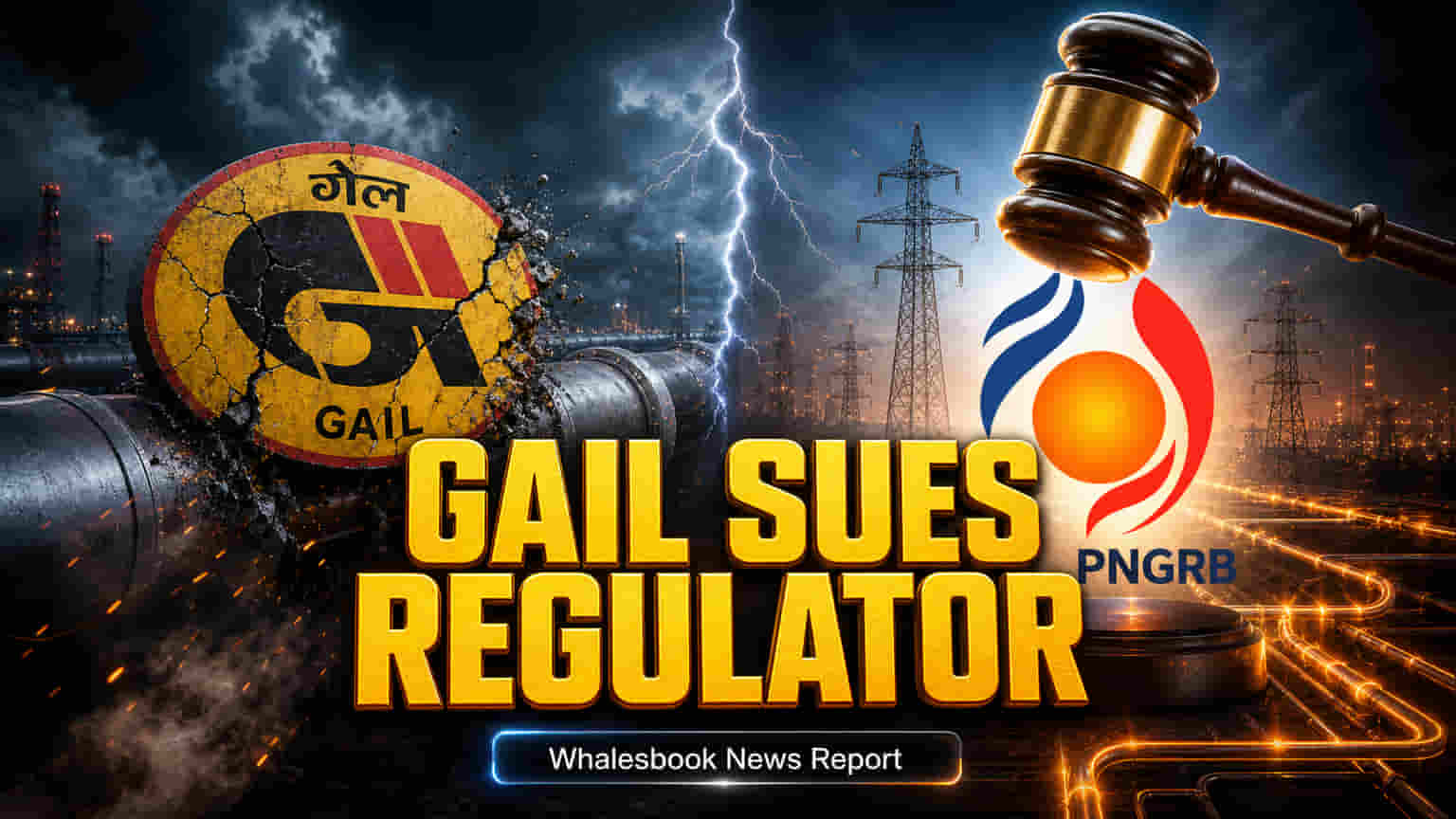


GAIL's Integrated Model Under Threat
GAIL India's legal challenge against the Petroleum and Natural Gas Regulatory Board (PNGRB) over a mandated separation of its gas transportation and marketing businesses marks a critical moment for India's energy sector. GAIL argues that forcing the split would weaken its financial strength. This clashes with the regulator's view, supported by findings from a committee led by Ajay Tyagi, that the Indian gas market is mature enough for competition and efficiency. The dispute touches on the balance between state-run companies' integrated operations and the regulator's drive for market reform and public benefit.
GAIL Defends Pipeline Network Control
GAIL operates about 16,000 kilometers of India's 25,000-kilometer gas pipeline network. The company believes its integrated model, which uses profits from different segments to support lower-margin transportation, is vital for the system's health. GAIL executives suggest a forced split could weaken both parts of its business and potentially allow private firms to gain control of key infrastructure built over decades. GAIL holds roughly 59% of the nation's authorized pipeline network and a major share in gas transmission and marketing. The company's market value is around ₹1.07 trillion ($11.55 billion), with a P/E ratio between 12.4 and 14.76, often seen as a value investment.
Regulator Cites Market Maturity, Pushes Competition
The PNGRB, citing a report from a committee chaired by former SEBI chief Ajay Tyagi, maintains that India's gas market has developed enough, pointing to the extensive pipeline network as proof. The regulator notes the separation was planned by 2017 and views GAIL's resistance as an unwillingness to give up control over setting transportation prices. This push from the PNGRB supports the government's broader goals to update the energy sector, attract investment, and improve energy security, especially as India imports about 88.2% of its crude oil. Efforts like the Oilfields (Regulation and Development) Amendment Act, 2025, and the Petroleum and Natural Gas Rules, 2025, aim to simplify regulations and make business easier.
Legal Challenge Creates Investment Uncertainty
GAIL's lawsuit in the Delhi High Court introduces significant uncertainty. While analysts generally rate GAIL a 'Strong Buy' with price targets around ₹184-188, this long court battle could dim that outlook. Other public sector companies like Indian Oil Corporation (IOCL) and Oil and Natural Gas Corporation (ONGC) trade at much lower P/E ratios (5.45-9.92) compared to GAIL's. Private companies such as Adani Total Gas have much higher P/E ratios, reflecting different growth expectations and risks. The possibility of regulatory overreach or a drawn-out legal process might discourage future investment in major energy infrastructure projects. GAIL also argues that domestic gas prices are still regulated, questioning if the market is truly mature and suggesting principles might be applied selectively, possibly benefiting private players. The drive for market liberalization has been ongoing since the PNGRB Act of 2006, but implementing it in a developing market remains complex.
Court Ruling's Impact on India's Energy Future
The outcome of the Delhi High Court case will heavily influence how regulators and investors interact in India's vital energy infrastructure sector. If GAIL's arguments win, it could lead to a more careful approach to forced unbundling, prioritizing the stability of integrated models and state-run company investments. On the other hand, if the PNGRB prevails, it could speed up market opening, potentially leading to better pricing and more efficient use of infrastructure. However, this might strain the finances of existing companies and affect future capital spending. With rising energy demand and a national aim to cut import reliance, clear regulations and investor confidence are crucial for India's energy security.