

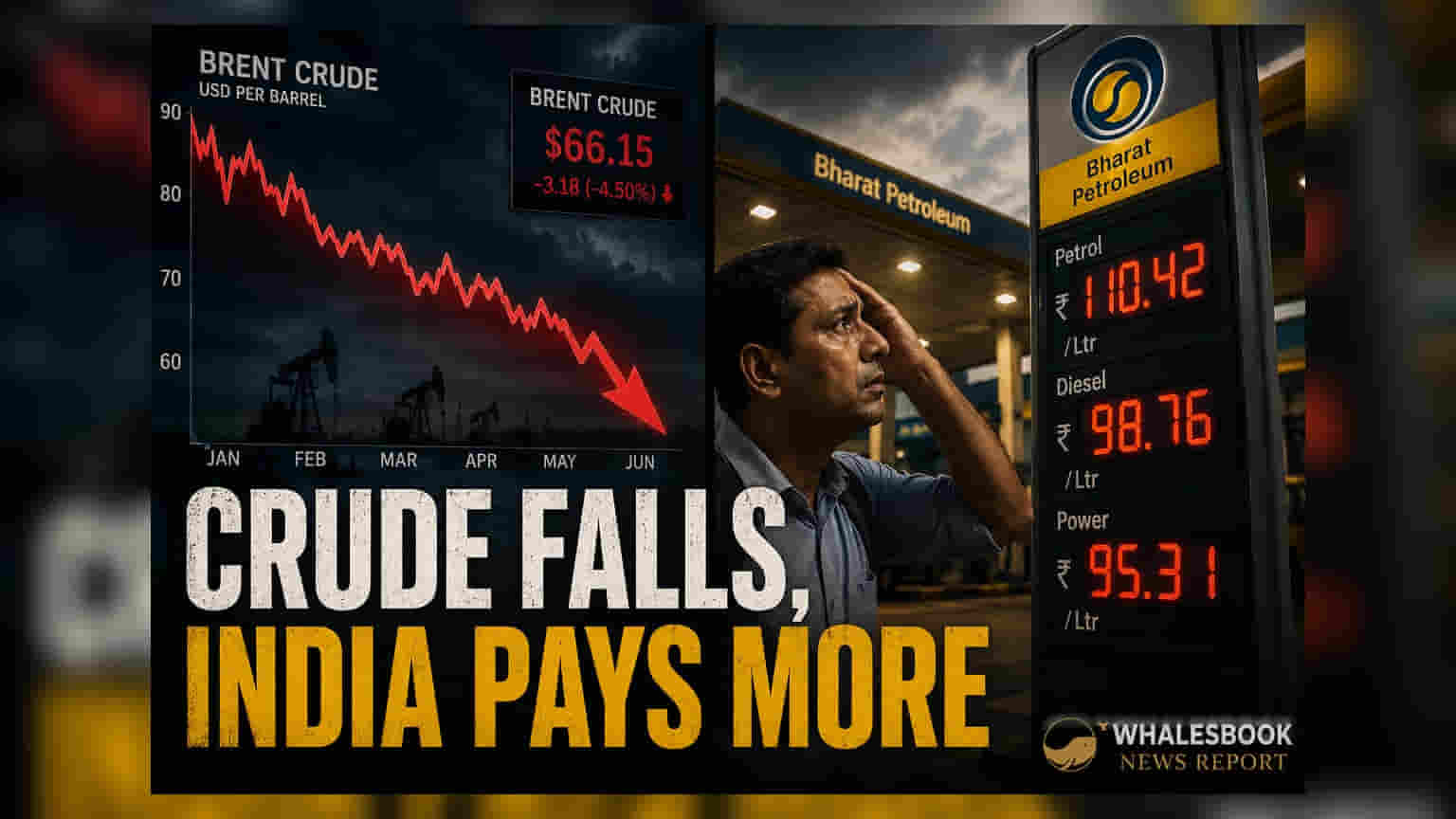
Despite a drop in global crude oil prices, state-run oil marketing companies in India have not reduced retail fuel rates. These companies are prioritizing the recovery of approximately ₹75,000 crore in losses incurred during the first quarter to stabilize their balance sheets.
Global crude oil prices have recently eased to levels seen before recent geopolitical conflicts, providing relief to many economies including China, which has already lowered local fuel costs. However, Indian consumers are not seeing a similar decline at the fuel pump. While private retailers like Nayara Energy have begun to lower their prices in response to cheaper crude imports, state-run oil marketing companies (OMCs) are maintaining current retail rates.
Impact of Q1 Financial Pressures on Pricing
The primary reason for this lack of price relief lies in the financial condition of the three major state-owned oil retailers—Indian Oil Corporation (IOC), Bharat Petroleum Corporation (BPCL), and Hindustan Petroleum Corporation (HPCL). These companies collectively faced significant financial pressure in the first quarter of the current fiscal year. Official data and reports indicate that these entities incurred losses nearing ₹75,000 crore during that period. These losses were largely driven by previous periods where retail fuel prices were held steady despite rising international crude costs, forcing the companies to absorb the difference.
For these state-run firms, the current window of lower global oil prices serves as an opportunity to repair their margins and recover the capital lost during the earlier months of high-cost imports. By keeping retail prices steady while the cost of purchasing crude oil falls, these companies are effectively using the improved profit margins to offset their earlier deficit. For shareholders, this strategy is intended to restore the financial health and cash flow of these oil retailers, which were severely strained by the earlier price control environment.
What Investors Should Monitor Next
The persistence of high fuel prices despite favorable global trends highlights the complex balance between government policy and the financial sustainability of state-run energy companies. Investors should continue to monitor the quarterly financial results of IOC, BPCL, and HPCL to track how quickly these companies can recover their losses and improve their overall debt position. Additionally, the timing of any future price reductions will depend on how quickly these firms reach a comfortable profit margin and whether the government provides any policy signals regarding price deregulation. The ability of these firms to manage raw material costs while navigating government-led pricing expectations remains the key factor for their financial performance in the coming quarters.