

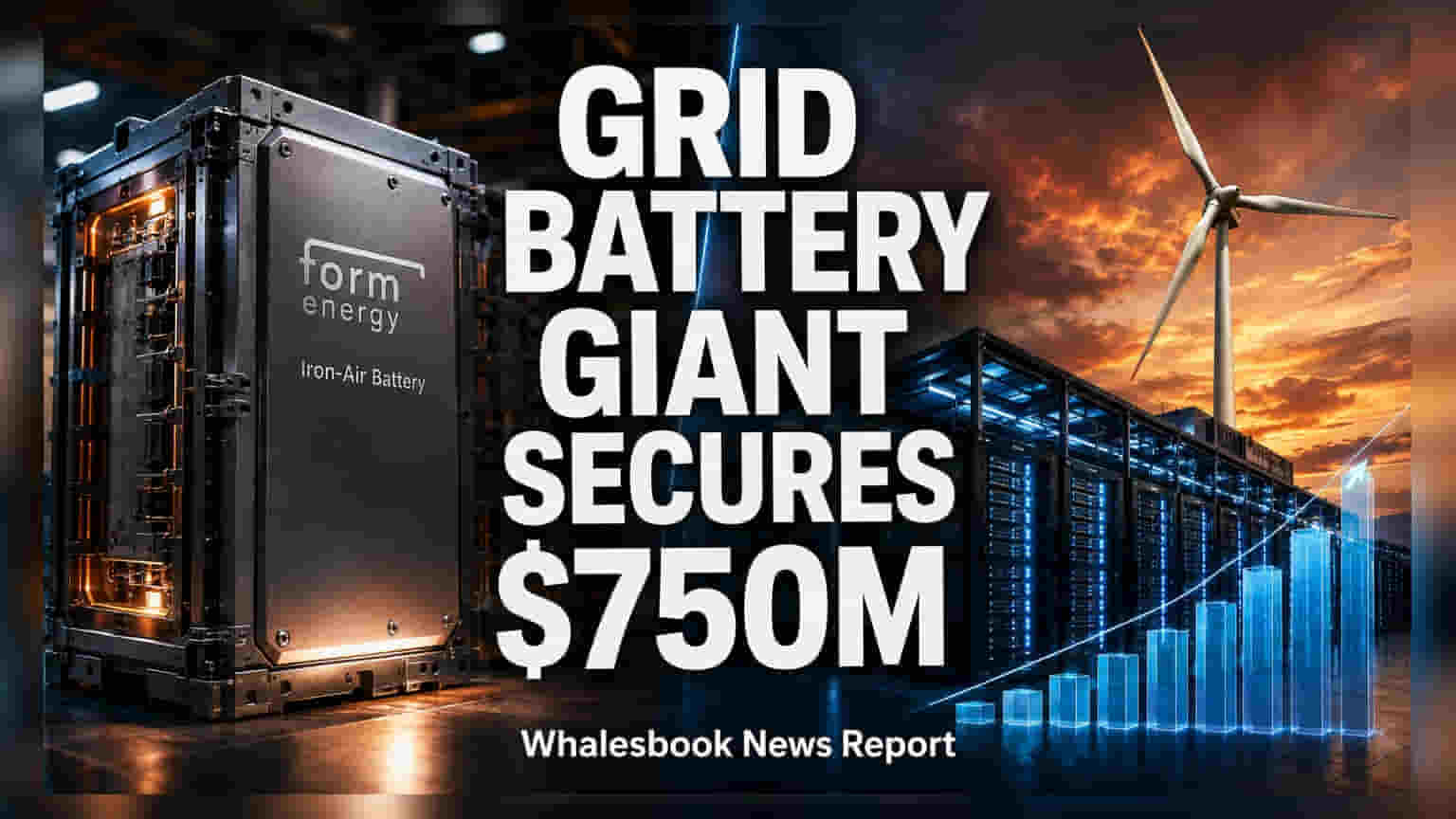
US-based Form Energy has secured $750 million in a new funding round to expand its iron-air battery manufacturing. As a private company, shares are not available on public stock exchanges, but the development marks a shift in global energy storage technology, which is crucial for managing renewable power reliability.
Form Energy, a private energy technology company based in the United States, has raised $750 million in its Series G funding round. The investment, led by T. Rowe Price, brings the company’s total funding to over $2 billion. The capital is aimed at scaling up its manufacturing operations at the 'Form Factory 1' facility in West Virginia.
While this news is significant for the energy sector, it is important for Indian investors to note that Form Energy is a private company. It is not listed on the National Stock Exchange (NSE), the Bombay Stock Exchange (BSE), or any other public market. Therefore, there is no ticker symbol or direct way for retail investors to buy shares in the company.
The Shift to Long-Duration Storage
The core of Form Energy’s business is its iron-air battery technology. Most current grid-scale batteries, primarily using lithium-ion chemistry, are typically designed to provide power for 2 to 4 hours. Form Energy aims to solve the 'intermittency' problem of renewable energy—where the sun does not shine or the wind does not blow—by providing storage that can last up to 100 hours.
The chemistry involves the reversible oxidation of iron, a process that is essentially controlled rusting. By using abundant, low-cost iron instead of expensive minerals like lithium, cobalt, and nickel, the company intends to lower the cost of large-scale energy storage. This is particularly relevant as data centers and industrial grids seek reliable power backups that can outlast typical short-term storage solutions.
Business Risks and Execution
For investors monitoring the energy sector, the company faces substantial execution risks. Hardware startups that require massive infrastructure for manufacturing often face challenges in scaling production to meet demand. The company is currently in a growth phase, moving from pilot programs to full-scale commercial manufacturing. Because the company is private, its financial performance, debt levels, and profit margins are not publicly disclosed.
Capital intensity is another major factor. Building factories for battery production requires massive upfront cash, which can put pressure on a company’s cash flow until it reaches a break-even point. Success will depend on the company's ability to prove the long-term reliability of its iron-air systems at a commercial scale and meet the delivery timelines for its backlog of projects, which include utility-scale deployments for major clients like Google and Xcel Energy.
Implications for the Energy Sector
While Indian investors cannot invest in Form Energy directly, the company's progress is a bellwether for the global energy storage market. The move toward iron-based storage highlights a broader trend: the industry is actively searching for alternatives to lithium-ion batteries to reduce reliance on complex, expensive, and sometimes concentrated global supply chains.
As the renewable energy transition accelerates, the demand for long-duration storage is expected to rise. Investors should track whether this iron-air technology becomes a standard solution for grid stability or if other storage technologies emerge as more cost-effective competitors. The next major monitorables for this sector globally will be the successful commercial operation of these large-scale plants and their ability to compete with existing lithium-ion battery costs over the long run.