

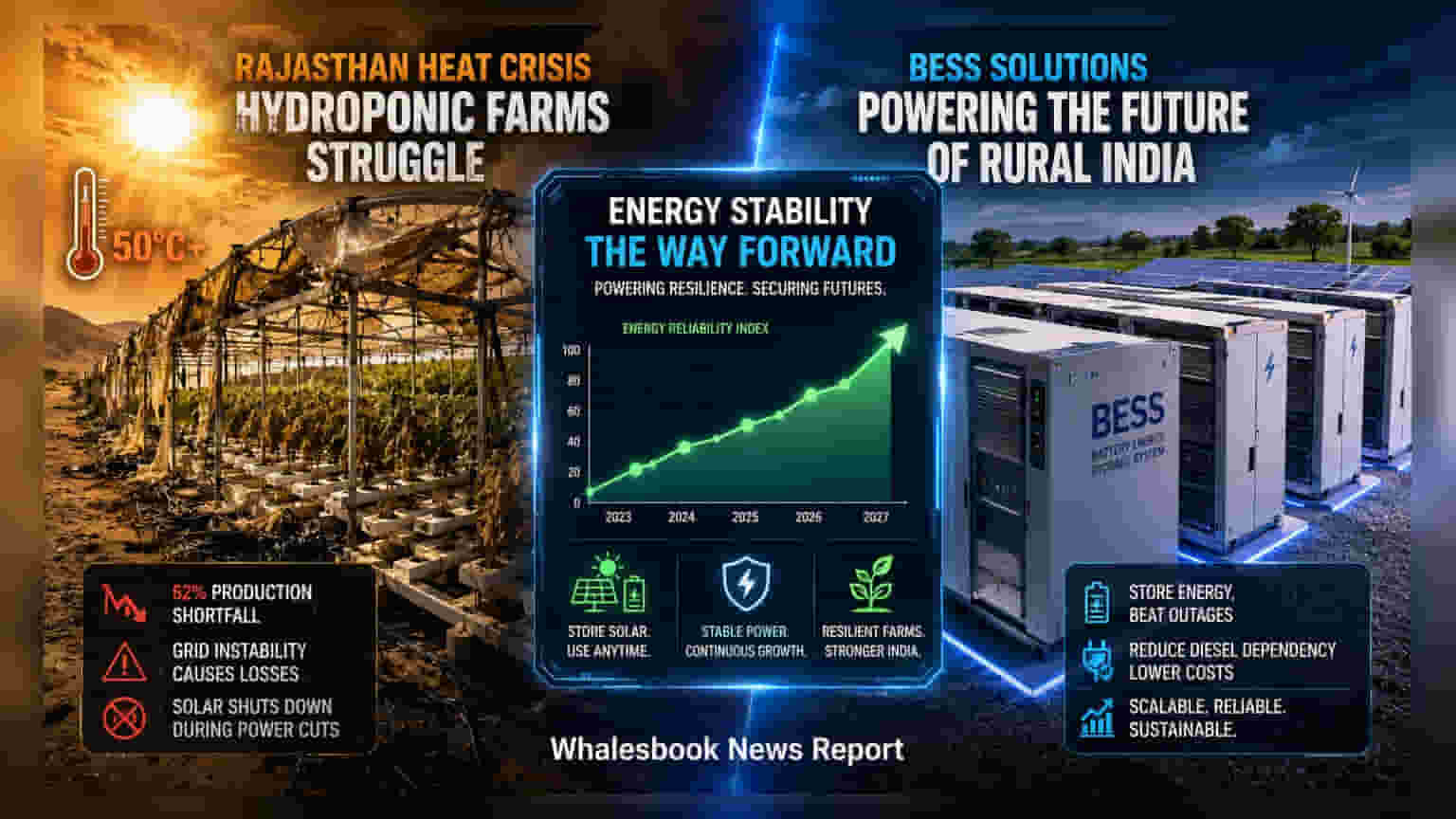
A Rajasthan-based hydroponic farm reported a 62% production drop due to severe grid instability, accelerating the push for Battery Energy Storage Systems (BESS) in Indian agriculture. As power outages impact rural output, BESS is transitioning from a backup option to essential infrastructure, offering a path to stabilize operations and protect capital-intensive agricultural projects.
The agricultural sector in India is facing a critical turning point as rural energy challenges threaten operational stability. Recent data highlights the vulnerability of high-tech farming operations, specifically with the case of E-Foods in Rajasthan. The hydroponic operator faced a 62% shortfall in production after severe grid instability hindered its ability to maintain consistent operations during the peak summer months. Even with 4.7 MW of installed solar capacity, the farm could not utilize its energy assets during daily power cuts because of grid-tied safety protocols that automatically shut down systems when the main grid fails.
The Shift to BESS as Critical Infrastructure
This incident underscores a growing problem in rural electrification: traditional centralized grids often fail to keep pace with the energy demands of modern agricultural technology. When electricity supply becomes volatile, many farmers rely on diesel generators as a temporary fix, especially during extreme heatwaves when temperatures exceed 48°C. However, this dependence leads to increased operational costs and frequent equipment failure, which ultimately puts investment at risk.
In response, industry trends show a clear move toward integrating Battery Energy Storage Systems (BESS). Unlike conventional backup methods, BESS allows farms to store solar energy generated during the day for use at night or during grid outages. This transition is shifting the perspective on energy storage, moving it from a luxury add-on to a necessary component of modern agricultural infrastructure. For agricultural enterprises, this technology ensures that vital systems—such as irrigation pumps, cold storage units, and grain processing facilities—remain functional throughout the day.
Scaling Rural Energy Resilience
Efforts to solve these energy gaps are moving beyond individual farm solutions toward broader, systemic changes. Several pilot initiatives are now underway to test the viability of storage-backed microgrids. For instance, projects involving the Maharashtra Energy Development Agency in Amravati, along with collaborations led by Smart Power India and The Rockefeller Foundation in Uttar Pradesh and Bihar, are utilizing intelligent software to manage load requirements more effectively.
By stabilizing local distribution feeders, these projects aim to provide a higher quality of electricity to rural enterprises. This development is important for investors and stakeholders to monitor, as the success of these microgrids may determine the long-term feasibility of large-scale agricultural investments in remote areas. As India’s traditional transmission infrastructure continues to adapt, the ability to generate and store power locally is becoming a primary mechanism to secure output against climate-driven energy shocks.
For investors and rural enterprises, the key monitorable will be the adoption rate of these storage technologies and how effectively they can reduce the reliance on diesel and unreliable grid connections. Future progress will depend on the cost-efficiency of battery deployments and the regulatory support for distributed energy management systems in agricultural corridors.