

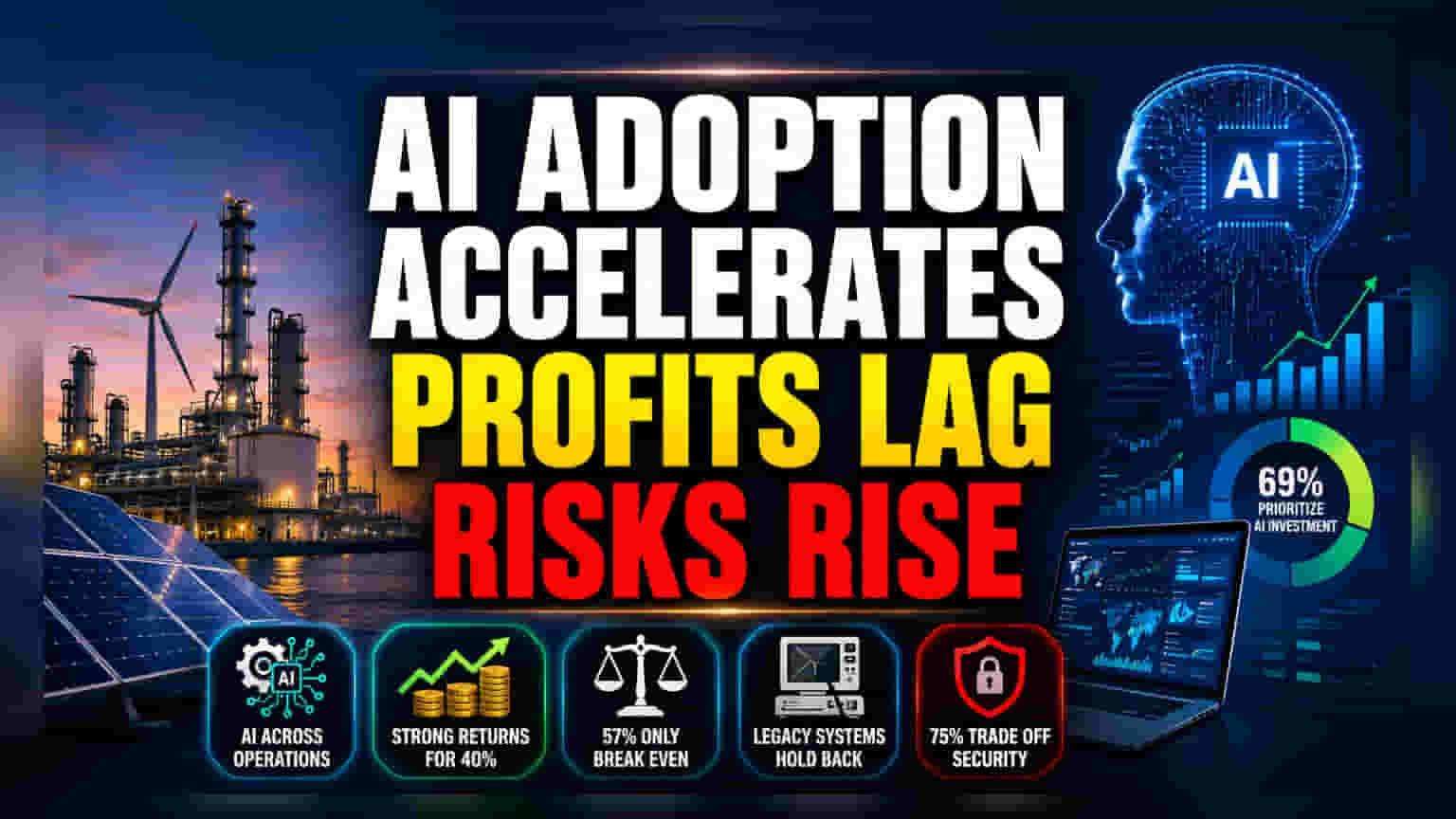
A new KPMG report shows energy and chemical companies are rushing to adopt AI, with 69% making it a top priority. However, outdated systems are limiting profits, as nearly 60% of firms report that their digital investments are only breaking even.
What Happened
A recent survey of 258 technology leaders across the energy, natural resources, and chemicals sectors by KPMG reveals a rapid shift toward Artificial Intelligence (AI). About 69% of these companies now prioritize AI as a key investment area. The study shows that firms are moving quickly from testing AI in small experiments to using it across their entire operations. These applications range from optimizing production to managing power grids and automating back-office tasks.
The Efficiency-Profit Gap
While the adoption of AI is high, the financial benefits remain uneven for shareholders. The KPMG report highlights that while 40% of energy companies are seeing strong returns of over 200% from their technology spending, a larger group of 57% are only breaking even. This means that for more than half of the companies, the money spent on digital transformation is not yet driving significant profit growth or cost savings.
For investors, this gap is important. Energy and chemical companies are capital-intensive businesses. If a large portion of the budget is spent on new technology that fails to deliver a clear financial return, it can create pressure on profit margins and cash flow. Investors may want to look closer at whether a company’s technology spending is actually improving operating efficiency or just adding to the expense list.
The Legacy System Hurdle
One of the main reasons for these mixed results is the age of existing technology. Nearly 60% of companies identified outdated systems as a major barrier. Many older energy plants and chemical facilities rely on legacy digital architecture that does not easily talk to modern AI tools. Integrating new, smart systems into old infrastructure often requires additional capital and time, which can lead to project delays or cost overruns.
Data And Security Risks
Beyond costs, the rush to deploy AI introduces operational risks. The pursuit of speed often involves compromises in cybersecurity and data governance. The report notes that 75% of respondents admitted that their push for faster digital adoption has traded off security and scalability. In sectors like energy and chemicals, where operational safety is vital, data security and system stability are not just IT issues; they are critical business risks. A security failure or data error in a production line could lead to expensive downtime or safety incidents.
What Investors Should Monitor
When looking at companies in this sector, investors may track how management discusses their digital strategy. Key monitorables include whether the company has a clear plan to replace or upgrade old systems and how they measure the return on their technology investments. Companies that successfully bridge the gap between their old infrastructure and new AI tools may be better positioned to control costs and improve output, while those struggling with high tech spending and weak returns may face margin pressure.