

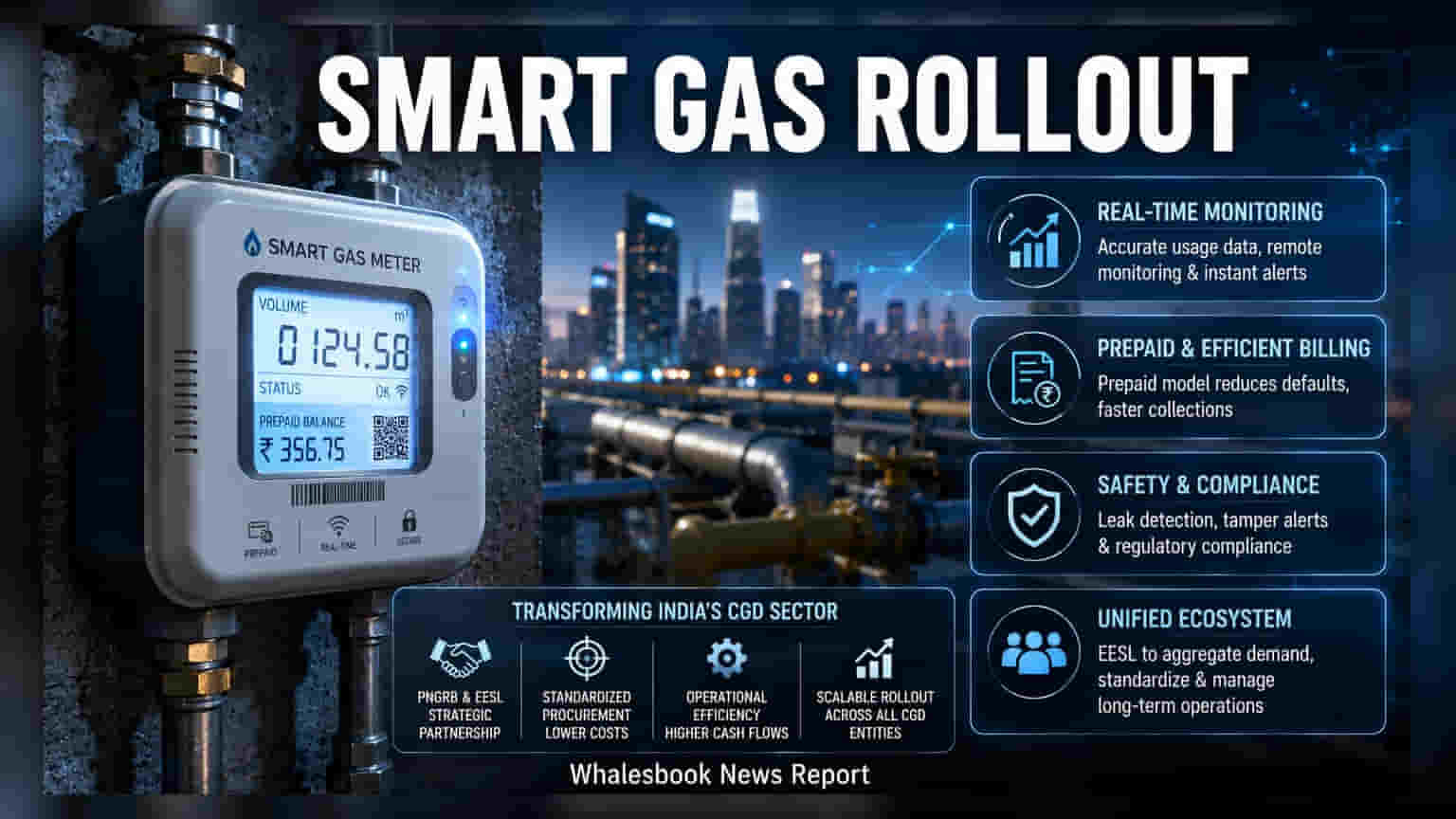
EESL and the gas regulator PNGRB have signed an agreement to drive the nationwide rollout of smart piped natural gas (PNG) meters. The partnership aims to simplify procurement and improve billing efficiency for gas distribution companies. This shift toward a data-centric model could influence capital spending and cash flow for players in the City Gas Distribution sector.
The Petroleum and Natural Gas Regulatory Board (PNGRB) and Energy Efficiency Services Ltd (EESL) have formalized a partnership to accelerate the adoption of smart metering technology for domestic piped natural gas users. This move, announced on August 28, 2026, aims to create a unified ecosystem for City Gas Distribution (CGD) entities across India, moving the sector away from manual meter reading toward real-time, digital monitoring.
EESL will lead the project by aggregating demand from various gas distributors, conducting market assessments, and overseeing long-term maintenance. By centralizing the procurement process, the regulator hopes to standardize hardware, improve safety compliance, and reduce the cost of technology implementation for local gas companies. For the industry, this is a push to resolve longstanding billing inefficiencies and reduce consumer payment defaults by encouraging a prepaid utility model.
Impact on the City Gas Distribution Sector
For investors monitoring the City Gas Distribution space, this development is significant because of the potential impact on capital allocation. Companies such as Indraprastha Gas, Mahanagar Gas, Adani Total Gas, and Gujarat Gas operate the networks that will eventually integrate these devices. While the move towards smart metering can improve operational cash flows by streamlining collections, it also requires upfront capital investment. The pace at which these companies adopt the new standards and the timeline for mandatory rollout will be critical monitorables.
Financial Context and Execution Risks
While the partnership aims to modernize infrastructure, investors should be aware of EESL’s internal financial backdrop. EESL, which is a joint venture of power sector public sector undertakings, is not a listed company, but it has historically navigated debt pressure and financial constraints. The agency has previously looked to divest its stake in its smart metering subsidiary, IntelliSmart, to manage its balance sheet. Given this, the financial health of the implementing agency is a factor that can influence project execution speed.
Furthermore, the smart metering sector in India has a history of implementation challenges. Previous large-scale smart meter projects in the power sector encountered hurdles, including payment realization issues from utility firms and significant delays in installation. The market will be watching to see whether this gas-focused collaboration can establish a more sustainable business model that protects against such execution risks. The success of this initiative will likely depend on the regulatory timeline set by the PNGRB and how quickly the hardware costs can be brought down through centralized competitive bidding.