

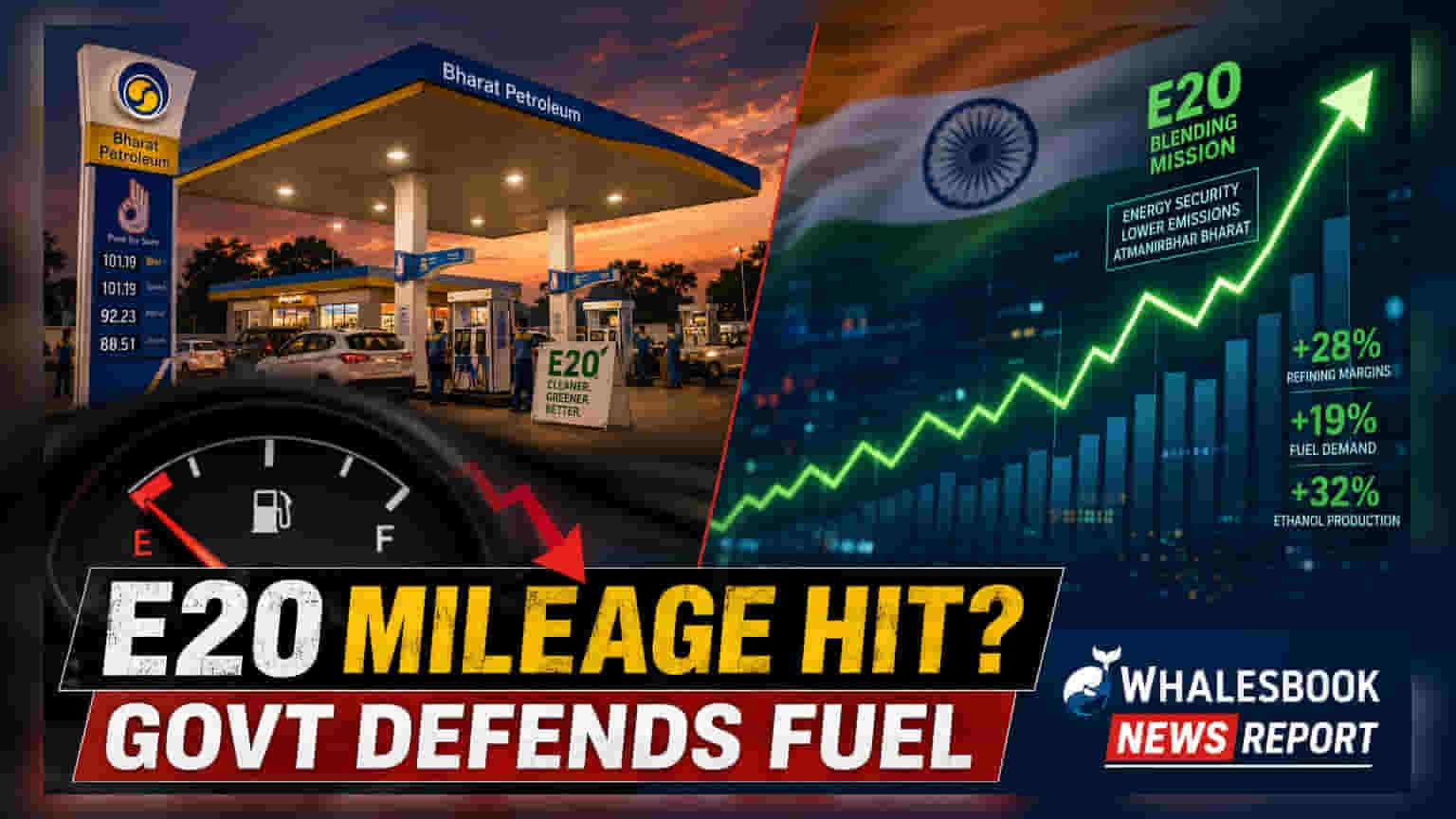
Petroleum Minister Hardeep Singh Puri has confirmed that E20 fuel may cause a slight dip in vehicle mileage, but maintains it enhances engine performance. The government emphasizes that the ethanol blending program is essential for cutting import costs and supporting the farming sector.
What Happened
Petroleum and Natural Gas Minister Hardeep Singh Puri has officially acknowledged that vehicles using E20 petrol—a blend containing 20% ethanol—may face a reduction in fuel efficiency. While addressing concerns about the impact of the fuel on consumers, the Minister noted that any minor loss in mileage is balanced by improvements in engine acceleration and overall performance. The government continues to frame this transition as a critical pillar of India’s energy security strategy, moving away from a high dependence on imported crude oil.
The Trade-off: Efficiency vs. Energy Security
Automobile industry testing has indicated that fuel efficiency may decline by approximately 2-4% when using E20 compared to traditional petrol. This shift is a core component of the government's plan to save roughly Rs 43,000 crore in foreign exchange annually by FY26. Beyond the macro-economic savings, the government expects the program to provide approximately Rs 40,000 crore in additional income for farmers by creating a steady demand for sugarcane and grain-based ethanol supplies.
Consumer and Technical Concerns
Since the rollout of E20, many vehicle owners have raised questions about how the fuel interacts with older engines and potential maintenance issues. The Ministry of Petroleum and Natural Gas has clarified that concerns regarding widespread engine failures or insurance coverage problems are not supported by evidence. They maintain that vehicle warranties remain valid and that the transition to higher ethanol blends has been managed through extensive industry consultations.
Future Roadmap and New Blends
India is already looking toward further increasing the ethanol content in fuel. Testing for E25 petrol is currently in progress to evaluate its impact on long-term vehicle durability and performance. Additionally, the government has begun limited trials of E85 fuel at specific outlets. For the long term, initiatives such as E100 dispensing stations for flex-fuel vehicles are being supported by state-run entities like Indian Oil Corporation to move closer to cleaner energy goals.
What Investors Should Track
Investors tracking the energy and auto sectors should monitor the progress of infrastructure upgrades required for higher-blend fuels. Key monitorables include the availability of flex-fuel vehicle models from major auto manufacturers, the pace at which fuel dispensing stations are retrofitted for E25 and beyond, and any future government policy shifts that could impact the pricing of ethanol versus crude oil. Additionally, public and industry feedback on the long-term maintenance costs for engines running on these higher ethanol blends will remain an important business indicator.