

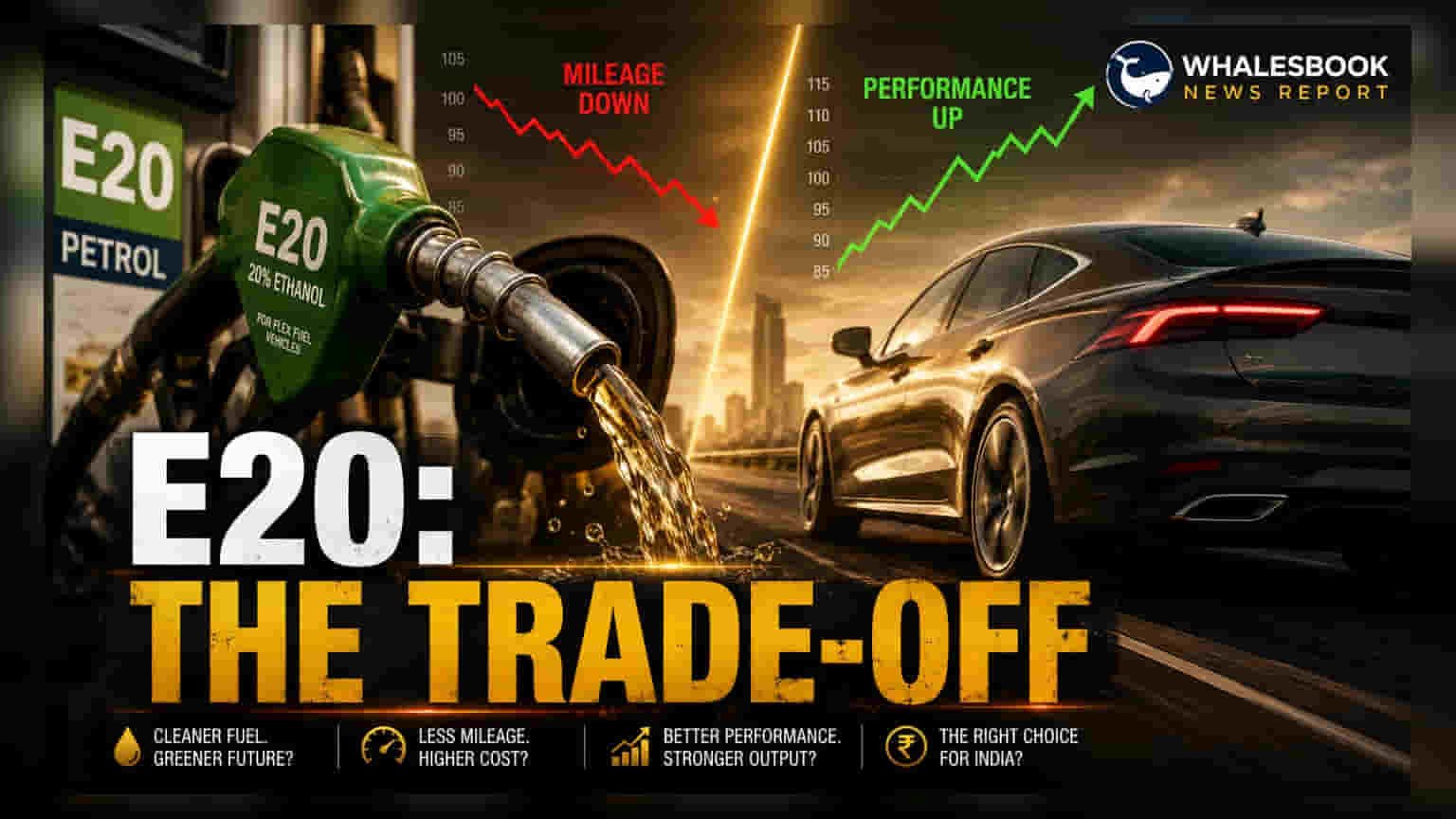
India’s Petroleum Minister has confirmed a minor decrease in fuel efficiency with E20 petrol, citing performance benefits to justify the nationwide shift. The government continues to push for higher ethanol blends to reduce oil imports, while focusing on flex-fuel infrastructure to support the energy security roadmap.
What Happened
India's Minister of Petroleum and Natural Gas, Hardeep Singh Puri, has officially acknowledged that vehicles using E20 fuel—petrol blended with 20% ethanol—may experience a slight reduction in mileage. Addressing public discourse, the Minister explained that while a minor drop in fuel efficiency is expected, it is balanced by improvements in vehicle acceleration and a reduction in engine knocking. The government maintains that this transition is a central pillar of India's long-term energy security and emission control strategy, following its nationwide rollout as the standard fuel grade.
Impact on Vehicle Performance and Costs
Data from automotive industry testing generally indicates a reduction in fuel efficiency of approximately 2% to 4% when using E20 fuel compared to traditional petrol. In real-world conditions, this impact can vary based on vehicle age, engine type, and maintenance. Despite the minor drop in mileage, the Ministry has clarified that vehicle warranties and insurance coverage remain unaffected by the change. Furthermore, officials have addressed circulating concerns regarding engine damage, labeling claims of widespread mechanical failures due to E20 as unsubstantiated.
Energy Security and Economic Goals
For the Indian economy, the ethanol blending program serves a dual purpose: lowering the national import bill and providing additional income streams for the agricultural sector. Projections from government initiatives suggest that the E20 program could reduce crude oil import costs by roughly ₹43,000 crore by the end of FY26. Additionally, the program is designed to distribute approximately ₹40,000 crore to farmers, who provide the raw material—such as sugarcane—necessary for ethanol production. This shift is intended to decrease dependence on imported fossil fuels while promoting cleaner energy usage.
Testing Future Blends
While the market settles into the E20 standard, research and testing are already moving toward higher ethanol concentrations. The Automotive Research Association of India (ARAI) is currently evaluating the performance and durability of E25 fuel blends. Looking further ahead, the government has begun introducing E85 fuel at select pilot outlets. These higher blends are intended for use in flex-fuel vehicles, which are specifically engineered to run on varying proportions of petrol and ethanol. Expanding the availability of these vehicles and the necessary fueling infrastructure remains a key requirement for the success of future, more aggressive blending targets.
What Investors Should Track
Investors tracking the energy and automotive sectors may watch the pace of flex-fuel vehicle adoption, as this will determine how quickly higher ethanol blends can be integrated into the market. Key indicators include the government's progress in expanding specialized fueling infrastructure and the actual impact of higher blends on engine component costs for auto manufacturers. Additionally, the financial benefits to the sugar and grain-based distillery industries, as well as any adjustments in oil import data, will be important factors in assessing the broader success of the energy security strategy.