

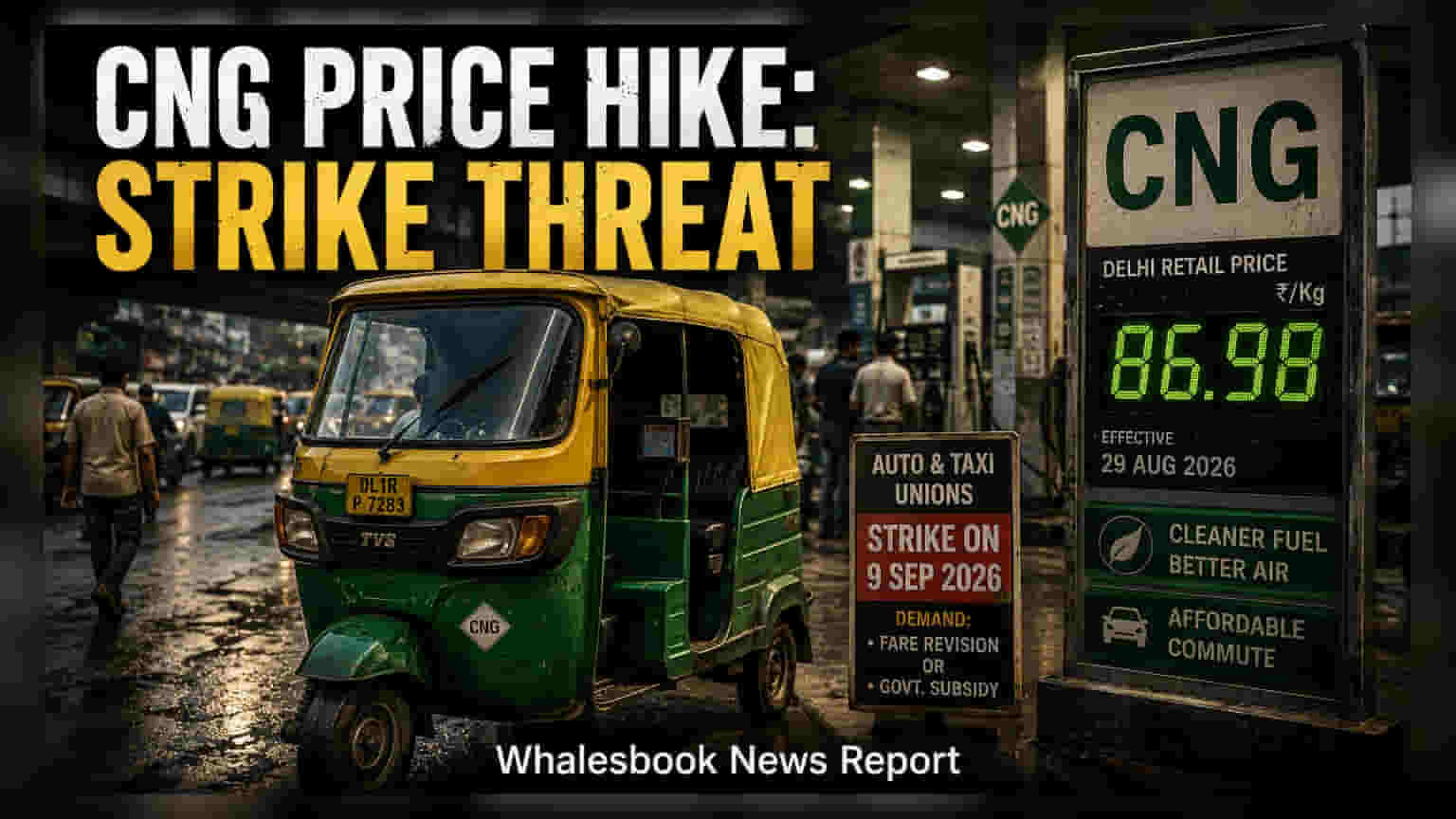
Delhi auto and taxi unions have announced a planned strike for September 9, protesting a ₹3.89 per kg increase in CNG prices. The hike, implemented by Indraprastha Gas Ltd (IGL), brings retail rates to ₹86.98 per kg. This development highlights the growing strain on both transport operators and IGL’s profit margins, which have already faced significant pressure from rising global gas costs.
Delhi commuters may face major transport disruptions on September 9, as auto-rickshaw and taxi unions have threatened a strike. This protest follows a sharp increase in CNG prices, which rose by ₹3.89 per kg on Saturday, August 29, 2026. The retail price of CNG in the capital now stands at ₹86.98 per kg.
The transport unions, including the Auto Rickshaw Association and the Delhi Pradesh Taxi Union, are demanding immediate fare revisions or government-provided subsidies to offset the rising fuel costs. They argue that the current price levels make it difficult for drivers to maintain their livelihoods. If the government fails to meet these demands, the unions intend to stop services, which could impact mobility across the National Capital Region.
The price hike announced by Indraprastha Gas Ltd (IGL) is largely attributed to the high cost of imported Liquefied Natural Gas (LNG). Ongoing instability in West Asia has constrained supplies, forcing gas companies to pass these costs on to consumers to protect their bottom lines. For investors, this situation highlights the delicate balance IGL must strike between maintaining profitability and managing the public sensitivity to fuel prices.
The financial pressure on the company is evident in its recent performance. In the first quarter of the 2027 fiscal year, IGL reported a 44% year-on-year decline in consolidated net profit, which dropped to ₹240.41 crore. The company has struggled with elevated input gas costs, which have weighed on its margins despite its role as a primary gas supplier in the region.
The strike threat complicates the outlook for IGL. If the company maintains higher prices to protect its margins, it faces the risk of lower volume growth and potential regulatory scrutiny. On the other hand, if it were to absorb costs to alleviate public pressure, its profitability could weaken further. Investors should monitor whether the Delhi government intervenes with fare hikes or fuel subsidies, as these decisions will directly influence the company’s operating environment and volume growth in the coming quarters.