

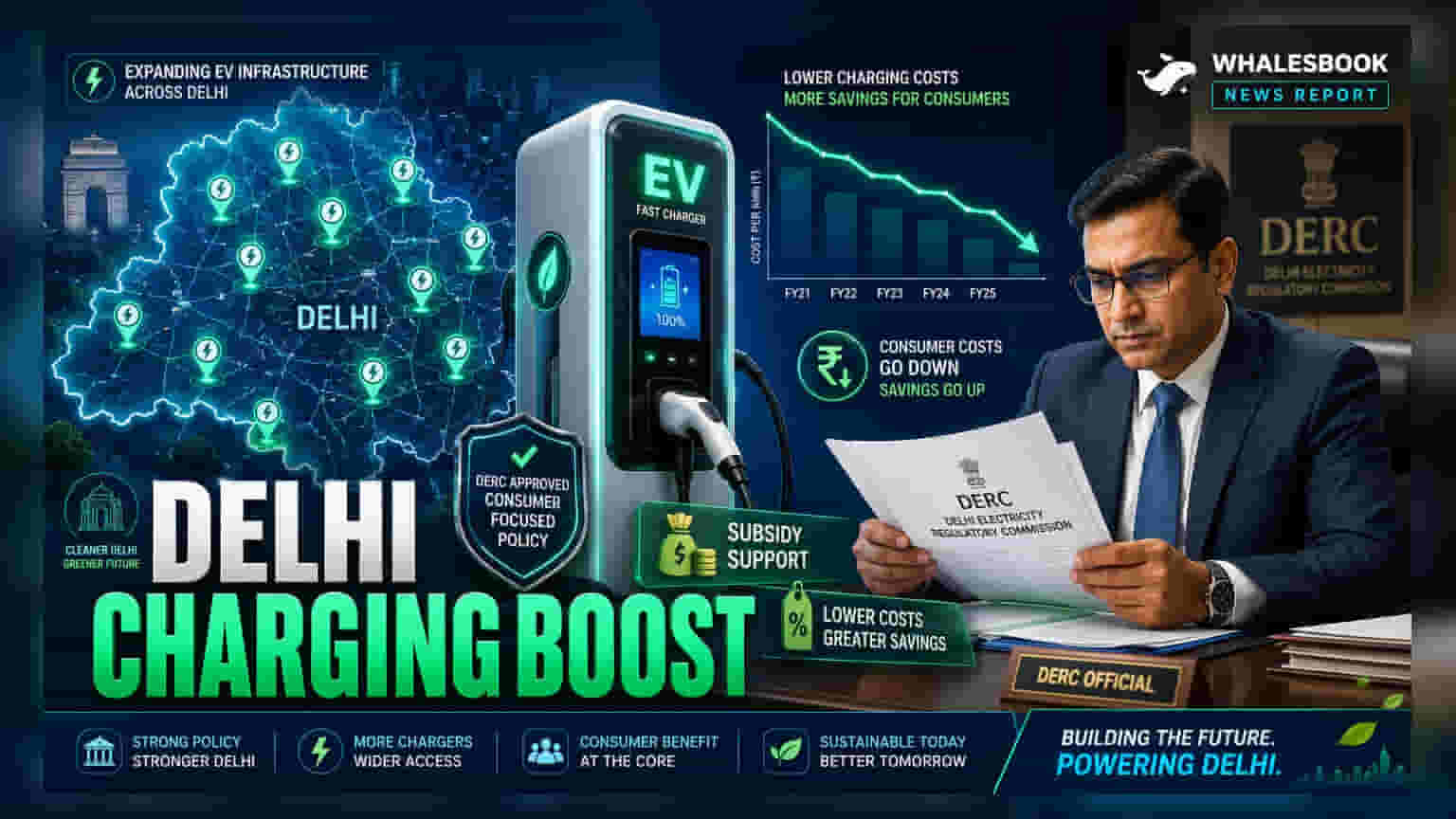
The Delhi Electricity Regulatory Commission has updated rules to ensure central subsidies cover EV charging infrastructure costs. By preventing these expenses from being added to consumer electricity bills, the move aims to accelerate private investment in the city's charging network.
What Happened
The Delhi Electricity Regulatory Commission (DERC) issued a new order on July 1, 2026, aimed at clearing hurdles for electric vehicle (EV) charging station expansion. Under the updated regulations, costs associated with setting up essential upstream infrastructure—such as transformers, cables, and control systems—will now be funded by the central government’s PM E-DRIVE scheme. Previously, these costs were often integrated into the expenses borne by power distribution companies (discoms), which could lead to upward pressure on general consumer electricity tariffs. By ring-fencing these costs, the regulator has protected households from shouldering the financial burden of commercial EV infrastructure development.
Why This Matters For Business
The previous regulatory setup created a procedural and financial bottleneck. Charge point operators frequently faced delays and confusion regarding how to claim the 70% subsidy available for upstream network development under the PM E-DRIVE scheme. Because these costs were tied to the discoms' overall revenue requirements, it was difficult to isolate them for direct subsidy reimbursement. The DERC's latest mandate removes this ambiguity. Discoms will now use an approved cost data book to calculate these expenses separately. For private developers and charging network operators, this provides a clearer path to cost recovery, which may improve the financial viability of new charging projects in the national capital.
Addressing The Network Gap
Delhi Transco Limited (DTL), acting as the nodal agency for the PM E-DRIVE program, had flagged this discrepancy in May 2026. The agency noted that without a specific regulatory carve-out, the network strengthening required for commercial EV sites would remain a financial liability for discoms. By mandating that these upstream costs be excluded from the annual revenue requirement calculations, the DERC has effectively synchronized state-level operations with central subsidy guidelines. This alignment is expected to simplify the demand note process for infrastructure providers and potentially increase the pace at which new charging units come online.
What Investors Should Track
While this regulatory change is a positive step for infrastructure providers, the long-term impact on the sector will depend on several factors. Investors may monitor the actual rate of installation for public charging stations in Delhi over the coming quarters to see if the reduction in procedural friction translates into faster project execution. Additionally, it will be important to observe whether other state regulators adopt similar frameworks to simplify subsidy access under the PM E-DRIVE scheme. Finally, the ability of discoms to efficiently manage the new cost data book and process subsidy claims will be a key indicator of how smoothly this policy shift is implemented on the ground.