

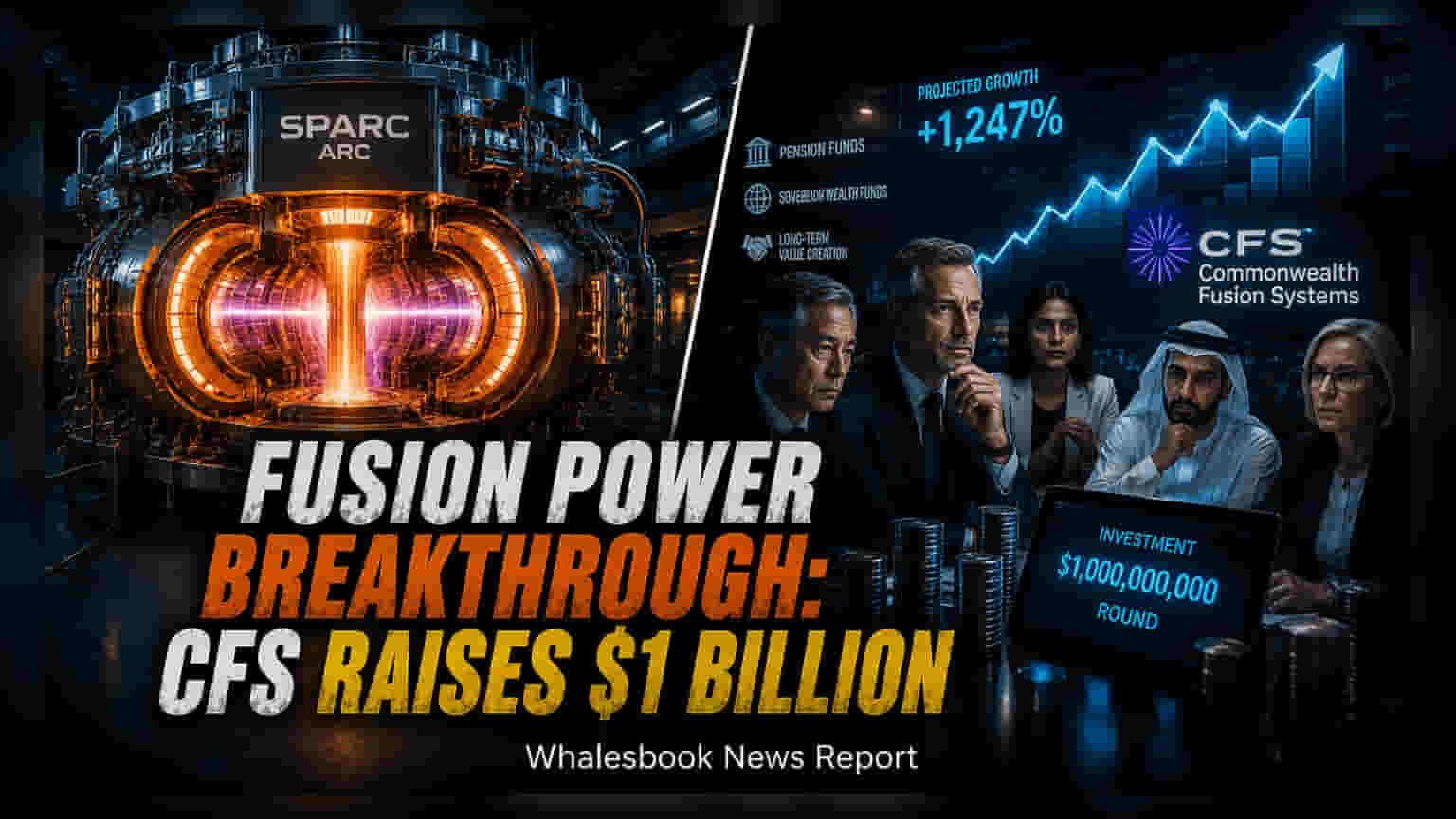
Commonwealth Fusion Systems (CFS) has raised $1 billion in new funding, bringing its total capital raised to $4 billion. The startup is using these funds to accelerate the development of its Sparc reactor and Arc commercial power plant. Investors should note that the company now aims to reach scientific breakeven with its demonstration reactor by 2027.
Commonwealth Fusion Systems (CFS), a developer of fusion energy technology, has secured $1 billion in its latest funding round. This capital infusion increases the total funds raised by the company to $4 billion, reinforcing its status as one of the most well-funded entities in the emerging fusion power sector. The latest round saw participation from a mix of institutional investors, including pension funds and industrial partners, although the company has not publicly disclosed the names of these specific participants.
Advancing Reactor Development
The newly raised capital is dedicated to the advancement of two primary infrastructure projects: the Sparc demonstration reactor and the Arc commercial power plant. CFS is currently in the construction phase for Sparc, which is a critical step in the company's path toward commercialization. The management team has set a target to achieve scientific breakeven—a milestone where the fusion process generates more energy than the power required to initiate it—by 2027. This level of performance has historically been achieved only by state-backed research facilities, such as the National Ignition Facility at the Lawrence Livermore National Laboratory.
Commercial Partnerships and Future Scaling
Beyond technical milestones, CFS has already secured commitments for the energy its future plants intend to produce. Italian energy giant Eni has signed an agreement to purchase more than $1 billion worth of electricity from the future Arc power plant. Additionally, Google has entered into a commitment to acquire 200 megawatts of capacity, which accounts for half of the projected output from the initial Arc plant. These agreements indicate a shift from purely experimental research toward creating a viable, grid-scale energy business model.
Execution and Capital Risks
Investors monitoring this space should note that fusion energy remains a highly capital-intensive and long-term endeavor. While the company has secured significant backing, fusion power plants like Arc are expected to be multi-billion-dollar projects that carry substantial execution risk, including potential cost overruns and technical delays. Unlike established renewable sectors such as wind or solar, fusion technology has not yet been proven at a commercial scale. Furthermore, the company has indicated that additional funding rounds will likely be necessary as it moves from the construction of demonstration reactors to full-scale commercial deployment. The primary monitorables for the coming years will be the successful commissioning of the Sparc reactor by 2027 and the company's ability to manage its rising capital requirements without further diluting ownership or increasing debt stress.