

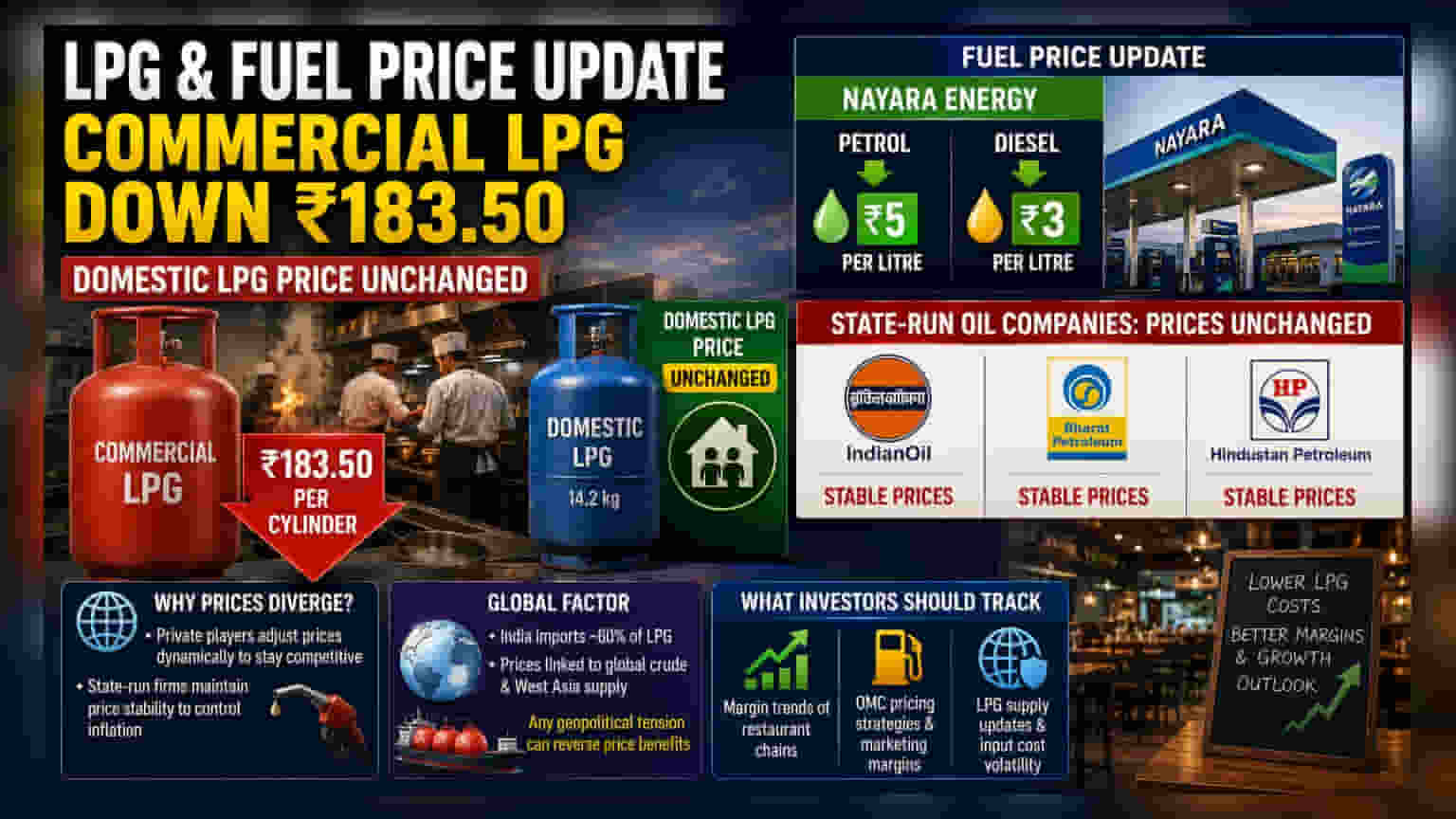
Commercial LPG cylinder prices have been reduced by ₹183.50 nationwide effective July 1, 2026, offering relief to the hospitality and restaurant sectors. While domestic LPG prices remain steady, private fuel retailer Nayara Energy has cut petrol and diesel prices, even as state-owned oil marketing companies hold their rates unchanged.
What Happened
Effective July 1, 2026, oil marketing companies have lowered the price of commercial LPG cylinders by ₹183.50 across India. This reduction follows a period of price volatility for businesses. While commercial rates have decreased, the price of 14.2-kg domestic LPG cylinders remains unchanged for household consumers.
Separately, private sector fuel retailer Nayara Energy has reduced petrol prices by ₹5 per litre and diesel prices by ₹3 per litre. In contrast, state-run oil marketing companies—Indian Oil Corporation (IOCL), Bharat Petroleum Corporation Ltd (BPCL), and Hindustan Petroleum Corporation Ltd (HPCL)—have kept their retail fuel prices steady.
Impact on Hospitality and Commercial Users
The price of commercial cooking gas is a significant operational expense for the hospitality, restaurant, and cafe (HoReCa) industry. A reduction of ₹183.50 per cylinder provides immediate relief to these businesses, which have faced cost pressures over the last few months due to global supply concerns. When commercial LPG prices drop, it helps improve the profit margins for food and beverage outlets, provided they maintain their menu prices, or it allows them more flexibility in pricing their services.
Why Fuel Pricing Diverges
Investors often look at how state-owned oil companies and private retailers compete. The decision by Nayara Energy to cut petrol and diesel prices while state-owned giants like IOCL, BPCL, and HPCL keep their prices unchanged highlights the different operational strategies between these entities. Private players can adjust prices more dynamically to gain market share or respond to changes in international crude oil costs. State-owned firms, however, often maintain price stability to align with broader national policies and consumer inflation goals, even when global crude prices fluctuate.
The Global Link to LPG Prices
India imports nearly 60% of its LPG requirements, making domestic pricing highly sensitive to international crude oil trends and geopolitical events, particularly in West Asia. The recent price cut reflects a cooling off in global supply chain pressures that had previously pushed prices higher. Understanding this linkage is important because any new geopolitical friction in oil-producing regions could quickly reverse these price benefits, potentially putting pressure on commercial gas costs again.
What Investors Should Track
Investors tracking energy and hospitality stocks may want to watch the following:
- Margin trends for restaurant chains: Look for whether reduced commercial LPG costs translate into better quarterly operating margins for major listed food and beverage companies.
- OMC pricing strategies: Monitor whether state-owned oil marketing companies eventually align their retail fuel prices if international crude oil remains soft, as this impacts their marketing margins.
- Input cost volatility: Since India remains heavily dependent on LPG imports, updates regarding supply lines in West Asia remain a key monitorable that could trigger future price changes for both commercial and domestic cylinders.