

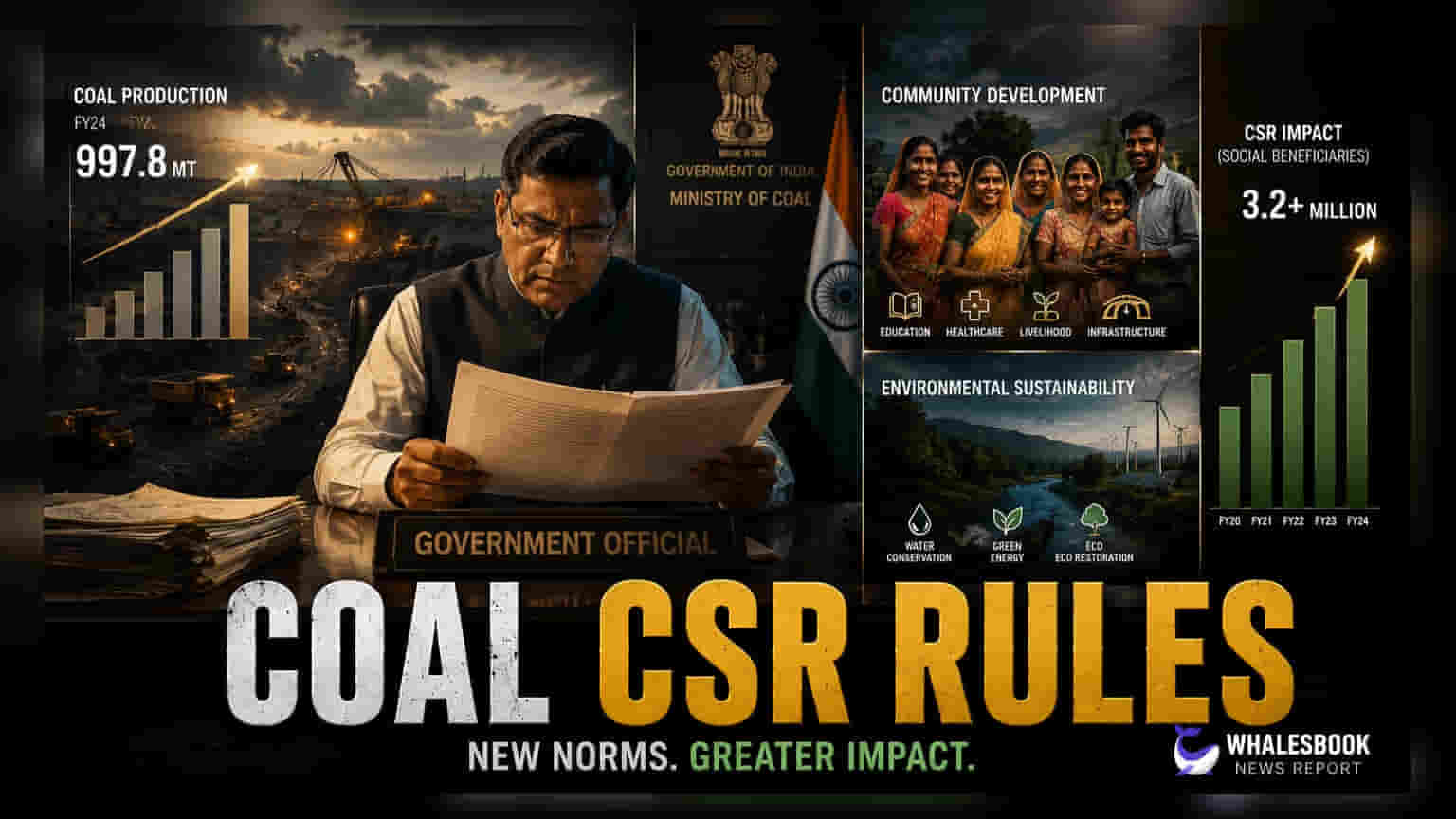
The Union Ministry of Coal is developing a customized Corporate Social Responsibility (CSR) framework to standardize social and environmental initiatives across public and private mining companies. This move aims to align mining activities with national sustainability goals. For investors, the potential introduction of sector-specific CSR mandates could influence how coal companies allocate funds, impacting long-term ESG reporting and community engagement strategies.
What Happened
The Union Ministry of Coal is actively working on a sector-specific Corporate Social Responsibility (CSR) framework tailored for the coal mining industry. This initiative is designed to create a unified approach for both state-owned entities, such as Coal India Limited (CIL) and NLC India Limited, and the growing number of private players in the sector. While the project has been under discussion for some time, it gained formal momentum following stakeholder consultations held in late 2025. The Indian Institute of Corporate Affairs (IICA) has been commissioned to assist in drafting these guidelines, which aim to address the unique social and environmental challenges inherent to coal extraction.
Why This Matters for Investors
Currently, all companies in India that meet specific financial thresholds—a net worth of at least ₹500 crore, turnover of ₹1,000 crore, or net profit of ₹5 crore—must comply with general CSR regulations under Section 135 of the Companies Act, 2013. These rules require companies to spend at least 2% of their average net profit from the preceding three years on eligible CSR activities.
For investors, the shift toward a bespoke framework represents a move from general spending to targeted, sector-specific investment. Mining companies often face heightened scrutiny regarding environmental impact, community displacement, and health hazards. A standardized framework could help companies better quantify their impact, improve ESG (Environmental, Social, and Governance) ratings, and potentially earn 'green credits' through more structured sustainability efforts. Investors may watch whether this framework leads to more rigorous disclosure requirements or changes in how companies budget for welfare projects.
The Business Context
Coal mining companies are already significant contributors to CSR spending in India, with large public sector undertakings often investing in education, healthcare, and rural development in the regions where they operate. For instance, CIL has long maintained policies that prioritize communities within a 25-kilometer radius of its mining sites.
However, the entry of more private players has created a need for a consistent set of guidelines. The Ministry’s goal is to ensure that both public and private entities follow the same standards, thereby preventing disparities in how communities in mining-affected areas are supported. By engaging third-party agencies for impact assessments, the government aims to move toward more data-driven reporting, which can be beneficial for institutional investors seeking transparency in sustainability metrics.
Potential Risks and Challenges
While the goal is to improve accountability, investors should consider the operational impact. Developing and implementing detailed impact assessment reports could increase administrative and compliance costs for smaller private miners. There is also the potential for execution risk if the framework becomes too rigid or if mining companies struggle to align their regional activities with broader national mandates. Furthermore, as the coal sector faces long-term pressure to transition toward cleaner energy, these companies will need to balance current CSR obligations with their own long-term capital spending on technology and diversification.
What Investors Should Track
Investors may monitor for the following updates:
- Final Framework Release: Any official notification from the Ministry of Coal detailing the new mandates.
- Implementation Timeline: Whether the new rules include a phased rollout or immediate compliance deadlines.
- Impact on Profitability: Potential changes to CSR spending patterns and whether they affect future cash flow or margin projections for listed coal miners.
- ESG Disclosure: Any changes in how mining companies report their sustainability progress, which could influence their attractiveness to ESG-focused funds.