

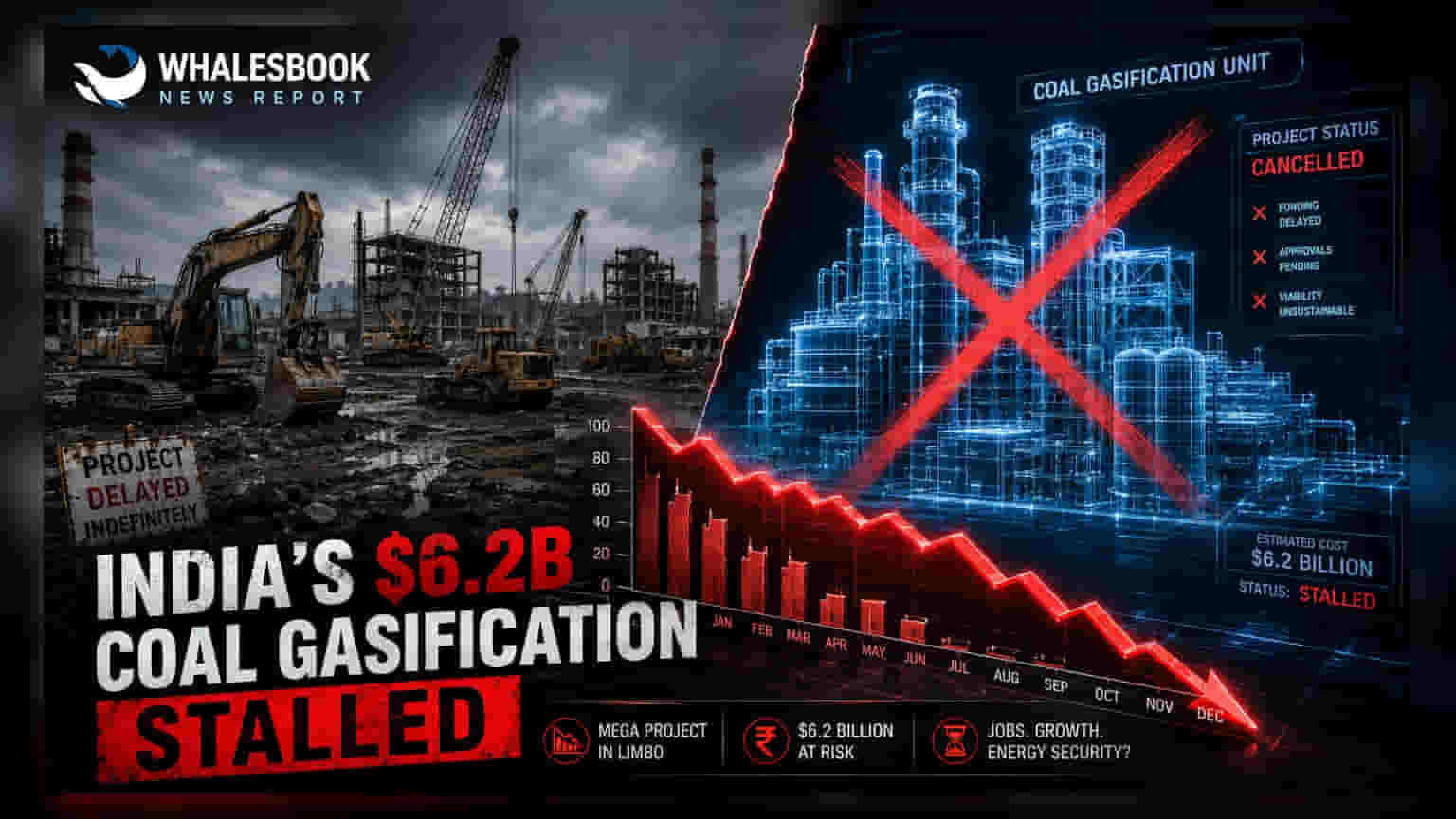
India's initial eight coal gasification pilot projects remain in the planning stage nearly a year after being awarded incentives. Delays in land acquisition, coal linkage, and funding have pushed completion timelines to FY30. With a new, larger incentive scheme excluding these early participants, the projects face significant execution and financial challenges.
What Happened
Nearly a year after the Indian government awarded eight coal gasification projects under an incentive scheme worth approximately ₹6,233 crore, ground-level progress has remained stagnant. While the program aimed to prove the commercial viability of coal gasification technology, none of the selected projects have moved beyond the initial planning phase. Official commissioning targets have now been deferred to the 2029-30 fiscal year. The lack of physical infrastructure, such as commissioned gasifiers, highlights the difficulty in implementing this capital-intensive technology in the current environment.
Challenges to Project Execution
Several hurdles have hampered these early-stage initiatives. Companies are grappling with delays in land acquisition and the complex process of securing long-term coal linkages. Furthermore, financing these projects has proven difficult, as the technology remains relatively unproven on a commercial scale in India. Reports indicate that even preliminary engineering studies, which are essential before construction begins, are still incomplete for most sites. This has left the projects as largely theoretical rather than operational assets.
The Incentive Gap and Policy Shift
The government has recently announced a significantly larger incentive scheme totaling ₹37,500 crore, aimed at achieving 75 million tonnes of coal gasification capacity by 2030. A major point of concern for initial participants—such as the joint venture between Coal India and BHEL, or Jindal Steel and Power—is their exclusion from this new, more lucrative support program. This second phase offers superior benefits, including support of up to ₹5,000 crore per project and 30-year assured coal linkages. Companies that moved early to adopt this technology now find themselves at a potential financial disadvantage compared to future participants.
Why This Matters for Investors
For companies involved, including public sector undertakings and private players like Jindal Steel and Power, the stalled progress represents a risk of capital idling without immediate returns. The capital expenditure required for these projects is substantial, and the lack of clarity regarding incentives could impact the expected return on investment. Investors may also note the shift in policy, which favors new entrants under the larger scheme while leaving the pioneers of the first round with limited support, creating uncertainty about the future viability of their specific projects.
What Investors Should Track
The key monitorables for stakeholders include updates on land acquisition progress, the finalization of coal linkage agreements, and any potential ministry-level policy revisions that might address the exclusion of first-round participants. Additionally, investors will watch for updates on whether the government provides any bridge financing or revised terms for the original eight projects to ensure they remain financially sustainable through the extended FY30 timeline.